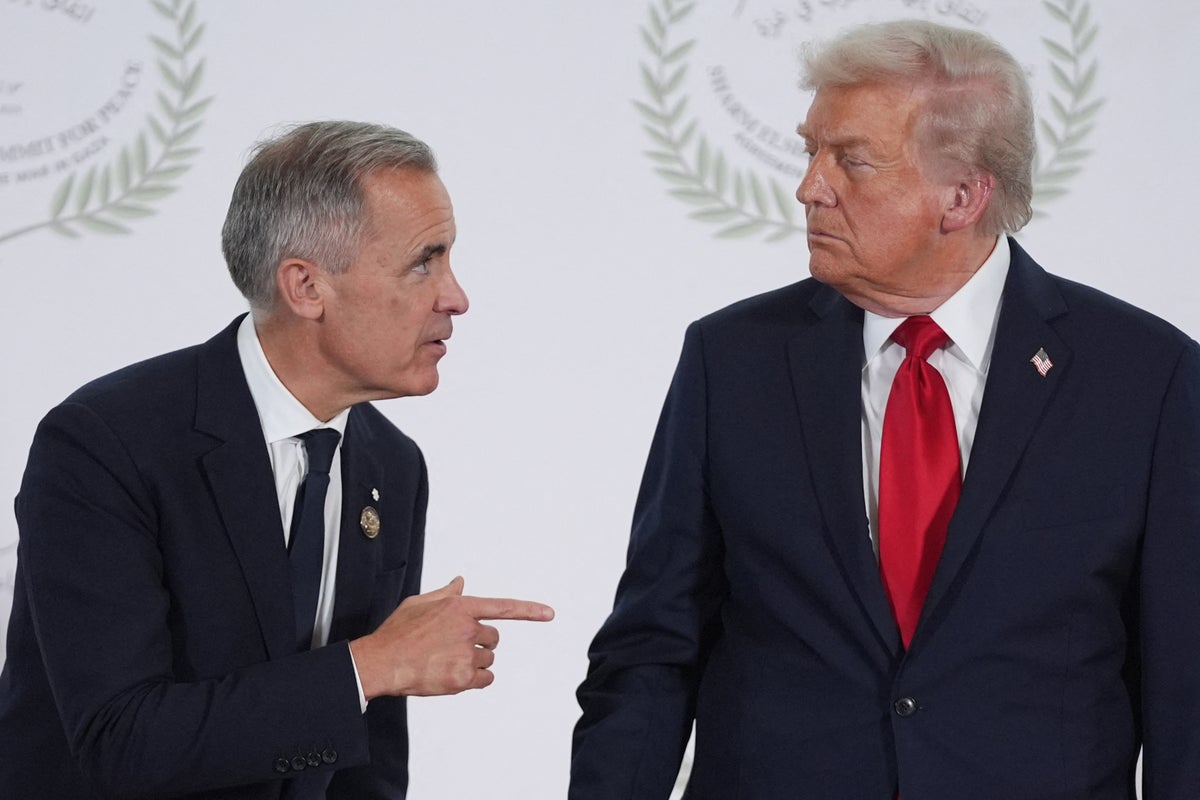
The U.S. is pausing the Permanent Joint Board on Defense with Canada, a World War II-era forum, after accusing Canada of failing to make credible progress on defense commitments. The move has drawn criticism from Canadian and U.S. officials and adds friction to an already strained bilateral relationship, with Canada facing pressure to lift defense spending toward the NATO 5% GDP target by 2035. While largely symbolic, the decision signals deteriorating North American defense cooperation and could weigh on alliance stability.
This is less about a single forum and more about the U.S. signaling that North American defense cooperation now has a financial price tag. The second-order effect is a credibility gap for Canada: if Ottawa is seen as underinvesting in hard security, the market will start pricing a higher probability of forced catch-up spending, which is structurally bullish for domestic defense procurement, Arctic infrastructure, and dual-use communications/radar vendors over the next 12-24 months. The near-term winner is U.S. defense primes with exposure to command-and-control, surveillance, and intercept systems, because any deterioration in alliance trust usually gets translated into accelerated procurement rather than lower total spend.
The bigger macro implication is Arctic and perimeter-security capex moving from discretionary to strategic. That benefits firms tied to sensor networks, satellites, coastal surveillance, ice-capable logistics, and northern infrastructure, while pressuring Canadian fiscal flexibility and crowding out civilian spending if Ottawa tries to respond quickly. A subtler loser is cross-border industrial supply chains in aerospace and defense maintenance: even a modest chill can slow contract awards, joint exercises, and procurement standardization, raising execution risk for integrators dependent on binational interoperability.
Timeline matters: the immediate reaction is political noise, but the investable signal emerges over months as Canadian budget language, procurement timing, and Arctic deployment plans shift. The key reversal catalyst would be a visible Canadian spending acceleration or a broader U.S.-Canada reset tied to NATO burden-sharing, which would blunt the headline risk without fully restoring the old status quo. Contrarian take: the move may be overread as a bilateral rupture; in practice it could be a coercive negotiating tool that increases defense spending on both sides, making the medium-term earnings effect more positive for defense than the market initially assumes.
AI-powered research, real-time alerts, and portfolio analytics for institutional investors.
Request DemoOverall Sentiment
mildly negative
Sentiment Score
-0.35
