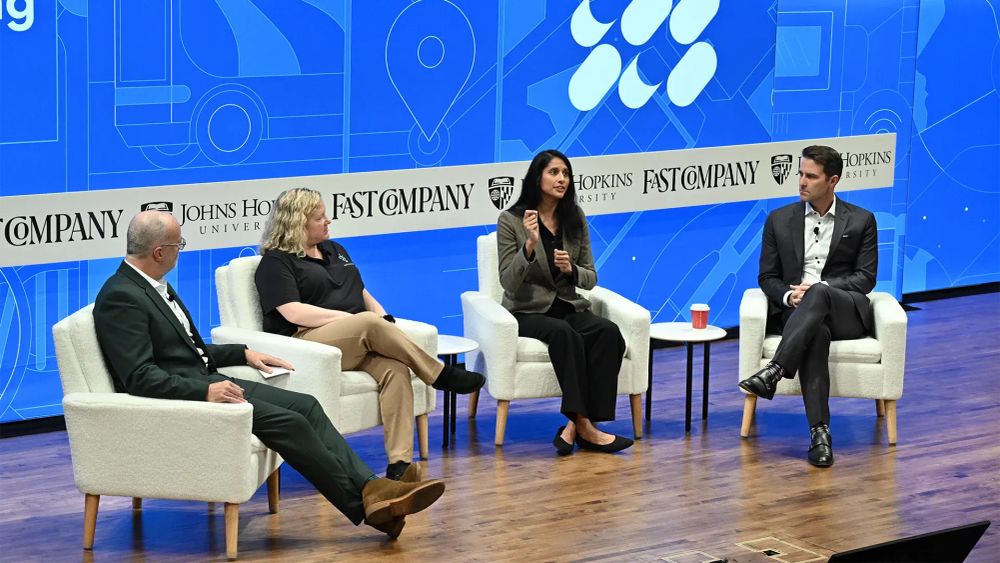
Early-stage companies highlighted at the summit are deploying AI and space-based platforms to accelerate drug discovery and national space infrastructure: Phare Bio aims to develop 15 new antibiotics by 2030 to outpace microbial resistance, SpaceMD (formed Aug 2025) is pursuing space-grown antibody crystals for commercial drugs, and Max Space is pitching new stations to replace the ISS when it retires in 2030. Isomorphic Labs (DeepMind spinout) is advancing toward human trials using AlphaFold-derived models; however, executives emphasize regulatory/FDA timelines and clinical validation as the primary bottlenecks that will determine commercial and investment outcomes.
Market structure: Platform owners of AI and large aerospace primes are the clear near-term winners—expect GOOGL (Isomorphic/DeepMind IP), RDW/MAXR (in-orbit manufacturing/space station services), and large CROs/TMO to capture outsized share as drug-discovery workflows industrialize. Small-cap, speculative AI-drug names and pure-play antibiotic startups without proven preclinical deliverables face margin pressure and funding rounds repricing; price discovery will shift toward firms that can demonstrably shorten timelines by 20–50% over incumbents.
Risk assessment: Key tail risks include an FDA pause or stricter guidance on AI-generated candidates, a major launch/insurance failure delaying in-space manufacturing, or export controls on advanced AI compute—each could wipe 30–60% off speculative valuations within 6–18 months. Immediate (0–3 months) volatility will track trial/contract news; short-term (3–12 months) depends on first human-trial starts; long-term (1–5 years) depends on demonstrated clinical efficacy and recurring revenue from space infrastructure.
Trade implications: Favor concentrated, size-controlled exposure to GOOGL (2–3% NAV) and RDW/MAXR (aggregate 2–4% NAV) with 12–36 month horizons; rotate out of small-cap AI drug discoverers (e.g., RXRX) by 30–50% and into defensives (TMO, MRK) to hedge regulatory risk. Use 9–15 month call spreads on SDGR (Schrödinger) sized 0.5–1% NAV to express constructive but cautious upside; consider protective puts on top speculative positions if they rally >50% without clinical milestones.
Contrarian angles: The market underestimates operational bottlenecks—orbital capacity, insurance, and GMP manufacturing in microgravity will constrain commercialization for 2+ years, so current valuations that price immediate revenue are likely overstated. Past cycles (2014–2017 AI/bio hype) show big winners are incumbents who buy validated tech; look for M&A windows (12–36 months) where large pharma/defense acquirers scoop validated startups at a 30–50% premium to last private rounds rather than chasing unicorn public multiples.
AI-powered research, real-time alerts, and portfolio analytics for institutional investors.
Request DemoOverall Sentiment
mildly positive
Sentiment Score
0.32
