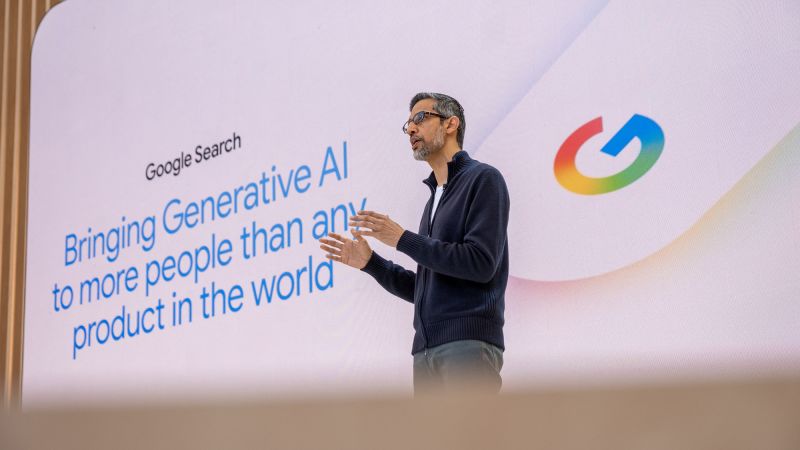
Google's Gemini 3 launch (debut Nov. 18) and its in-house Tensor ASICs have jolted the AI landscape, drawing public acknowledgement from Nvidia and OpenAI and reportedly prompting Meta to discuss buying Google's chips. Gemini 3 posted over 1 million trials in 24 hours and sits atop multiple benchmark leaderboards; Gemini's app has ~650M monthly users versus ChatGPT's ~800M weekly active users. Nvidia, which still dominates AI hardware, reported 62% year-over-year sales growth and 65% higher profits in the October quarter; Alphabet shares rose nearly 8% last week while Nvidia shares slipped ~2%, signaling potential reallocation and strategic hardware decisions across hyperscalers and AI firms.
Market structure: Gemini 3 and Google’s Tensor ASIC push benefits Alphabet (GOOGL) and hyperscalers that can integrate vertically—expect GOOGL to capture marginal AI enterprise spend and cloud share over 6–12 months. Nvidia (NVDA) retains dominant pricing power today because GPUs + networking + developer stack remain the industry standard; ASICs are efficient for narrow workloads but unlikely to displace GPUs broadly within 12–24 months. Memory (HBM) and power/networking suppliers see sustained demand; AMD (AMD) is a candidate to pick up GPU share if hyperscalers diversify.
Risk assessment: Key tail risks are regulatory intervention (US/EU antitrust or export controls) and supply-chain shocks to HBM or advanced nodes; probability medium, impact high—plan for >15% moves in affected stocks within 3–6 months. Near-term (days–weeks) volatility will be driven by benchmark headlines and partnership announcements (e.g., Meta/Anthropic deals); long-term (years) outcome depends on software ecosystem lock-in to NVDA versus ASIC portability. Hidden dependency: commercial adoption hinges on developer tooling and cloud availability, not raw model scores.
Trade implications: Tactical play favors being long GOOGL exposure and selectively long AMD while avoiding overconcentration in NVDA on headline risk; use pair trades to hedge platform vs. hardware exposures over 3–6 months. Options: use LEAP calls on GOOGL (9–18 month) and short-dated protective puts or put spreads on NVDA to hedge immediate multiple risk. Rotate modestly from pure GPU suppliers into cloud/platform/software names (GOOGL, CRM) and memory suppliers if HBM tightness persists.
Contrarian angles: The market is underestimating the inertia of NVDA’s software/networking moat—historical parallels (AWS Graviton vs Intel) show custom silicon boosts vendor diversity but doesn’t immediately topple incumbents. The short-term enthusiasm for Gemini may be overdone; if ecosystem fragmentation increases developer costs, incumbents (NVDA, GOOGL) could both benefit differently—NVDA via hybrid workloads, GOOGL via cloud lock-in. Watch enterprise procurement cycles (RFPs) over next 6–12 months as a reality check.
AI-powered research, real-time alerts, and portfolio analytics for institutional investors.
Request DemoOverall Sentiment
mildly positive
Sentiment Score
0.28
Ticker Sentiment
