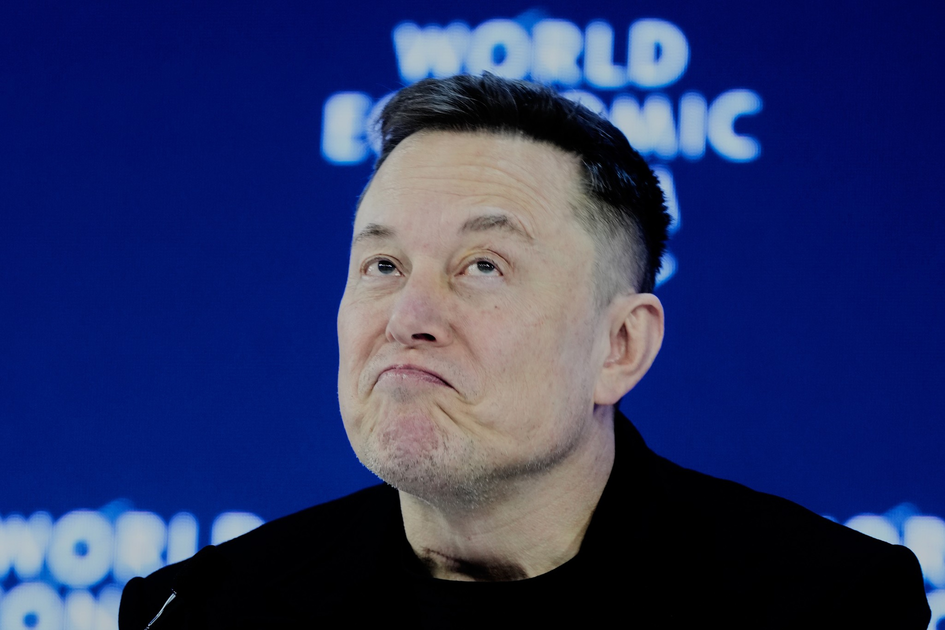
A jury trial begins Monday in Oakland over Elon Musk’s claim that OpenAI’s 2019 shift from nonprofit to for-profit structure cheated him out of future value, with opening arguments scheduled for Tuesday and proceedings expected to run through mid-May. The case centers on OpenAI’s governance, its $852 billion valuation, and the role of Microsoft, which backed the restructuring with a $1 billion investment and now holds a 27% stake. Key figures including Sam Altman, Greg Brockman, Ilya Sutskever, Elon Musk, and potentially Satya Nadella could testify, keeping AI governance and competitive dynamics in focus.
This case is less about legal liability than about forcing a public reassessment of who controls the AI stack at the moment capital intensity is exploding. The market’s current assumption is that governance noise is a sideshow; the real second-order effect is that every incremental headline raises the implied regulatory and reputational discount rate on frontier AI, which should help incumbents with distribution and balance-sheet heft while pressuring pure-play AI vendors that need clean IPO windows.
For MSFT, the asymmetric risk is not a direct legal hit but prolonged optics friction around its strategic stake and governance influence. If the trial keeps highlighting concentration risk or “control without control,” it could modestly compress the valuation premium investors assign to Microsoft’s AI optionality versus peers, even if fundamentals remain intact. That said, any evidence that Microsoft is the indispensable adult in the room strengthens the franchise value of Azure/OpenAI-linked demand and may support enterprise adoption by reducing fear of vendor instability.
TSLA is a cleaner negative because Musk is now being forced to defend intent and stewardship in a venue that can magnify character risk, distraction risk, and capital-allocation skepticism all at once. The main overhang is not one verdict day; it is the next 6-10 weeks of depositions, testimony clips, and cross-examination that can keep Musk in defense mode while xAI tries to scale. A favorable outcome for Musk could re-open some multiple compression, but the base case is continued headline beta and a modestly higher governance discount on the stock.
The contrarian angle is that the biggest trade may be volatility itself, not direction. OpenAI’s near-term IPO narrative could be slowed if the court record makes governance look messier than the market wants, which is indirectly positive for incumbent cloud and negative for late-stage private AI comps. The market may be underpricing how much this trial shifts the conversation from "AI growth" to "AI control," a framing that can persist for months and alter capital formation across the sector.
AI-powered research, real-time alerts, and portfolio analytics for institutional investors.
Request TrialOverall Sentiment
neutral
Sentiment Score
-0.05
Ticker Sentiment
