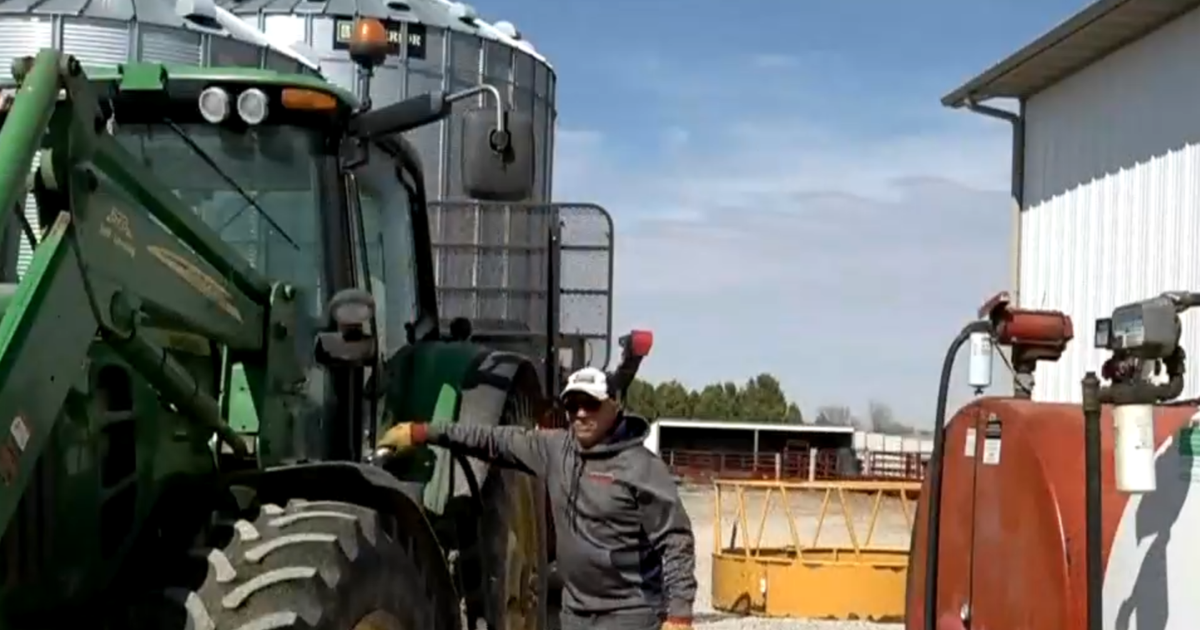
The Iran war has driven sharp input-cost shocks: ammonia up ~20%, urea up ~50%, and diesel up 43.5%, contributing to rising farm costs (one Iowa farmer reports a 25% increase) and a 46% rise in U.S. farm bankruptcies year-over-year per the American Farm Bureau Federation. These energy and fertilizer price spikes threaten farm profitability and are likely to pass through to higher consumer food prices via increased production and transport costs.
The immediate economic mechanism here is a margin shock to crop producers that will shift behavior within the upcoming planting window: reduced acreage, fertilizer under-application, or a pivot to lower-input crops. That behavioral response is likely to compress near-term supply (planting → harvest cycle = 3–9 months), creating a lopsided risk profile where commodity prices spike after the planting window closes even if input prices ease later.
Second-order winners and losers extend beyond farmers: fertilizer and refining margin capture should rise (benefiting producers with fixed-cost leverage), while equipment OEMs, regional banks and less-capitalized operators face a multi-quarter pullback in capex and elevated credit losses. Expect volatility in residual values for used tractors/implements and a delayed recovery in OEM order books—this amplifies cyclic stress for DE/AGCO earnings over 6–12 months.
Key catalysts that can reverse the move are outside the farm sector: a diplomatic de-escalation or logistics fixes that restore ammonia/urea throughput would normalize input prices in weeks; conversely, a prolonged trade-disruption or tighter natural-gas market would extend fertilizer stress for 6–12+ months. Monitor planting intentions, USDA acreage reports, crop condition indices and regional bank ag-loan delinquency prints as high-frequency decision points.
From a portfolio perspective the jagged risk is attractive: commodity upside (corn/soy) is convex if acreage falls, while fertilizer/refining equities asymmetrically capture higher input prices. The clearest near-term hedge is protection on ag OEMs and selective long exposure to fertilizer/refining names or crop futures with disciplined sizing and stop rules tied to weather and policy announcements.
AI-powered research, real-time alerts, and portfolio analytics for institutional investors.
Request DemoOverall Sentiment
strongly negative
Sentiment Score
-0.65
