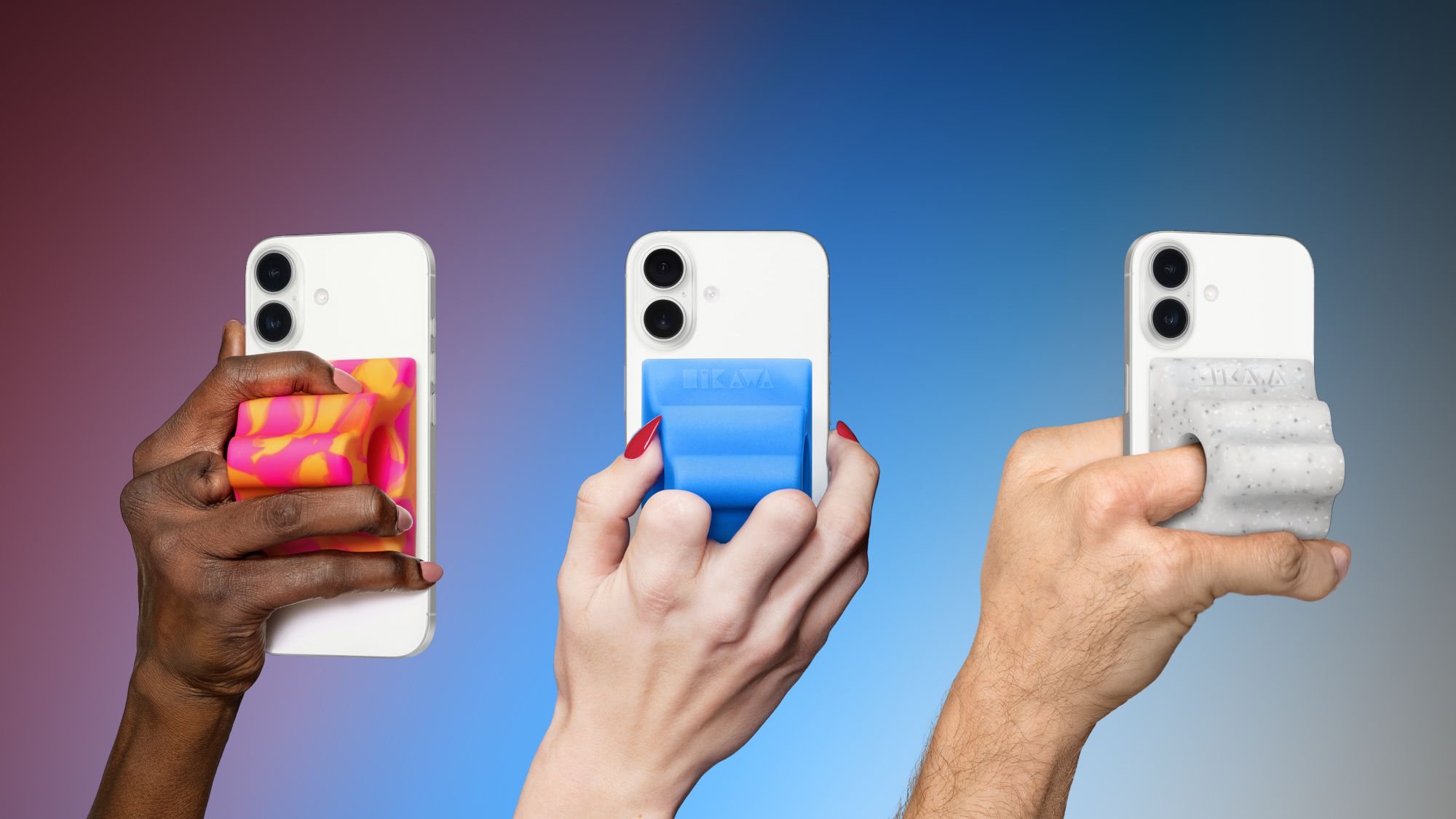
Apple re-released the Hikawa Grip & Stand for iPhone in three new colors—Orange Swirl, Glow Blue, and Speckled Stone—at a U.S. price of $54.95. The MagSafe accessory is now broadly available worldwide through Apple’s online store after selling out last year, though U.S. delivery estimates are still around mid-June. The update is a small, accessory-level product refresh with limited expected impact on Apple shares.
This looks less like a single-product launch than a small but useful test of whether Apple can monetize the iPhone as an ecosystem platform through accessories with higher attachment margins and little cannibalization risk. The economics are attractive: a premium accessory priced far above commodity grip alternatives can still clear because it rides on installed-base inertia and Apple’s retail trust, and every incremental accessory sale has outsized brand value relative to hardware ASPs. The re-release also signals that Apple is willing to let third-party manufacturing handle fulfillment for niche products, which reduces operational burden while preserving margin capture and merchandising control.
The second-order winner is PopSockets-style accessory demand broadly, because Apple’s endorsement validates the category and may pull more shoppers into MagSafe-compatible add-ons. That said, the bigger strategic read-through is on retention: accessories increase switching costs and reinforce iPhone ownership as a system, not a device purchase. Over months, this can modestly lift Services-adjacent behavior through store traffic and higher accessory attach, but the more important effect is defensive — it helps Apple protect share among high-value users who are already locked into the ecosystem.
The market is likely underestimating how much Apple’s accessory merchandising can serve as a demand probe ahead of larger product cycles. If this sells through quickly again, it is evidence that the MagSafe ecosystem remains sticky even in a mature iPhone market, which supports continued accessory-led monetization without needing unit growth acceleration. The main risk is that this is too small to matter financially unless Apple scales a broader line of premium attach products; if delivery times normalize and sell-through slows, the signal value fades quickly.
For competitors, the pressure is less on handset OEMs than on independent accessory brands that compete on design and ergonomic differentiation. Apple’s retail channel can selectively elevate a niche product and absorb demand that would otherwise go to Amazon or direct-to-consumer brands, compressing discovery for smaller players. The contrarian view is that this is not a consumer demand read-through for iPhones themselves — it is mostly a merchandising and ecosystem control story, so treating it as a meaningful near-term revenue catalyst for AAPL would be overstating the economics.
AI-powered research, real-time alerts, and portfolio analytics for institutional investors.
Request DemoOverall Sentiment
mildly positive
Sentiment Score
0.15
Ticker Sentiment
