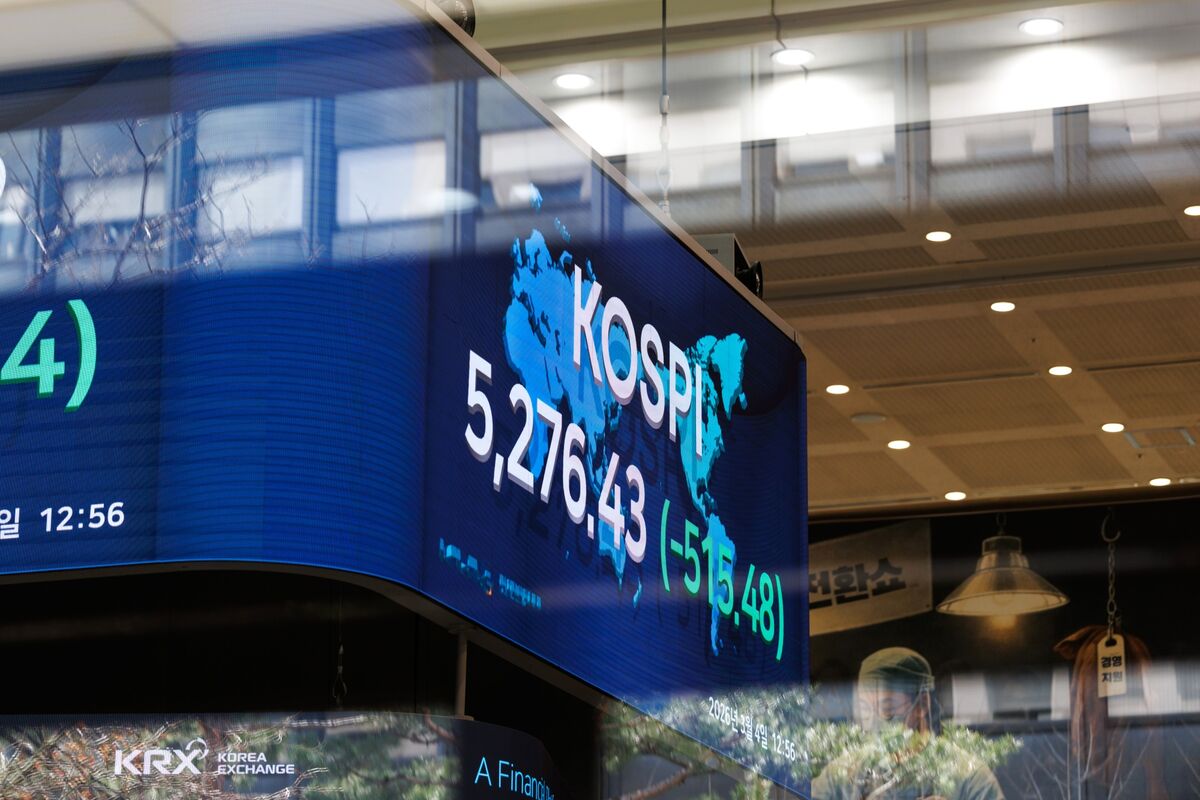
South Korea’s Kospi fell as much as 4.7% on Monday and briefly entered correction territory, now down more than 10% from its May 14 peak before trimming losses to about 3%. Rising bond yields are pressuring risk appetite and threatening the AI-driven equity rally, while the Korea Exchange briefly halted Kospi program selling after a sharp futures slump. The move signals a broader risk-off shift with market-technical and rates-driven pressure.
This is less about Korea specifically and more about how crowded AI/semis exposure has become inside a higher-yield regime. When duration rises, the market starts repricing the terminal multiple on any stock whose valuation depends on long-dated growth; Korea’s market is simply one of the most leverage-sensitive places for that rotation to show up first. The fact that program selling was triggered suggests the move is being amplified by systematic flows, not just discretionary de-risking, which raises the odds of overshoot in both directions over the next 1-3 sessions.
The second-order loser is not just local equities but the broader Asia semiconductor complex: Korea is a core proxy for memory, hardware supply chain beta, and AI capex sentiment. If higher yields persist, investors will favor cash-generative incumbents and power/defensive sectors over names where the AI narrative is still outrunning near-term earnings translation. That creates a temporary relative-value opportunity in exporters and quality balance-sheet names versus the most crowded AI beneficiaries.
The key catalyst is whether bond yields stabilize. If yields keep grinding higher for another 1-2 weeks, the correction can broaden from Korea into US and Taiwan AI hardware proxies as portfolio managers cut aggregate exposure rather than rotate within the theme. Conversely, a sharp reversal in yields would likely trigger an equally mechanical rebound, because the selling here looks flow-driven and positioning-heavy rather than fundamentally driven.
AI-powered research, real-time alerts, and portfolio analytics for institutional investors.
Overall Sentiment
strongly negative
Sentiment Score
-0.55
