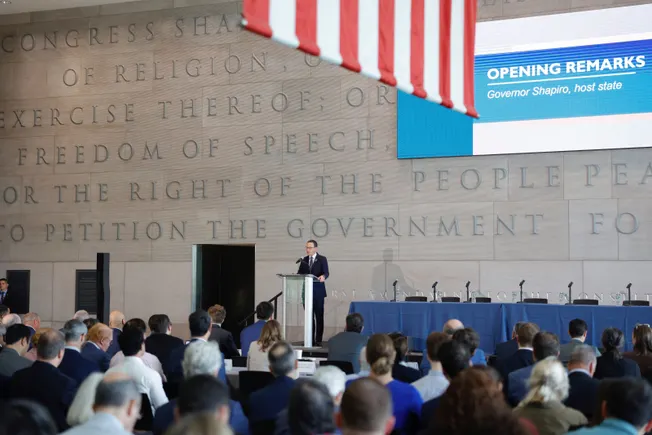
Governors from PJM Interconnection states, spanning both Republican and Democratic parties, are threatening to withdraw from the grid operator's markets unless they are granted a formal role in its governance. This demand stems from recent capacity price spikes that led to double-digit electricity bill increases and a perceived 'crisis of confidence' in power supply, with states seeking increased representation, FERC filing rights, and input on board member selection within months. While PJM is open to discussions, independent power producers oppose state involvement, warning it could lead to gridlock and stifle critical investment, signaling significant potential restructuring and uncertainty for the region's energy markets and infrastructure.
A significant governance crisis is unfolding within the PJM Interconnection, as a bipartisan group of governors from eleven member states threatens to withdraw from the wholesale power market unless granted a formal role in its governance. This ultimatum, delivered with a demand for reforms in "months, not years," is a direct response to recent capacity price spikes that caused double-digit electricity bill increases for consumers, a situation partly attributed to PJM's forecasts for rising demand from new data centers. The states are specifically seeking the right to file proposals at the Federal Energy Regulatory Commission (FERC) and a role in selecting PJM's board members, mirroring the governance structures of other grid operators like MISO and SPP. While PJM's leadership remains open to discussion, it cautions that such changes require a lengthy approval process. The proposal faces staunch opposition from the Electric Power Supply Association (EPSA), which represents independent power producers and warns that granting states a governance role would introduce political motives, create "red tape, gridlock, and a stifling of critically needed investment," thereby jeopardizing grid reliability.
AI-powered research, real-time alerts, and portfolio analytics for institutional investors.
Overall Sentiment
strongly negative
Sentiment Score
-0.70
