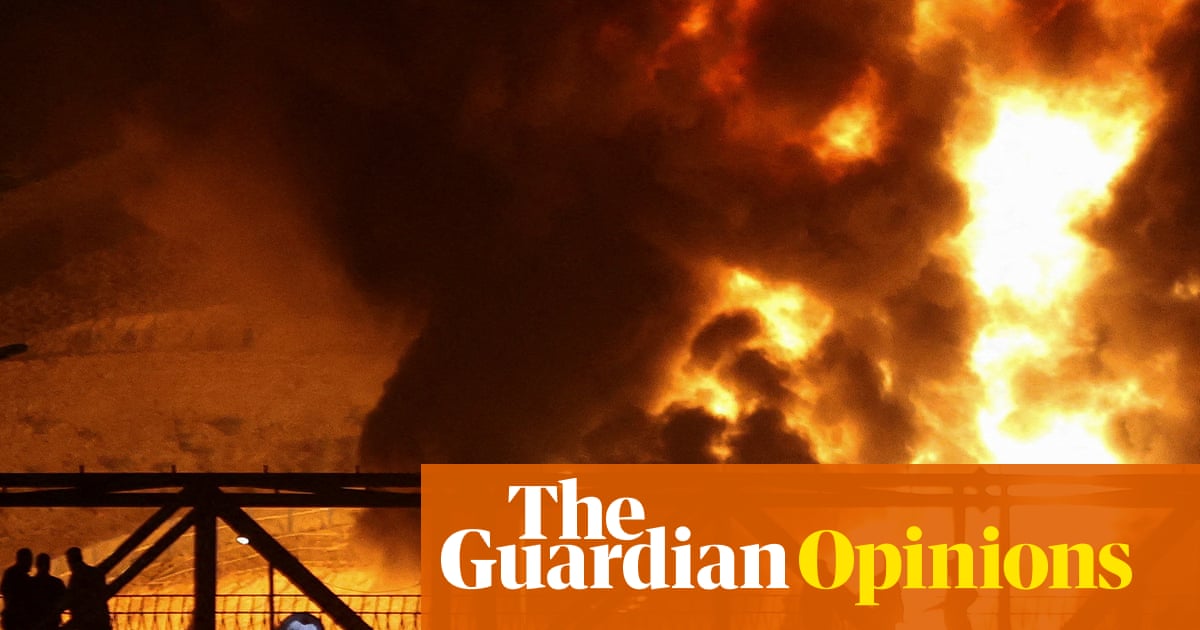
Heightened tensions between Israel and Iran, driven by recent Israeli airstrikes, have escalated the risk of a broader Middle East conflict. The article attributes blame primarily to the leadership of Benjamin Netanyahu, Ayatollah Ali Khamenei, and Donald Trump, citing Netanyahu's long-standing desire for a showdown with Iran, Khamenei's hardline stance and nuclear ambitions, and Trump's inconsistent foreign policy. The situation raises concerns about regional stability, potential global energy shocks, and the possibility of further military actions involving multiple nations.
The article details a severe escalation in the Israel-Iran conflict, characterized as a deliberately chosen war by Israel, risking a broader Middle East conflagration. It argues that diplomatic alternatives were available before Israeli airstrikes, which are deemed unlikely to halt Iran's presumed nuclear ambitions and may instead accelerate them. The conflict has reportedly reached a 'wholly different level' from previous exchanges, with civilian casualties and leaders becoming targets. The author assigns primary responsibility for this escalation to three individuals: Israeli Prime Minister Benjamin Netanyahu, criticized for allegedly seeking a confrontation with Iran for years, partly for his own political survival, and whose military actions in Gaza have reportedly resulted in over 55,000 Palestinian deaths; Iranian Supreme Leader Ayatollah Ali Khamenei, for his regime's insistence on uranium enrichment despite a lack of civil applications and its repressive domestic policies; and former U.S. President Donald Trump, whose 'feeble ineptitude' and inconsistent foreign policy, including his withdrawal from the Iran nuclear deal, are said to have destabilized the situation. The piece highlights Iran's threats to retaliate, potentially target US and UK bases, and close the Strait of Hormuz, which could trigger a 'global energy shock.' This narrative aligns with the provided signals of an 'extremely negative' sentiment (-0.85) and a high market impact score (0.85), reflecting significant pessimism and warning of substantial instability driven by geopolitical strife and its potential effects on energy markets.
AI-powered research, real-time alerts, and portfolio analytics for institutional investors.
Request DemoOverall Sentiment
extremely negative
Sentiment Score
-0.85
