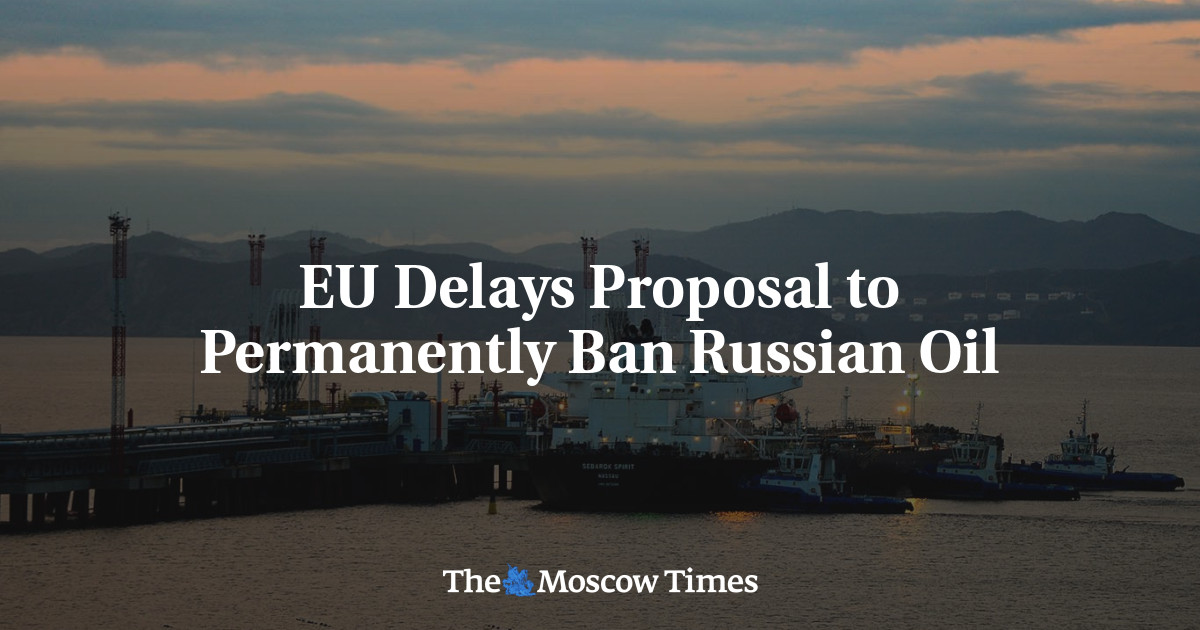
Brent crude topped $100/bbl after the EU postponed the April 15 unveiling of a law to permanently ban Russian oil, with a new date not yet set. The delay comes amid the largest-ever global energy supply disruption (IEA) and follows halted Druzhba pipeline flows to Hungary and Slovakia since January; the EU has already banned maritime crude (2022) and plans to ban Russian LNG by end-2026 and pipeline gas by fall-2027. The combination of policy delay and heightened Middle East war-related supply risk raises near-term volatility and policy uncertainty for European energy markets.
Policy uncertainty around European energy restrictions interacting with a major Middle East supply shock creates a regime where price direction matters less than realized volatility. Markets are now simultaneously pricing a higher probability of acute downside (diplomatic deals, temporary re-routing or re-exports) and acute upside (sustained supply disruption), so implied volatility in oil and marine freight should command a persistent premium for the next 1–3 months.
Beyond headline oil price moves, the highest-leverage second-order pockets are (1) maritime logistics — longer voyage geometries and risk premiums meaningfully boost tanker dayrates and voyage costs, (2) refining and blending hubs that can arbitrage swings between heavy sour and light sweet grades, and (3) European utility/LNG buyers facing higher hedging costs and credit stress if forward curves stay elevated. These effects operate on different cadences: freight and options vol reprice within days–weeks; refinery margin rotation and storage builds play out over 1–6 months; infrastructure repairs or legal timelines compress over quarters to years.
Key catalysts that will flip the current regime are discrete and time-stamped: large SPR releases or coordinated diplomatic supply agreements (60–90 days to price-impair), rapid repair/permissioning of cross-border pipelines (months), or a credible EU legal path that either hardens or permanently abandons sanctions (quarterly to multi-year). Tail risk remains elevated — a rapid escalation in the Middle East could blow realized volatility well above current implied levels, while a fast political resolution would sharply compress it and punish long-volatility positions.
AI-powered research, real-time alerts, and portfolio analytics for institutional investors.
Request DemoOverall Sentiment
mildly negative
Sentiment Score
-0.25
