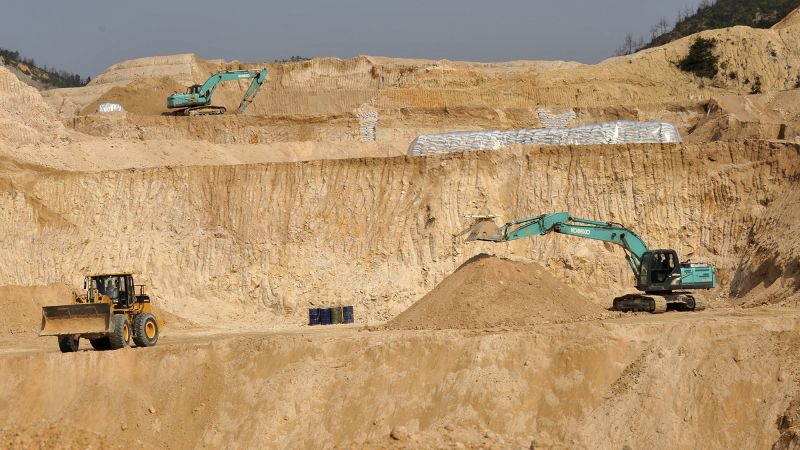
A potential shortage of rare-earth elements, critical for various industries including automotive and electronics, looms as China has imposed new export licensing requirements, slowing shipments. With US companies reportedly holding only a few months' worth of supply, widespread manufacturing disruptions, potentially exceeding the impact of the prior chip shortage, are feared if the US and China do not reach a trade agreement to restore normal supply flows; temporary export licenses have been granted to some suppliers, but only for a limited time.
A critical shortage of rare-earth elements looms for US industries, driven by China's new export licensing requirements implemented in April, which have significantly slowed outbound shipments. Given China's control over approximately 92% of global rare earth processing and US companies reportedly holding only two to three months of inventory, the situation poses a severe threat of widespread manufacturing disruptions, potentially exceeding the impact of the pandemic-era chip shortage, particularly within the automotive sector; Ford, for instance, experienced a recent one-week production halt at its Explorer plant, though the direct link to rare earth shortages remains unconfirmed by the company. While temporary export licenses of up to six months have reportedly been granted to some suppliers of major US carmakers like General Motors, Ford, and Stellantis, the overall reliance on ongoing US-China trade negotiations in London for a sustainable resolution introduces significant uncertainty. Even if an agreement is reached to ease restrictions, concerns persist that export flows may not resume at a pace sufficient to prevent supply chain interruptions or that any reprieve might be temporary, complicating long-term industrial planning. Efforts to develop alternative materials or establish independent processing capabilities are underway but face challenges, as substitutes often entail performance compromises and building new processing facilities is a multi-year endeavor, underscoring the profound geopolitical and supply chain vulnerabilities highlighted by this crisis.
AI-powered research, real-time alerts, and portfolio analytics for institutional investors.
Overall Sentiment
extremely negative
Sentiment Score
-0.80
Ticker Sentiment
