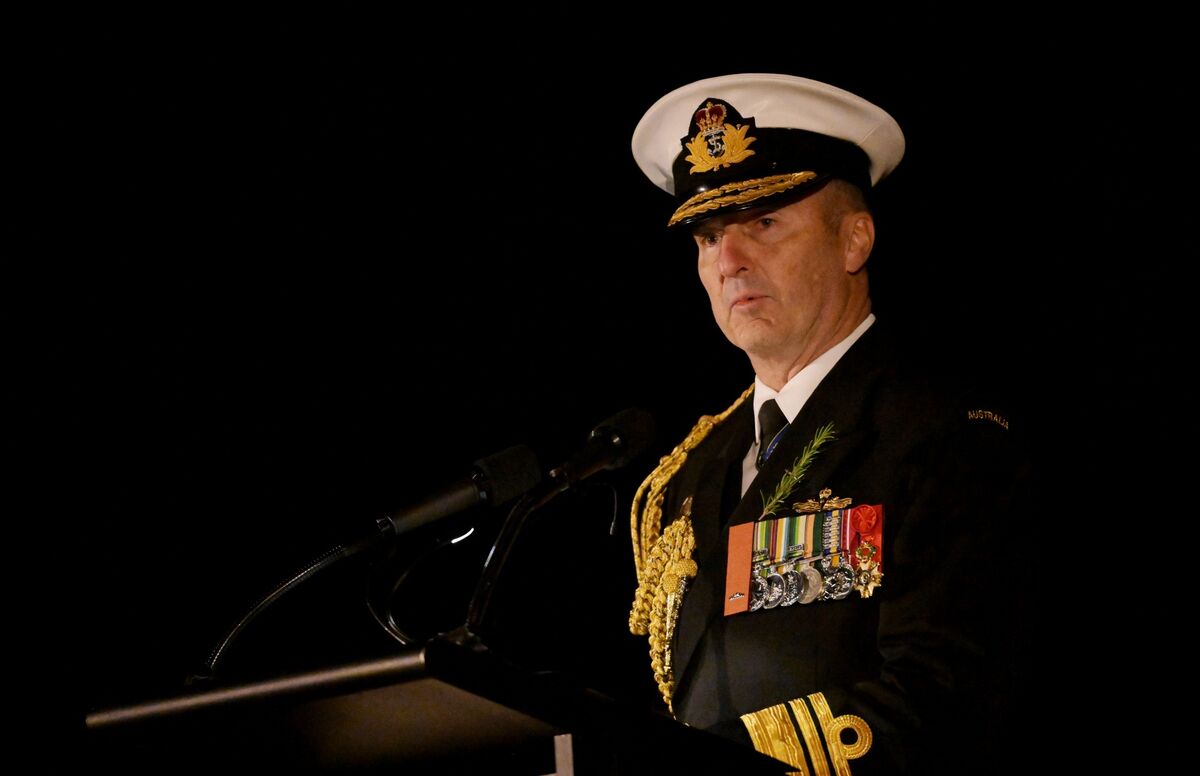
Australia's military said it is ready to work with allies if needed in Asia or elsewhere after joint drills in the South China Sea with the US, Philippines, and other partners. Admiral David Johnston said the forces have already tested, trained, and practiced coordinated operations, underscoring alliance readiness rather than announcing any new deployment or policy shift.
The market implication is less about one-off exercises and more about a persistent re-pricing of Indo-Pacific deterrence as a coalition problem. That shifts budget probability toward multi-year procurement, interoperability software, communications, maritime surveillance, and munitions stockpiles rather than legacy platform headlines. The beneficiaries are the vendors that sit inside allied standards, classified networks, and sustainment chains; the losers are firms exposed to slower, discretionary sovereign spending in regions that may now defer capital toward defense readiness.
The second-order effect is that allied coordination lowers execution risk for any future contingency, which paradoxically increases the value of pre-positioned inventory and domestic industrial capacity. That should support defense primes with munitions backlogs and near-term delivery capacity, while pressuring subcontractors that are already capacity-constrained and may face wage/input inflation. Watch for incremental demand in under-the-radar enablers: secure radios, satellite bandwidth, ISR analytics, port logistics, and ship repair, where budget dollars can move quickly without a headline procurement cycle.
From a timing standpoint, this is a months-to-years story, but the next catalyst is any new joint exercise, basing announcement, or supplementary appropriations bill tied to regional readiness. The main reversal risk is diplomatic de-escalation that reduces urgency, but even that likely only slows the rate of spend rather than reversing it, because alliance coordination once demonstrated tends to become embedded in doctrine and procurement planning. The bigger tail risk is an actual regional flashpoint, which would accelerate orders, widen delivery premiums, and compress available capacity across the defense supply chain.
The consensus may be underestimating how much of this spend will bypass headline primes and flow into the digital and logistics layers that make coalition warfare usable. That creates a more attractive risk/reward in adjacent enablers than in the most obvious defense names, which already embed a lot of geopolitical optionality. In short, this is a call to own the picks-and-shovels of alliance integration, not just the platforms.
AI-powered research, real-time alerts, and portfolio analytics for institutional investors.
Request DemoOverall Sentiment
neutral
Sentiment Score
0.05
