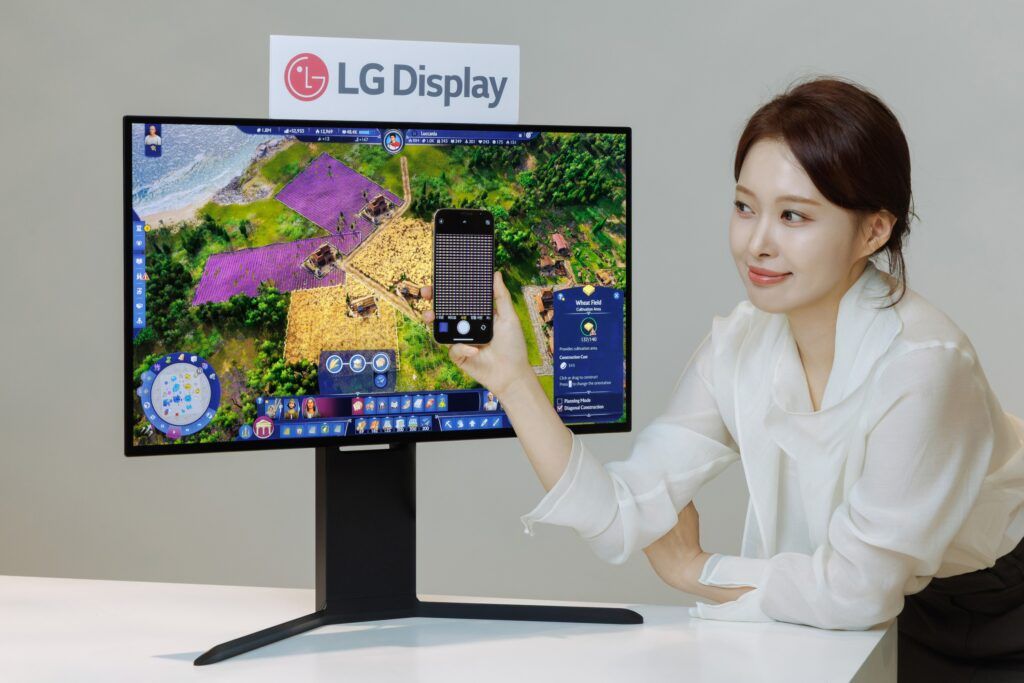
LG Display has developed a 27-inch 4K OLED gaming panel with a native 240 Hz refresh rate that uses a true RGB striped subpixel layout — the first high-refresh OLED to do so — built on its 4th‑gen Tandem WOLED technology. The panel targets improved color accuracy and reduced text fringing at the expense of peak brightness (cited at 1,000 nits peak and 250 nits full‑screen APL versus prior 1,500 nits), positioning LG Display to better compete with QD‑OLED offerings ahead of CES 2026; pricing and availability have not been disclosed. Investors should view this as a product/technology advancement that may modestly influence competitive dynamics among display suppliers rather than an immediate market-moving earnings event.
Market structure: LG Display’s RGB-striped 4K/240Hz panel is a premium niche win for panel makers and high-end monitor OEMs — expect LG to command 10–30% ASP premium vs incumbent WOLED/QD-OLED gaming panels initially, with SKU scarcity for 6–12 months. Direct beneficiaries: LG Display (panel ASPs, margins), ASUS/Acer/Alienware product lines, and high-end GPU vendors (NVIDIA, AMD) because 4K@240Hz raises GPU performance demand. Losers: traditional LCD leaders (BOE, AUO) and possibly Samsung Display in the monitor segment if LG captures share.
Risk assessment: Tail risks include yield/brightness shortfalls (if real-world HDR <1,000 nits perception reduces demand), supplier bottlenecks for tandem WOLED stacks, or aggressive Samsung counter-launches; each could halve expected premium within 3–9 months. Immediate catalyst risk: CES 2026 reviews (days–weeks) and initial OEM orders (0–3 months). Hidden dependencies: OS/font rendering adoption and GPU adoption rates (consumer upgrade cycles) are second-order drivers of unit demand over 12–24 months.
Trade implications: Tactical alpha: small, event-driven longs into CES (2–4% position sizes) with option hedges; medium-term rotation into semiconductor/graphics suppliers (NVDA) and OLED materials (OLED/UDC) for 3–12 months. Pair trades: long LG Display, short BOE/AUO to capture ASP migration; use 3–6 month call spreads on LG and NVDA rather than outright longs to limit downside. Rebalance after independent lab/retailer shipment data 30–90 days post-CES.
Contrarian angle: The market may overvalue the novelty and underprice adoption friction — 1,000 nits peak vs 1,500 nits could keep many HDR-first buyers on QD-OLED; initial volumes could be low, producing 20–40% realized sales below sell-side forecasts in H1 following launch. Historical parallel: early QD-OLED rollouts were high-margin but low-volume for >12 months; same could happen here, so size positions accordingly and prefer option-defined-risk structures.
AI-powered research, real-time alerts, and portfolio analytics for institutional investors.
Request DemoOverall Sentiment
mildly positive
Sentiment Score
0.35
Ticker Sentiment
