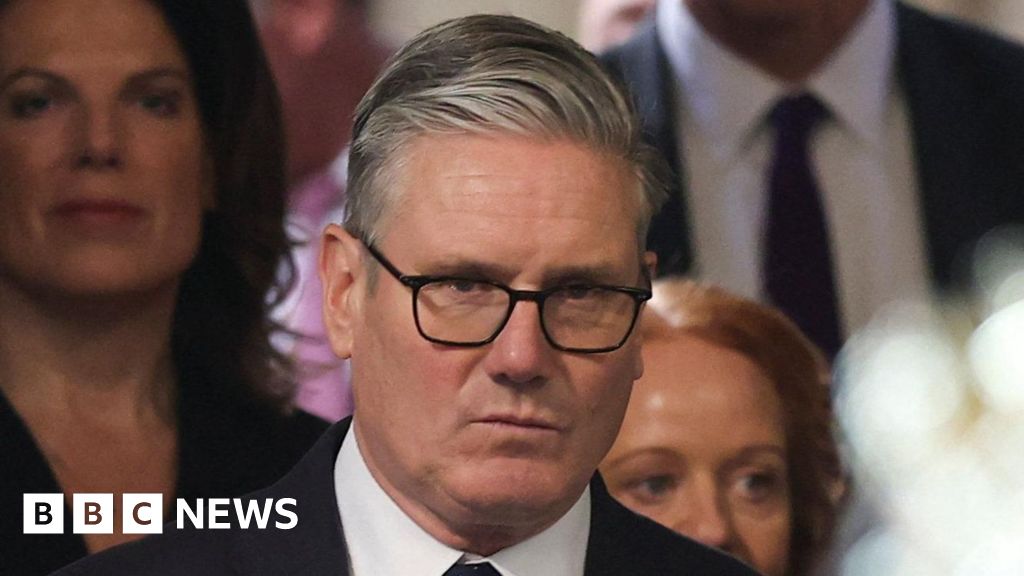
UK Prime Minister Sir Keir Starmer is facing mounting internal pressure after Labour lost nearly 1,500 councillors in local elections, prompting resignations from senior figures and calls from nearly 90 MPs for him to resign or set a timetable. Potential leadership challengers include Angela Rayner, Andy Burnham and Wes Streeting, while Starmer says he will continue governing and that no formal challenge has been triggered. The story is politically significant but has limited direct market impact unless it escalates into a full leadership contest.
The market implication is not a binary “PM exits or stays” headline; it is a widening probability distribution around policy continuity. For UK risk assets, the first-order loser is domestic-duration sentiment: a leadership challenge would likely force a pause in fiscal signaling, delay spending decisions, and widen the discount rate on UK small/mid caps whose earnings are more leveraged to local demand than to global FX translation. The second-order winner could be non-UK earners and defensive balance sheets, because political noise tends to compress the multiple of domestically exposed cyclicals before it changes macro data. The more important signal is coalition fragility. When a governing party starts to internally price leadership turnover, the market usually extrapolates weaker discipline around taxes, welfare, and budget credibility over the next 3-6 months. That raises the tail risk of a softer fiscal stance into the next budget cycle, which is more relevant for gilts and sterling than the leadership contest itself. If the contest is prolonged, the highest-beta reaction should show up in front-end rates and financials with UK retail exposure, as policy uncertainty increases the odds of slower loan growth and tighter credit creation. The contrarian view is that much of the reputational damage may already be embedded in UK domestics after the election and subsequent policy reversals; a leadership reset could actually reduce uncertainty if it installs a clearer growth/discipline narrative. In that scenario, the near-term pain trade is consensus short-UK, especially if the opposition is perceived as less disruptive on fiscal housekeeping than the current stewardship. The key reversal trigger is not a new leader’s personality but whether the party can rapidly present a credible, unified budget path within weeks, not months. Second-order, a leadership change that improves perceived competence could marginally support sterling and UK financials via lower political risk premium, but only if it comes without a wider policy lurch. Without that, the market will treat the episode as another sign that Britain’s governing framework is becoming harder to underwrite, which is structurally negative for valuation multiples in UK domestic equities.
AI-powered research, real-time alerts, and portfolio analytics for institutional investors.
Request DemoOverall Sentiment
mildly negative
Sentiment Score
-0.20
