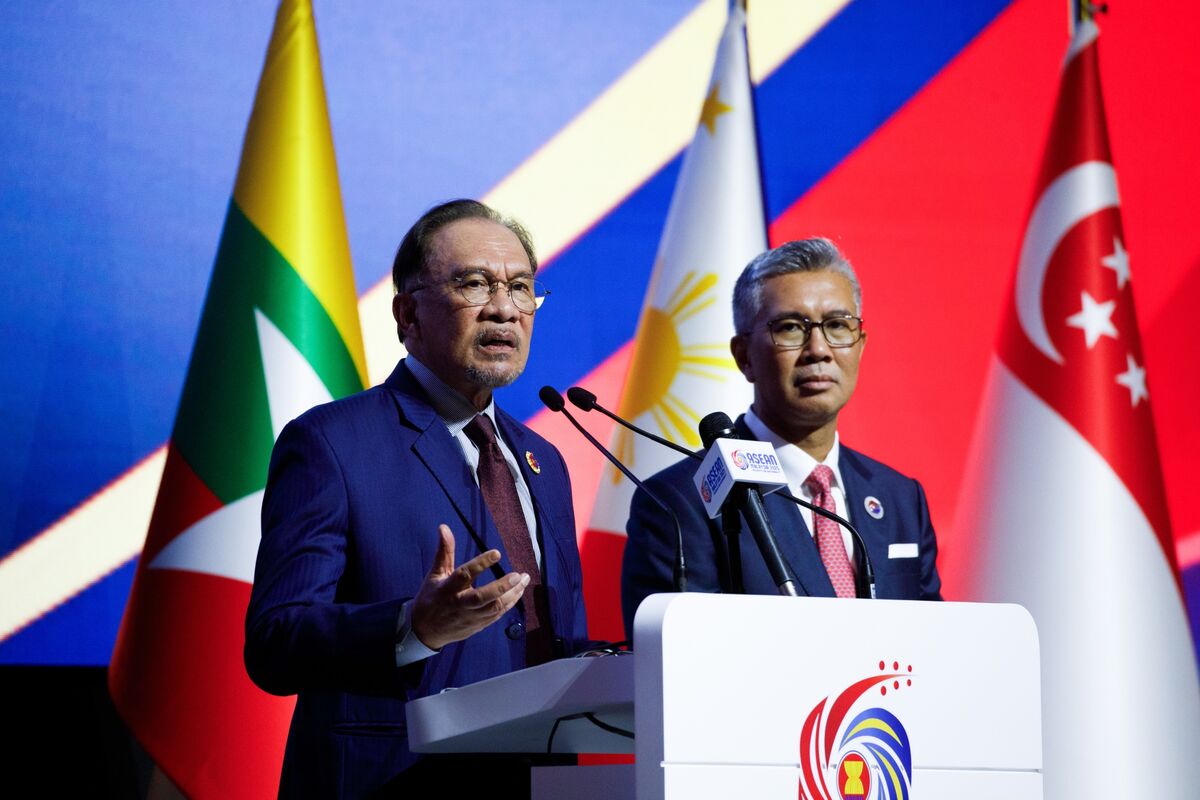
Southeast Asian leaders issued a joint statement criticizing unilateral tariff actions, a veiled reference to the United States, the region's largest export customer. The statement, released during an ASEAN meeting in Kuala Lumpur, expressed concern over the rise in trade and investment restrictions and the increasing risk of global economic fragmentation. This signals potential trade tensions and could impact investment strategies in the region.
Leaders of the Association of Southeast Asian Nations (ASEAN) have issued a joint statement from Kuala Lumpur, Malaysia, expressing concern over the "continued rise in unilateral actions relating to tariffs and other trade and investment restrictions." This statement, while not explicitly naming any country, is a veiled reference to trade measures potentially enacted by the United States, which stands as the ASEAN region's largest export customer. The leaders highlighted the "growing risk of global fragmentation" as a consequence of these unilateral policies. This development carries a "moderately negative" sentiment and a "cautious" tone, reflecting apprehension about potential disruptions to international commerce and supply chains. The situation underscores escalating geopolitical tensions and directly impacts themes crucial to investors, including "Trade Policy & Supply Chain," "Tax & Tariffs," and the overall investment climate in "Emerging Markets" within Southeast Asia, suggesting a potentially more challenging environment for economies heavily reliant on international trade.
AI-powered research, real-time alerts, and portfolio analytics for institutional investors.
Request DemoOverall Sentiment
moderately negative
Sentiment Score
-0.50
