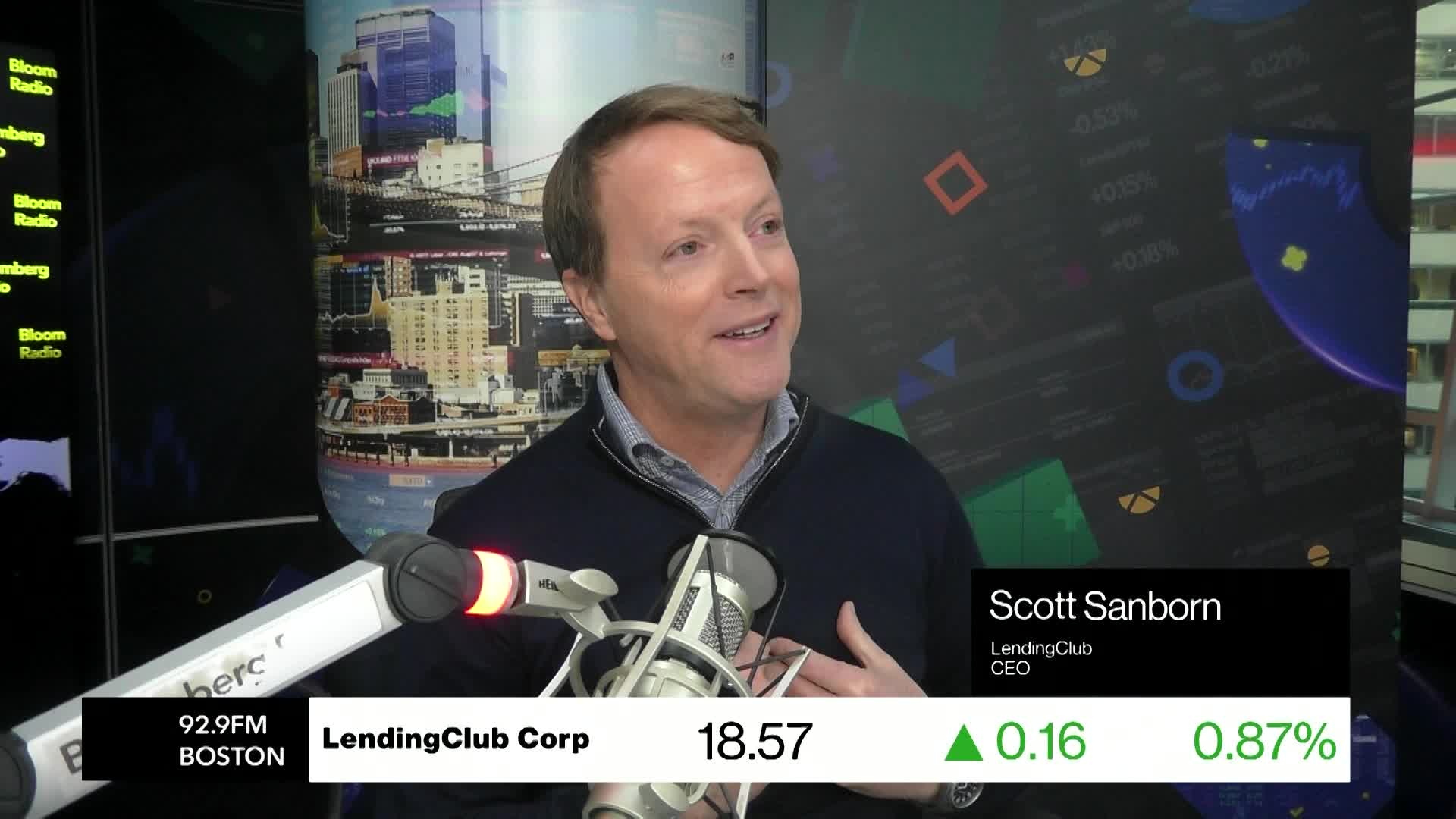
LendingClub CEO Scott Sanborn outlined a strategy focused on a ‘middle majority’ customer base (roughly one-third of the U.S. population, average income ~$125,000) and plans to double annual originations to $18–$20 billion. The business is ~80% credit-card refinancing (addressable market ~ $1.3 trillion of card balances at very high rates, cited ~23%), with LendingClub holding a large share of its own loans since its 2021 bank acquisition to test products and preserve credit performance; management reports delinquencies ~30–40% below industry peers and runs 200+ live tests. Growth adjacencies include major-purchase financing (50%+ YoY) and unsecured home-improvement loans with controlled use-of-proceeds and vendor payouts, underpinning a narrative of resilient consumer repayment and scalable originations.
Market structure: LendingClub (LC) and other unsecured personal-loan fintechs are positioned as clear winners if they can capture meaningful share of the $1.3T high-rate credit-card market (CEO cites ~80% refiable market). Holding loans on-balance-sheet gives LC faster product iteration and pricing power versus card issuers that rely on rewards-driven customer inertia; if LC reaches $18–20B annual originations it can materially compress card APR-driven interest income over 1–3 years. Consumer ABS demand should firm (tightening spreads) while bank/card net interest margins face downward pressure as balances migrate.
Risk assessment: Key tail risks are (1) macro deterioration driving charge-offs (+150–300bps above current levels), (2) funding/warehouse line withdrawal increasing funding cost by 200–500bps, and (3) regulatory scrutiny over “controlling use of proceeds.” Immediate (days) risk is sentiment; short-term (weeks–months) is originations/funding; long-term (quarters–years) is credit-cycle losses and capital intensity. Hidden dependencies: securitization appetite, warehouse lines, and accuracy of proprietary underwriting/FICO proxies.
Trade implications: Tactical trade is to lean long LC exposure (equity or call-spread) into the marketing ramp over the next 2–12 weeks, paired with modest shorts in legacy card issuers (COF, SYF) to express wallet-share shift. Buy exposure to credit analytics (FICO) as secular beneficiary of increased refis and scoring demand. Use option structures to cap downside (buy-call spread on LC and buy puts on card issuers) with 6–12 month expiries to capture the origination-cycle.
Contrarian angles: Consensus underestimates funding constraints and overestimates sustainable credit outperformance; originations can double only if funding and securitization capacity scales without margin squeeze. Historical parallels (marketplace lenders post-2015) show vintage degradation once funding tightens; aggressive refi growth may invite CFPB/AG attention and trigger regulatory or capital-based slowdowns, creating non-linear downside and a buying opportunity for disciplined holders.
AI-powered research, real-time alerts, and portfolio analytics for institutional investors.
Request DemoOverall Sentiment
moderately positive
Sentiment Score
0.40
Ticker Sentiment
