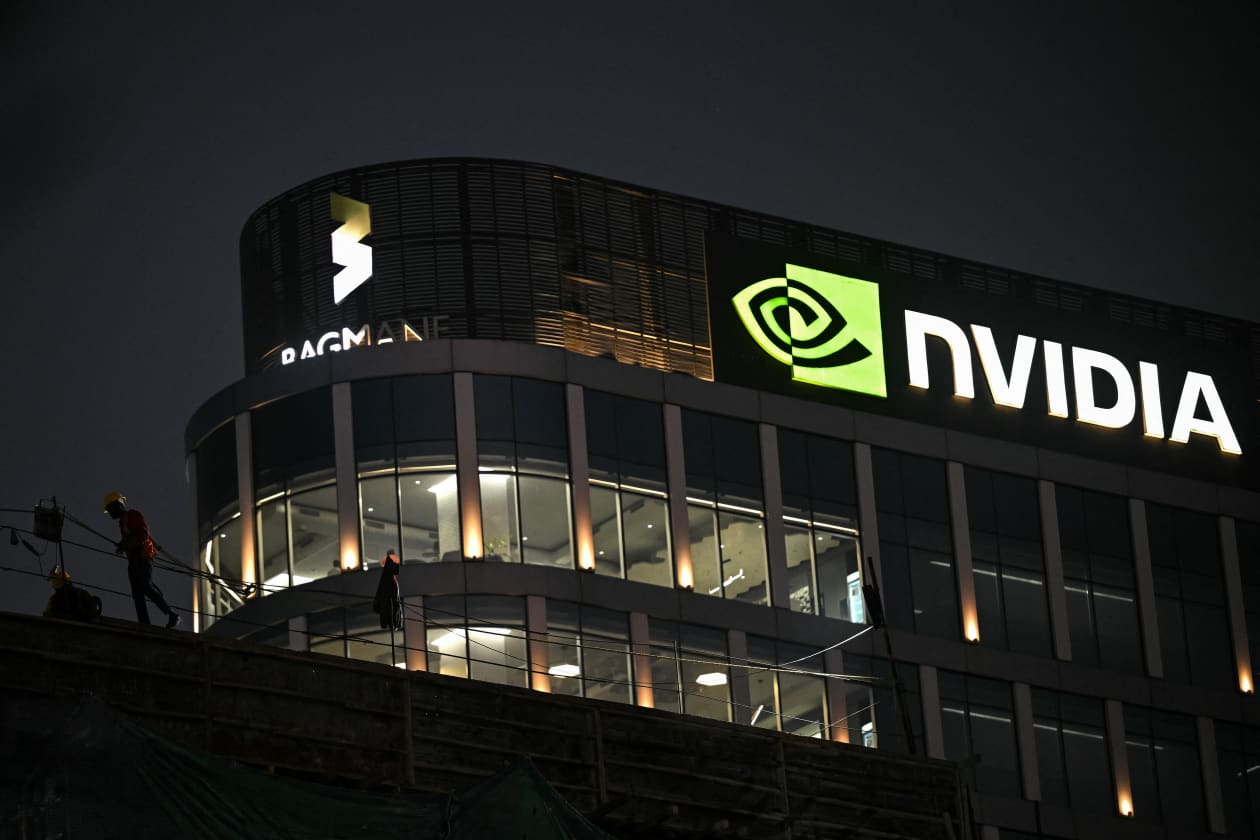
Nvidia’s upcoming earnings report is expected to matter less for the headline beat and more for what it reveals about the AI buildout, memory supply constraints, and revenue generation beyond GPUs. Morgan Stanley is focused on how newer products are affecting financials and whether Nvidia can diversify its revenue base. The article is largely a preview of investor debates rather than a new financial development.
The real market read-through is not on headline earnings quality, but on whether Nvidia’s revenue mix is beginning to shift from a pure compute monoculture into a broader platform franchise. If management can show credible traction outside GPUs, the multiple can hold even if near-term growth decelerates; if not, investors may start to treat the stock as a cyclical capex beneficiary rather than a durable AI platform winner. The memory-tightness angle matters because it is a leading indicator of whether the AI supply chain is still demand-constrained or starting to normalize — and normalization would compress pricing power before unit growth rolls over.
Second-order winners are likely upstream component and packaging beneficiaries with pricing leverage, while the more exposed losers are AI infrastructure buyers that are already stretched on deployment economics. A memory crunch can temporarily support supplier margins, but it also raises total system cost, which eventually pushes hyperscalers to delay marginal orders or demand better ROI proof. That creates a subtle timing risk: the next leg of AI spending may shift from broad-based accelerator buying to more selective deployments, favoring vendors with software attach and disfavoring pure hardware exposure.
The key risk window is the next 1-2 quarters, not the next several years. If Nvidia’s commentary suggests memory constraints are easing or that non-GPU revenue is still immaterial, the market could de-rate the stock quickly as investors realize earnings quality is still overwhelmingly tied to one product cycle. Conversely, if newer products are pulling through meaningful revenue and gross margin remains resilient, that would extend the AI capex runway and delay the debate about peak growth.
The contrarian miss is that consensus may be over-focusing on beat/raise optics and underweighting the composition of growth. A company can continue to beat estimates while its incremental economics worsen because revenue quality is narrowing and the customer base is increasingly concentrated in a few large buyers. That sets up a potential asymmetry: the stock can still rise on strong reported numbers, but the downside reaction to any evidence of mix deterioration could be larger than typical beat/miss behavior implies.
AI-powered research, real-time alerts, and portfolio analytics for institutional investors.
Request DemoOverall Sentiment
neutral
Sentiment Score
0.05
Ticker Sentiment
