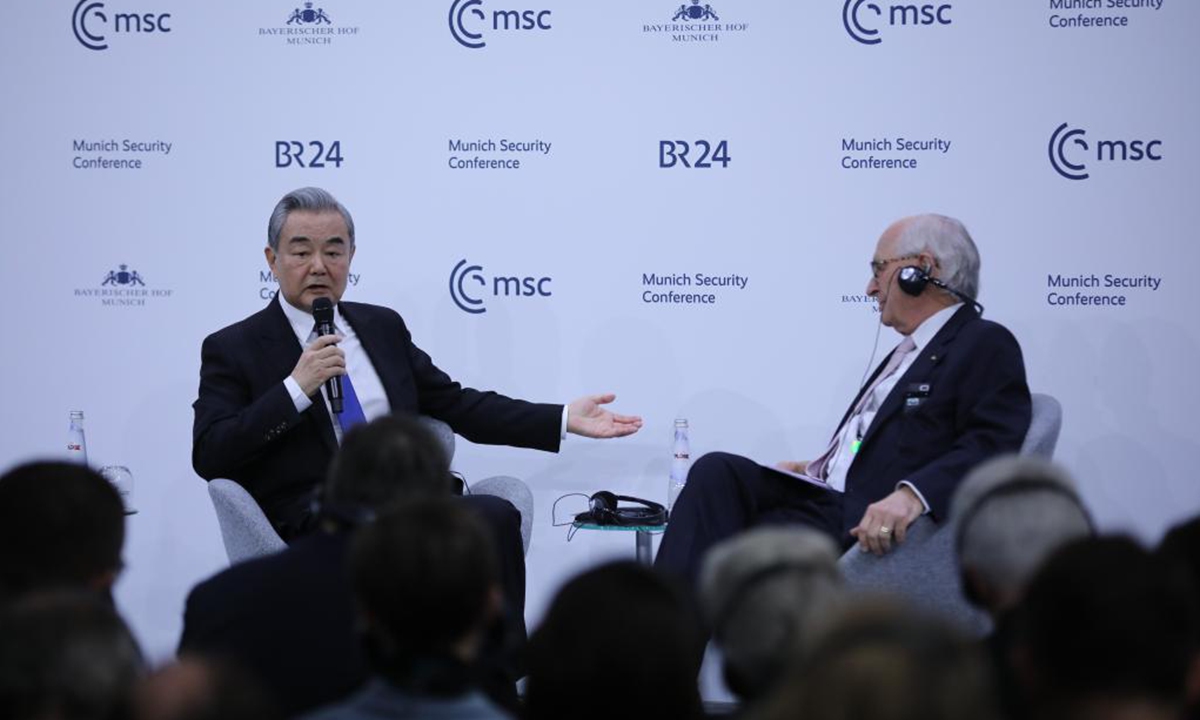
At the Munich Security Conference on Feb. 14, 2026, Chinese Foreign Minister Wang Yi warned of ‘dangerous trends of militarism’ in Japan and specifically rebuked statements by Prime Minister Sanae Takaichi, prompting Japan’s foreign ministry to issue a public rebuttal and lodge a diplomatic demarche. The exchange highlights rising bilateral political tensions and has drawn broad international attention and applause for China’s stance, underscoring the risk of heightened regional security dynamics that could influence defense spending, diplomatic relations and investor risk premia in the Asia‑Pacific.
Market structure: The immediate winners are defense primes (US: LMT, RTX, NOC) and non-China rare‑earth miners (MP, LYC.AX) as higher Japanese/US defense cooperation and supply‑chain security raise demand for hardware and critical materials; expect a 10–25% re‑rating possibility within 6–18 months if Tokyo increases procurement. Losers are broad Japan export cyclicals (EWJ) and regional tourism/logistics plays sensitive to China‑Japan tensions; expect 5–15% relative underperformance in the next 3–6 months. Cross‑asset: USD and gold should act as safe havens, JPY and JGBs likely to show elevated two‑way volatility; oil/LNG risk premium could spike +$10–$25/bbl in a severe shipping disruption scenario.
Risk assessment: Tail risk—localized military incident around Taiwan or maritime blockade—remains low probability (<10% per year) but high impact (equities down 15–30%, oil +20%+ within weeks). Timeline: days—volatility spikes; weeks/months—risk premium repricing and defense orders; quarters/years—structural onshoring and supply‑chain reconfiguration benefiting non‑Chinese miners and US OEM contractors. Hidden dependencies include US policy response, Japan’s budget vote (within 30–60 days), and Taiwan incidents; these are binary catalysts that amplify moves.
Trade implications: Tactical plays should overweight defense primes (2–4% AUM each) and rare‑earth miners (1–2% AUM), hedge Japan beta via EWJ puts or short exposure, and buy volatility on USD/JPY and regional equity indices for 1–3 month windows. Use 6–12 month call spreads on LMT/RTX to limit premium spend and 3‑6 month puts on EWJ to hedge tail risk; target 12–18 month horizons and set 8–10% stop losses. Entry: deploy in tranches over next 2–6 weeks, accelerate on confirmation (Japan defense budget +10% vs prior year).
Contrarian angles: Consensus focuses on headline rhetoric; markets may overprice immediate escalation while underpricing multi‑year rearmament and supply rewiring. If Takaichi moderates policy or bilateral talks resume, defense names could pull back 10–20% quickly—so pair trades (long US defense, short Japan equities) and option hedges matter. Historical parallel: post‑2014 NATO rearmament—initial spike then multi‑year secular budgets; expect similar multi‑year structural winners here.
AI-powered research, real-time alerts, and portfolio analytics for institutional investors.
Request DemoOverall Sentiment
moderately negative
Sentiment Score
-0.32
