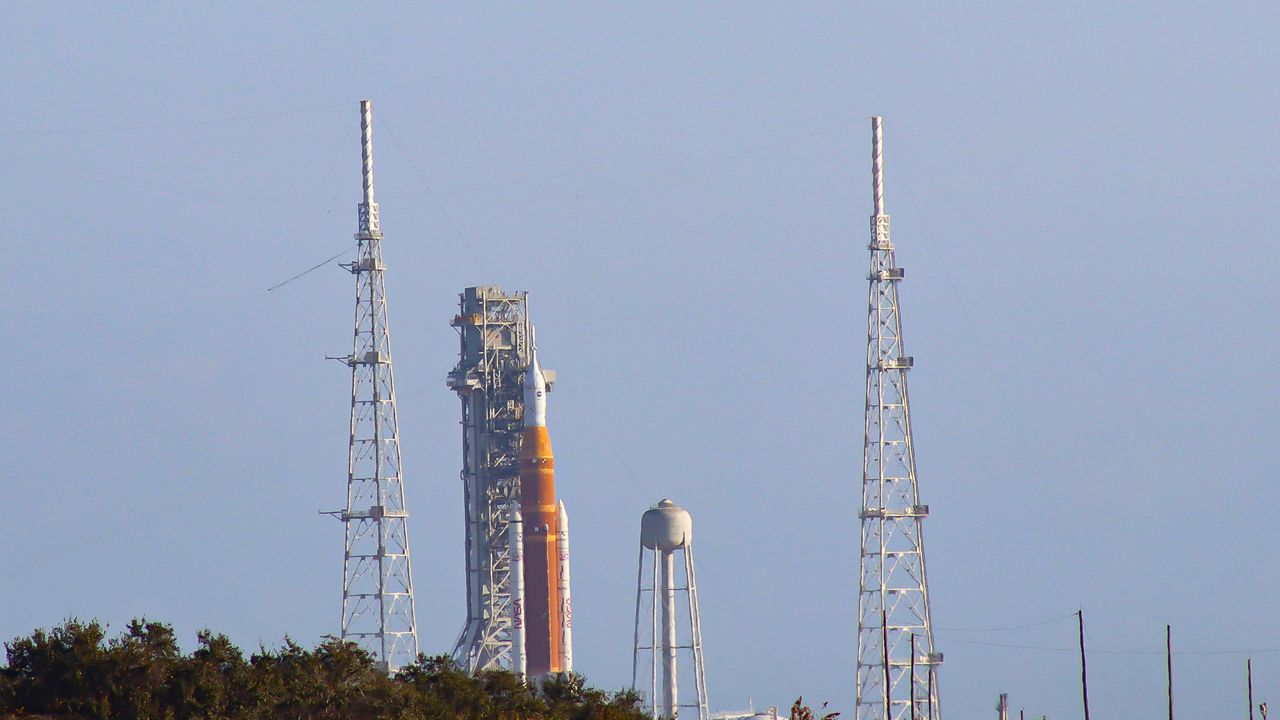
Launch scheduled Apr 1 with a two-hour window opening at 6:24 p.m. ET; a 322-foot (98.27 m) Space Launch System will carry four crew on a 10-day Artemis II lunar flyby. The mission follows multiple slips — including heat‑shield Avcoat issues on uncrewed Artemis I and later liquid hydrogen leaks and a helium flow problem — and could set a new distance record beyond Apollo 13’s 248,655-mile mark when the crew travels roughly 4,600 miles past the moon’s far side, during which communications with Earth will be lost for about 30–50 minutes.
The near-term market reaction will be dominated by program execution optics rather than revenue recognition — a clean flight will decompress program risk premium on primes tied to SLS/Orion (Lockheed, Boeing, Northrop, Aerojet), whereas another anomaly or further delays materially increases program cadence uncertainty and pushes NASA toward commercial alternatives. Supply-chain effects are concentrated: recurrent cryogenic hydrogen leaks and heat-shield rework imply multi-month follow‑on contracts for valve/seal/composite vendors and requalification work for thermal‑protection system suppliers, which can meaningfully boost small-cap aerospace parts vendors’ revenues on a lumpy basis over 3–12 months.
Tail risks are binary and fast: a successful mission in the next 30–90 days is a positive catalyst that should compress insurance spreads and bolster near-term procurement budgets, but a failure or additional leak could trigger Congressional hearings, reprogramming of funds, and expedited contracting to lower-cost commercial launch providers over 6–24 months. Key monitoring items are repeat cryo leaks, heat‑shield batch test results, and any formal NASA cost/schedule rebase — each event has the potential to move related equities +/-25–40% within weeks depending on narrative.
Consensus celebrates mission symbolism; investors should instead focus on practical cash flow and contract timing. If the flight proceeds cleanly, primes with fixed-price backlog and rework exposure (esp. suppliers of Avcoat-style TPS and cryo hardware) should see order reallocation and margin repair; if not, expect accelerated wins for lower-cost commercial providers and a multi-quarter funding tug-of-war that favors defense‑diversified names with recurring government revenue.
AI-powered research, real-time alerts, and portfolio analytics for institutional investors.
Request DemoOverall Sentiment
neutral
Sentiment Score
0.00
