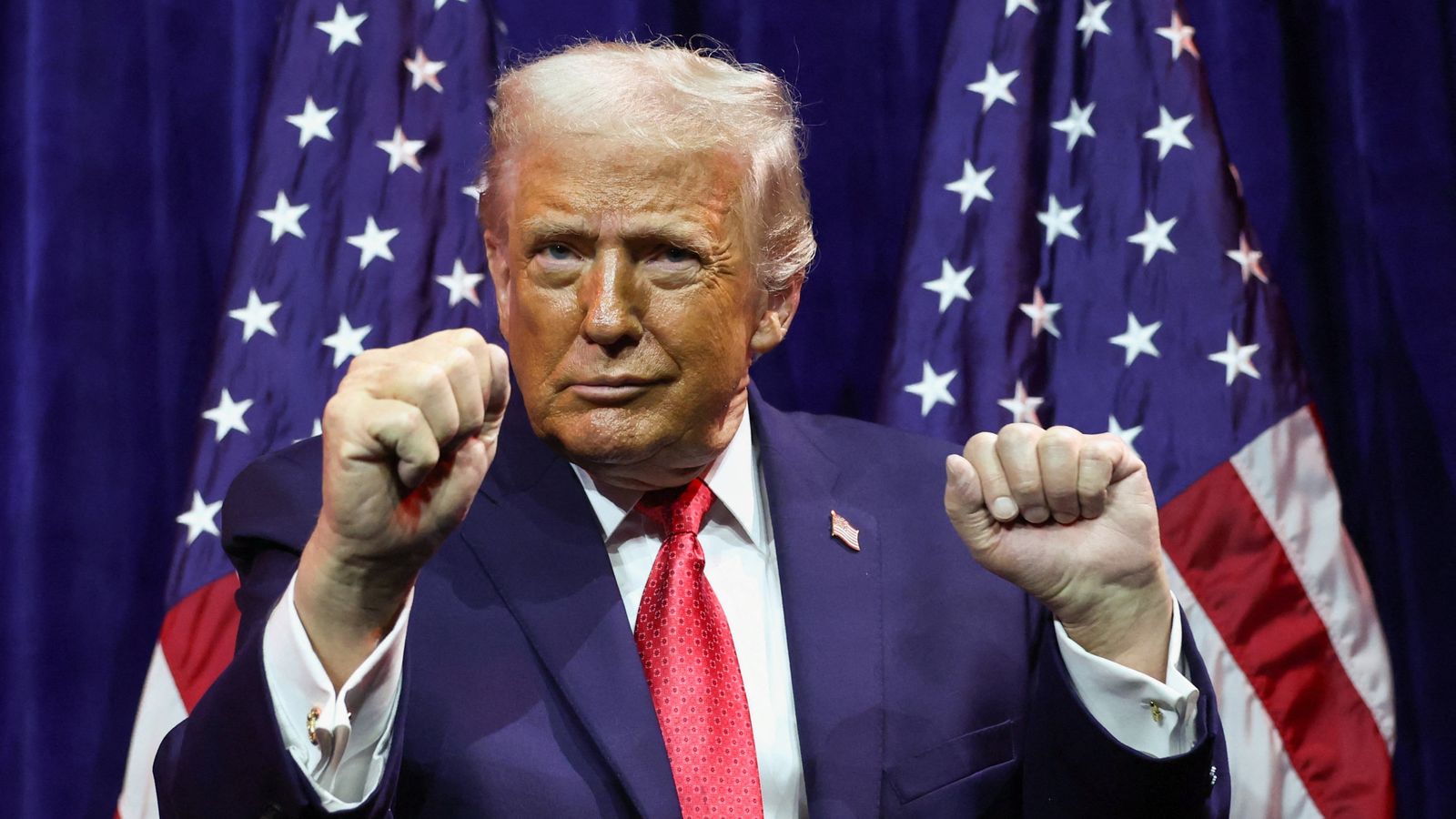
President Donald Trump announced Venezuela's interim government will be "turning over" 30–50 million barrels of "high quality" crude to the US—valued at upwards of $2bn—to be held on storage ships, unloaded at US docks and sold at market prices with proceeds controlled by Trump and executed by Energy Secretary Chris Wright. The declaration follows a US raid that captured Nicolás Maduro, the seizure of tankers and tightened sanctions, heightening geopolitical and legal risks that could drive volatility in crude markets, complicate re-entry plans for US oil majors and create sanction-exposure for investors in Venezuela-linked assets.
Market structure: Seizing 30–50m barrels (~$2bn) is a headline-sized but not market-moving volume versus ~100m bpd global demand; if delivered over 3–6 months it can supply ~160k–550k bpd of heavy crude-equivalent, easing Gulf Coast refinery feedstock and pressuring heavy-light spreads by an estimated $3–6/bbl near-term. Chevron (CVX) is the direct beneficiary given existing Venezuelan footprint; Exxon (XOM) and Conoco (COP) face mixed outcomes — potential access reopening is optional and politically contingent, compressing their near-term optionality value.
Risk assessment: Tail risks are large — legal challenges, international retaliation, tanker seizures, or escalation that tightens supply (oil +$10–$30/bbl) within days to weeks. Short-term (0–3 months) volatility will be headline-driven; medium-term (3–12 months) depends on re-entry timelines (Trump suggested 18 months) and OPEC+ reactions; long-term (1–3 years) hinges on asset rehabilitation CAPEX and political/legal ownership uncertainty. Hidden dependency: delivered barrels are heavy crude needing diluent/upgrade; effective light-equivalent supply may be 10–25% lower.
Trade implications: Favor selective long exposure to CVX and Gulf Coast refiners/midstream that can accept heavy crude; implement option structures to cap downside while capturing 6–12 month upside. Consider relative short exposure to integrated peers that lack Venezuela access (COP), and use volatility trades on XOM/CVX around White House meetings and sanction rulings.
Contrarian angles: The market may overestimate immediate supply — technical/operational limits mean realized flows could be delayed months; conversely, escalation risk is underpriced. Historical parallels (sanctions-era seizures) show legal and insurance frictions often mute physical flow for 3–12 months. A mispriced heavy-light spread or a spike in tanker insurance (>=+10%) would create rapid repricing opportunities.
AI-powered research, real-time alerts, and portfolio analytics for institutional investors.
Request DemoOverall Sentiment
moderately negative
Sentiment Score
-0.50
Ticker Sentiment
