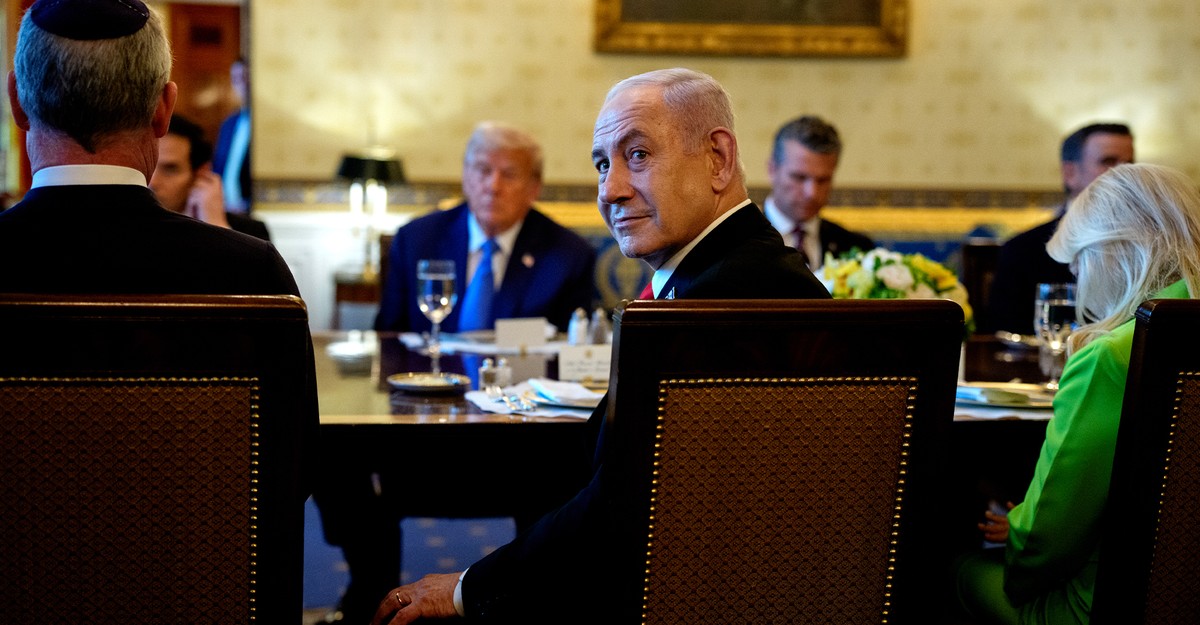
President Trump has publicly broken with Israeli Prime Minister Benjamin Netanyahu, expressing frustration over the Gaza famine and accusing Netanyahu of prolonging the conflict for political reasons. This divergence is driven by Trump's desire to fulfill campaign promises, stabilize the Middle East for business, and manage domestic political pressures from his 'America First' base. Despite the escalating rhetoric and dispatch of a U.S. envoy, the article indicates no significant policy shift, with Trump continuing to blame Hamas for cease-fire failures and rejecting Palestinian state recognition, signaling increasing U.S. pressure while maintaining core strategic alignment.
A significant rhetorical divergence has emerged between President Trump and Israeli Prime Minister Netanyahu concerning the Gaza conflict, primarily driven by the humanitarian crisis and Trump's perception that Netanyahu is prolonging the war for political self-preservation. This public friction, underscored by Trump's comments on the Gaza famine and the dispatch of a U.S. envoy for an independent assessment, reflects pressure from his 'America First' political base and his objective to stabilize the Middle East for commercial interests, such as expanding the Abraham Accords. However, despite the escalating rhetoric and a 'moderately negative' sentiment score of -0.5, the situation is characterized by uncertainty; the administration insists there is no 'significant rupture' and has made no substantive U.S. policy changes. Trump continues to hold Hamas responsible for the failure of cease-fire talks and opposes initiatives like the recognition of a Palestinian state. The low market impact score of 0.3 suggests that, for now, markets perceive this as political posturing rather than a precursor to a material shift in U.S. strategic alignment or regional stability.
AI-powered research, real-time alerts, and portfolio analytics for institutional investors.
Request DemoOverall Sentiment
moderately negative
Sentiment Score
-0.50
Ticker Sentiment
