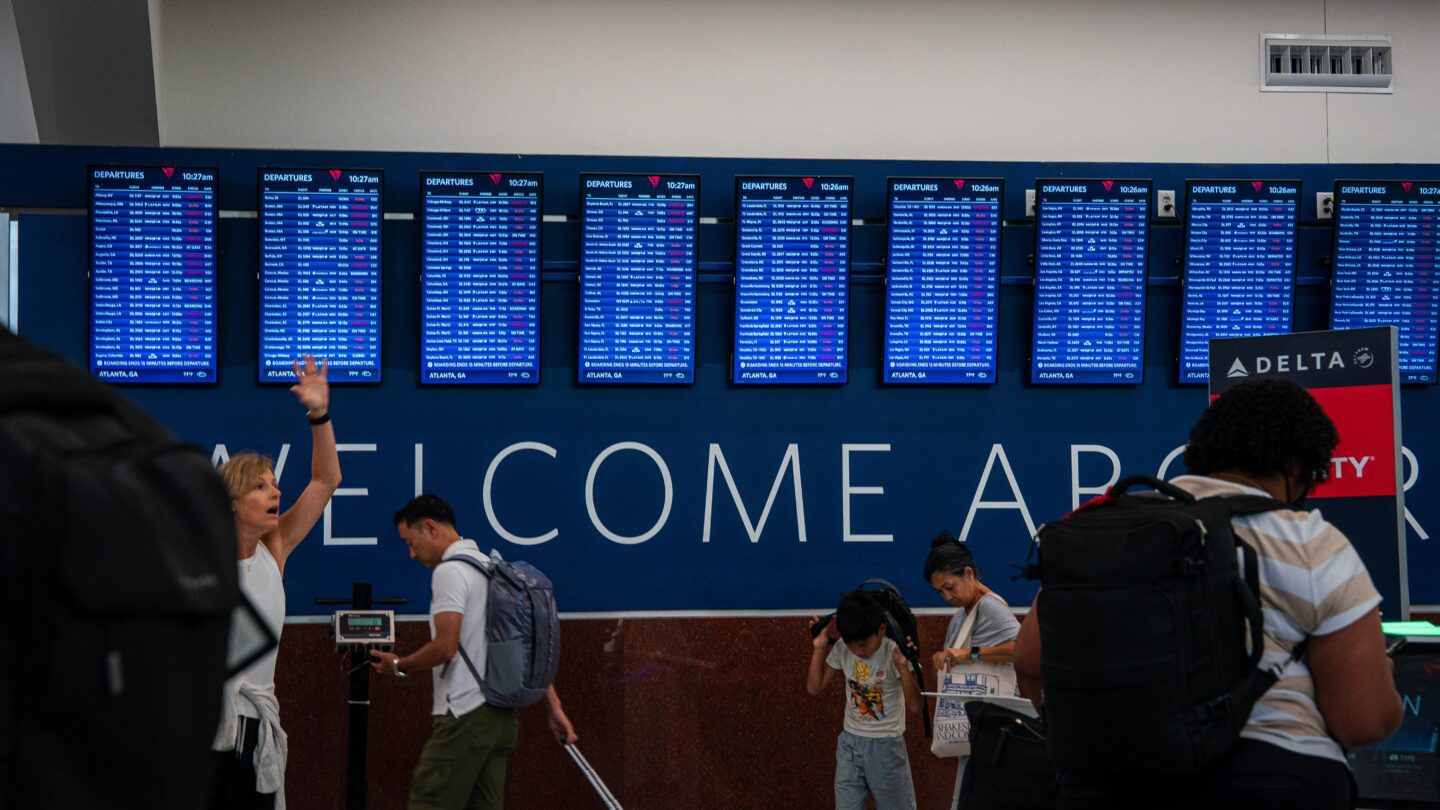
Delta extends an ATL rebooking waiver: passengers booked through March 30 can rebook without additional fees and rebooked travel must begin by April 6; fare differences waived if remaining in the same cabin and booking class. The move responds to the TSA's reported 'longest wait times ever' amid a partial government shutdown — President Trump signed an executive action to pay TSA workers after Congress failed to act, with ~500 TSA departures and 'thousands' calling out sick, and Delta temporarily suspending some specialty services for members of Congress.
Delta’s Atlanta exposure amplifies operational risk non-linearly: delays at a single mega-hub cascade through crew rotations, aircraft positioning and partner connections, so a 24–72 hour persistence in elevated security wait times can translate into multi-day blockages of aircraft and outsized re-accommodation costs. Because the waiver limits revenue recovery to same-cabin/class rebookings, the direct ticket revenue hit is contained, but indirect costs — crew overtime, passenger accommodations, missed regional feed into international trunks, and incremental customer recovery spend — are the primary P&L vectors to watch over the next 2–8 weeks.
Second-order beneficiaries and losers are asymmetric. Point-to-point carriers and LCCs with decentralized networks (lower hub concentration) are positioned to capture some near-term demand displaced from hub-reliant Delta itineraries; airport concession vendors and regional partners that rely on predictable connecting flows will see volatile traffic and margin pressure. Conversely, Delta’s loyalty program and corporate contracts are stickier, so recurring demand loss is less likely unless disruptions extend beyond a few weeks and erode corporate confidence.
Key catalysts and timing: operational improvements can occur fast (days) if TSA staffing is stabilized through emergency pay or temporary contractors, which would materially reduce the rebooking tail-costs; conversely, attrition rates that accelerate over 2–6 weeks create a materially higher probability of rolling cancellations and a larger-than-expected opex shock. Monitor TSA staffing metrics, Delta on-time performance and daily re-accommodation counts on a weekly cadence — a persistent elevation for two consecutive weeks is our trigger for escalating downside exposure.
Contrarian frame: the market’s negative knee‑jerk pricing tends to conflate temporary operational disruption with structural demand deterioration. The waiver is a deliberate containment tool that preserves future revenue and reduces immediate cancellation rates; if TSA staffing is restored quickly, Delta’s stock reaction could be overstated. That said, if disruptions persist, losses are front-loaded and concentrated — making bounded downside option structures more attractive than naked shorts.
AI-powered research, real-time alerts, and portfolio analytics for institutional investors.
Request DemoOverall Sentiment
mildly negative
Sentiment Score
-0.25
Ticker Sentiment
