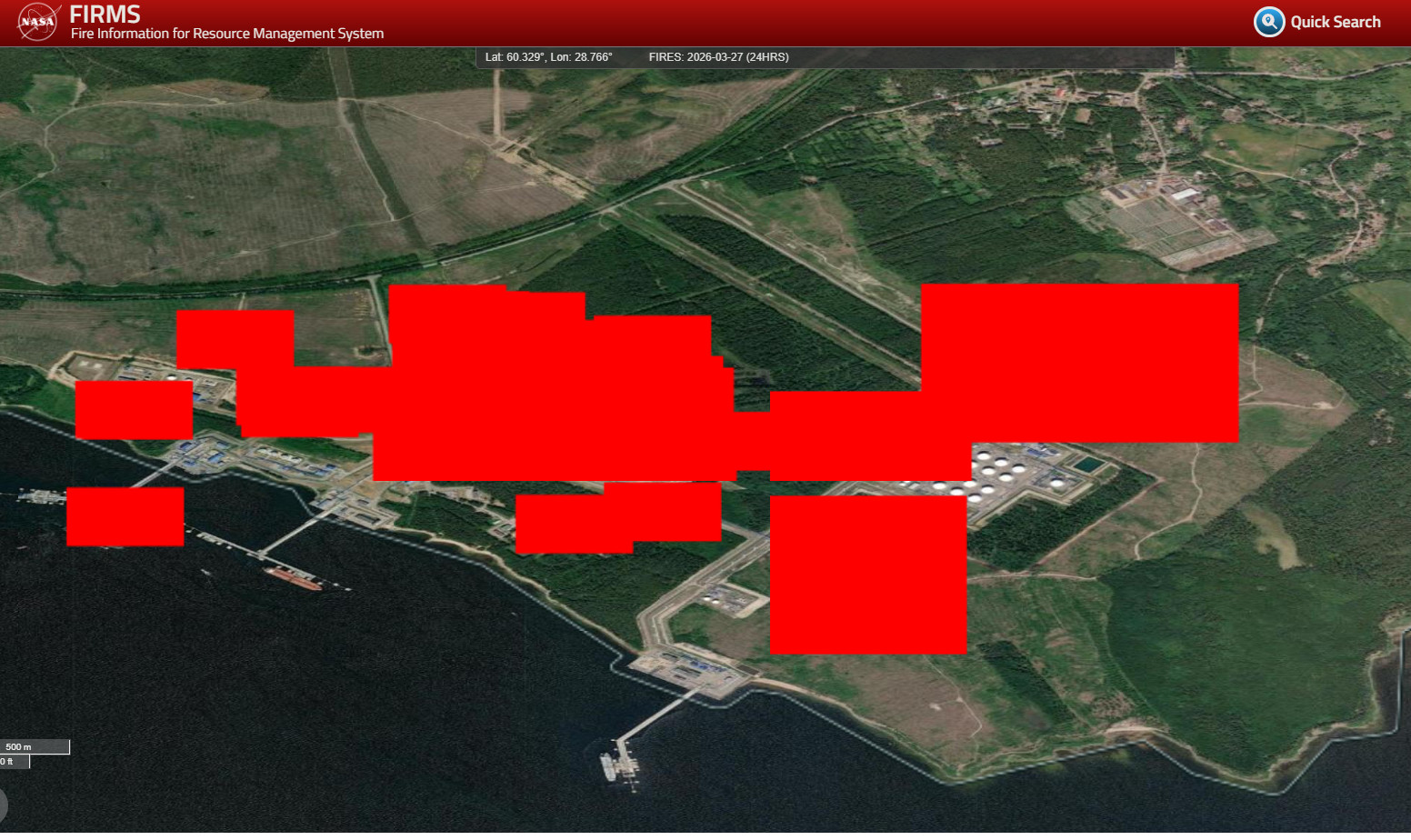
Ukrainian drone strikes have effectively shut down roughly 40% of Russia's seaborne crude export capacity (Ust-Luga and Primorsk), producing an estimated loss of $6–9 billion/month in export earnings; satellite imagery shows fires covering ~6 sq km at Ust-Luga and ~4 sq km at Primorsk and both ports appear empty of tankers. Attacks also struck refineries, storage tanks, multiple tankers, and a shipyard (partially capsizing the icebreaker Purga), while Ukraine's SBU/USF claimed credit and Russian authorities reported large numbers of drones shot down but persistent air-defense failures. This is a material supply shock to global oil flows and elevates geopolitical risk and market volatility for energy markets and logistics tied to Russian crude exports.
The operational success of long-range kamikaze drones shifts the risk premium from a price shock to a logistics-and-insurance shock: expect acute dislocations in spot freight and war-risk insurance that amplify upstream price moves even if physical barrels can be rerouted. In practice this means faster, larger moves in charter rates and time-charter values than in crude prices initially — tanker asset values can rerate materially in weeks as charterers pay up to avoid interdiction.
Over the 1–6 month horizon the market will bifurcate: buyers who can quickly secure alternate logistics (longer voyages, alternative terminals, pipeline swaps) incur higher landed costs but maintain flows, while constrained refiners and trading houses face squeezed margins and inventory risk. That produces a near-term positive for owners of available tonnage and marine insurers, and a negative for refiners and fuel-sensitive operators lacking flexible contracts. Structural responses (additional port hardening, convoying, and increased surveillance) take months and will raise fixed export costs permanently.
Key reversal risks are rapid Russian hardening of port defenses, a diplomatic opening that restores safe maritime corridors, or an orchestrated release from strategic inventories — any of which could collapse the logistic premium within days–weeks. Conversely, escalation (expanded targets, or strikes on chokepoints) could push effects from weeks into multi-year rerouting and onshore storage expansion. Monitor tanker spot curves, war-risk premiums, and European refinery run rates as leading indicators for the persistence of this regime change.
AI-powered research, real-time alerts, and portfolio analytics for institutional investors.
Request DemoOverall Sentiment
strongly negative
Sentiment Score
-0.60
