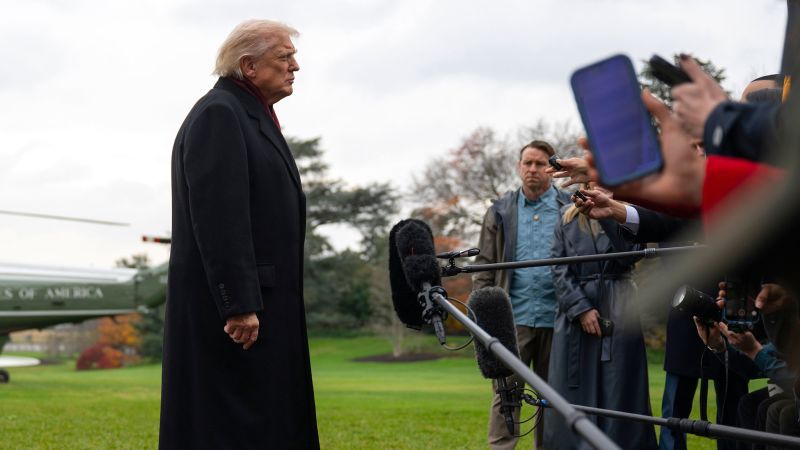
Republican leaders face political risk over expiring enhanced ACA subsidies that cover roughly 22 million people after a reported White House offer of a two‑year extension (with GOP-favored income caps and minimum payments) was scuttled amid intra-party backlash. Polling shows broad public support for extending subsidies (KFF: 74% overall; notable cross-party support) and substantial blame directed at Trump/GOP if they lapse, while Trump’s approval on health care is deeply negative (Fox: 64%-34% disapprove; Reuters-Ipsos: 58%-32%), raising the political and electoral stakes ahead of the 2026 midterms and creating potential near-term pressure on policy and healthcare costs (premiums could double for many) that markets and insurers will watch.
Market structure: If subsidies are extended (likely cost on order $50–100bn/yr), beneficiaries are large diversified insurers (UNH, ELV, HUM) and PBMs/CVS because enrollment and premium stability preserve margin; losers in the headline downside are hospital operators (HCA, UHS) who would face rising uncompensated care if subsidies lapse. Extension reduces short-term default/fiscal shock risk but increases medium‑term deficit pressure—pushing modestly higher Treasury term premia if baked into markets.
Risk assessment: Tail risk = a legislative lapse that causes premiums to rise ~50–100% for segments of the 22m enrollees, producing a sharp drop in enrollment and a spike in bad debt over 1–3 months; probability moderate but impact high for regional hospitals and short‑cycle consumer credit. Key catalysts are the White House proposal/rollout, CMS rate filings (Nov–Dec), and any congressional vote before Christmas; political dynamics mean outcomes will likely resolve inside 30–90 days.
Trade implications: Favor defensive, large-cap managed‑care exposure ahead of a probable extension and hedge duration: establish small long positions in UNH/ELV (2–4% each) and consider short exposure to hospital operators (HCA, UHS) or buy puts on them. Use 3–6 month call spreads on UNH/ELV (buy 3–6 month 5–8% OTM call, sell higher strike) and 3‑month puts on HCA (10% OTM) to express asymmetry while containing premium spend.
Contrarian angles: The market underestimates political pain of taking benefits away — bipartisan extension is the path of least resistance, so outright large shorts on insurers are likely mispriced; conversely, permanent subsidy normalization would tighten long‑term rates and hurt long‑duration assets. Watch for negotiation of caps/minimum payments which could redistribute enrollment risk to higher‑cost cohorts — that nuance creates alpha in single‑stock selection rather than sector bets.
AI-powered research, real-time alerts, and portfolio analytics for institutional investors.
Request DemoOverall Sentiment
mildly negative
Sentiment Score
-0.25
