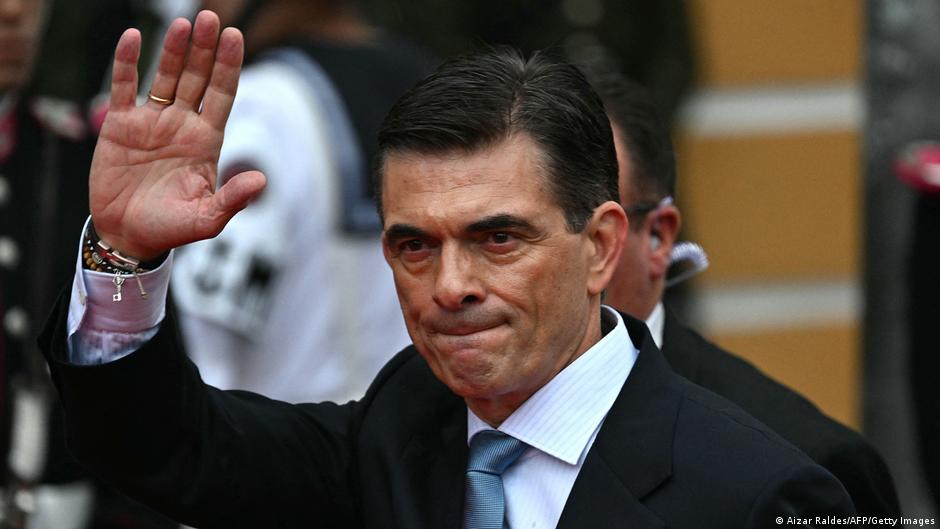
Rodrigo Paz, a pro-business centrist, has been sworn in as Bolivia's president, ending two decades of leftist rule and signaling a significant policy shift aimed at addressing the country's severe economic crisis, marked by dollar shortages, high inflation, and fuel scarcity. Paz has vowed to implement gradual free-market reforms, including cuts to government subsidies, opening the nation's vast lithium reserves to foreign investment, and restoring ties with the United States, while rejecting aggressive fiscal shock therapy or an IMF bailout. This pivot is expected to reorient Bolivia's economy towards market principles and international engagement after years of state-led policies.
Bolivia's new pro-business centrist President Rodrigo Paz signals a profound shift, ending nearly two decades of leftist rule and inheriting a nation grappling with severe economic crisis. The previous socialist government's policies, characterized by nationalized energy, generous subsidies, and a fixed exchange rate, led to acute US dollar shortages, high inflation, and chronic fuel scarcity, despite an earlier commodities boom. This transition represents a fundamental move away from state-led economic models towards market principles.
President Paz has committed to implementing gradual free-market reforms, emphasizing "capitalism for all" and a market-oriented economy. Key initiatives include cuts to government subsidies and a strategic commitment to open Bolivia's vast lithium reserves, the world's largest, to foreign investment, aiming to attract capital and integrate the nation into global markets. He has, however, rejected an IMF bailout and aggressive fiscal shock therapy.
A critical component of Paz's agenda is the restoration of diplomatic and trade ties with the United States, reversing the previous administration's alignment with China, Russia, Cuba, and Venezuela. Despite a "strongly positive" sentiment and a high "market impact score" of 0.7, Paz faces domestic political hurdles, with his Christian Democratic Party controlling only 39% of legislative seats, necessitating the formation of alliances to enact his reform agenda.
AI-powered research, real-time alerts, and portfolio analytics for institutional investors.
Overall Sentiment
strongly positive
Sentiment Score
0.60
