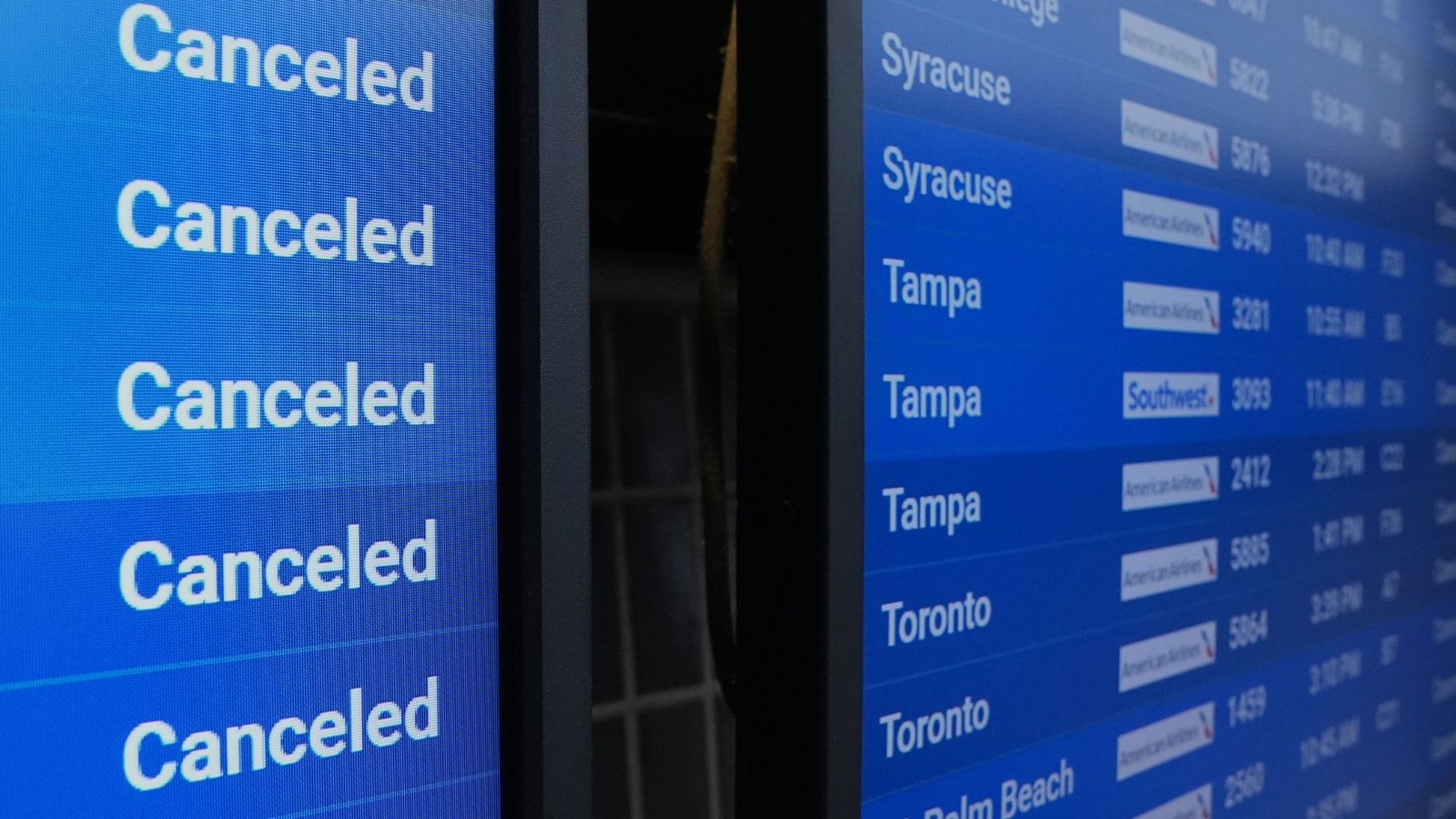
American Airlines suffered its most disruptive storm-related outage in company history, cancelling more than 10,000 flights over the weekend and roughly 1,400 (≈37%) on Tuesday with another 304 (≈8%) cancelled for Wednesday; LaGuardia saw 21% of AA flights cancelled and the airline says the disruption has already cost $150–200 million while its stock is down ~7%. Management is offering double pay to flight attendants and additional pay to pilots to staff flights, underscoring elevated short-term labour costs and operational strain tied in part to icing in its Dallas hub. The event is a significant near-term hit to revenue and cash flow and has pressured investor sentiment, though impacts appear idiosyncratic and likely temporary barring further weather-related disruptions.
Market structure: This incident acutely disadvantages American Airlines (AAL) relative to peers (DAL, UAL, LUV) because hub concentration in Dallas amplifies operational risk; AAL canceled >10,000 flights and expects $150–200m of near-term costs, implying a measurable hit to quarterly margin (order-of-magnitude: mid-to-high single-digit % of quarterly operating profit if sustained). Direct beneficiaries are competitors with more resilient crew/hub footprints (Delta DAL, United UAL) and ground/hotel operators capturing stranded demand; travel insurers and refund-liability managers face elevated claims exposures.
Risk assessment: Immediate risk (days) is operational churn and elevated opex (double pay for attendants, bonus pay for pilots) pressuring cash flow; short-term (weeks) risk is guidance cuts and negative revisions to Q1 revenue; long-term (quarters) risks include reputational flight-schedule churn, union leverage, and potential credit-spread widening leading to costlier refinancing or covenant stress. Tail risks: multi-week operational paralysis, regulatory penalties for poor customer treatment, or a liquidity shock if cancellations cascade into lower bookings; hidden dependency: hub-centric scheduling and crew domiciles create non-linear failure modes.
Trade implications: Tactical short bias on AAL for 2–8 week horizon (target 15–25% downside) via put spreads to limit pain; pair trade long DAL (or LUV) equal-dollar vs short AAL to capture share reallocation. Credit play: buy protection on AAL bonds (or reduce HY airline exposure) if spreads widen >100bps. Options: buy 6–8 week AAL put 25–30 delta and sell lower strike to fund cost; consider buying DAL call spreads if ticket-price mix improves.
Contrarian angles: The market may partly overprice transitory weather risk—if cancellations normalize (<5% system cancellations for 3 consecutive days) and management refrains from guidance cuts, AAL could snap back 8–12%. Conversely, repeated disruption revealing structural crew shortages would justify a deeper repricing; use operational metrics (system cancellation rate, crew-called status, hub-specific cancellations) as precise triggers to scale positions.
AI-powered research, real-time alerts, and portfolio analytics for institutional investors.
Request DemoOverall Sentiment
strongly negative
Sentiment Score
-0.60
Ticker Sentiment
