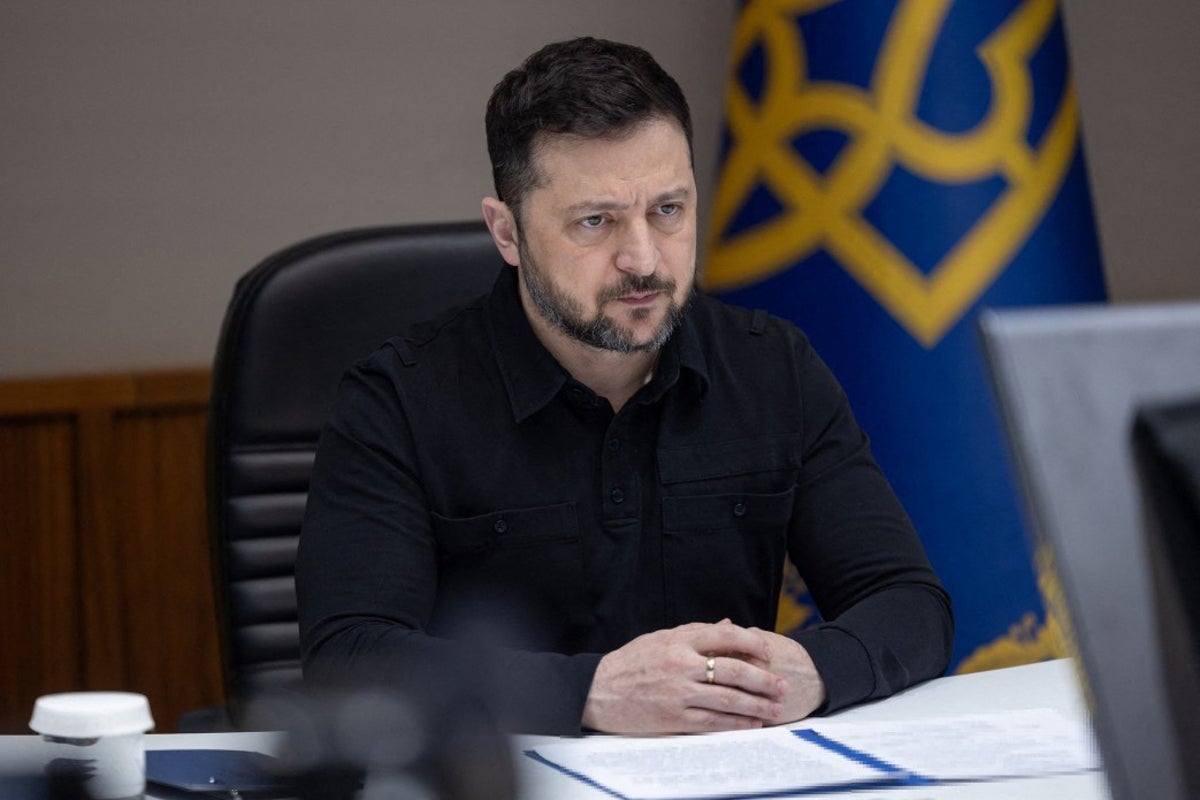
Russia's Defence Ministry said it downed 389 Ukrainian drones across 13 regions plus Crimea in the largest reported overnight attack since the invasion began; the prior day Russia launched nearly 1,000 drones and 34 missiles at Ukrainian areas, killing at least six and injuring ~50. Ukrainian President Zelensky accused Russia of trying to 'blackmail' the US by offering to withhold intelligence to Iran if Washington stopped sharing intel with Kyiv, and said Ukraine has 'irrefutable' evidence of Russian intelligence support to Iran and Russian components in some Iranian drones. Kyiv is assisting Gulf states (Saudi Arabia, UAE, Qatar) to counter drone attacks and is seeking long-term deals to fund production of Ukrainian drone interceptors or to obtain air-defence missiles, a development that could lift defense-sector demand and raise regional risk premia.
The allegation of Russia supplying components to Iran — if it triggers new US export controls or targeted secondary sanctions — is a near-term catalyst that disproportionately benefits suppliers of hardened sensors, electronic warfare (EW) and interceptor munitions. Procurement timelines for Gulf states and replenishment cycles for Ukraine are typically measured in quarters to a few years; expect order announcements (memoranda of understanding and deposit contracts) within 3–12 months and revenue recognition but hardware delivery slippages in the 12–36 month window.
Second-order supply effects matter: capacity for high-margin seeker heads, RF amplifiers and guidance IMUs is tight globally; a sudden acceleration of orders will reroute limited production capacity away from commercial industrial projects and raise margins for specialist suppliers. That creates a two-speed industrial backdrop — large primes (Lockheed, Raytheon, Northrop) can scale supply with subcontractor markup, while niche component vendors enjoy transient pricing power and order visibility for 6–18 months.
Tail risks and catalysts are binary and time-staggered. Near-term headlines (days–weeks) — official US sanctions, public Gulf procurement confirmations, formal export-control updates — will move sentiment sharply; medium-term outcomes (3–24 months) hinge on manufacturing capacity, congressional/appropriations approvals and logistical bottlenecks. A rapid diplomatic de-escalation or credible refutation would reverse the sector rerating quickly; conversely, formal sanctions or evidence that forces accelerated Gulf/Ukraine contracting will compound upside for defense and niche supplier equities.
AI-powered research, real-time alerts, and portfolio analytics for institutional investors.
Request DemoOverall Sentiment
strongly negative
Sentiment Score
-0.60
