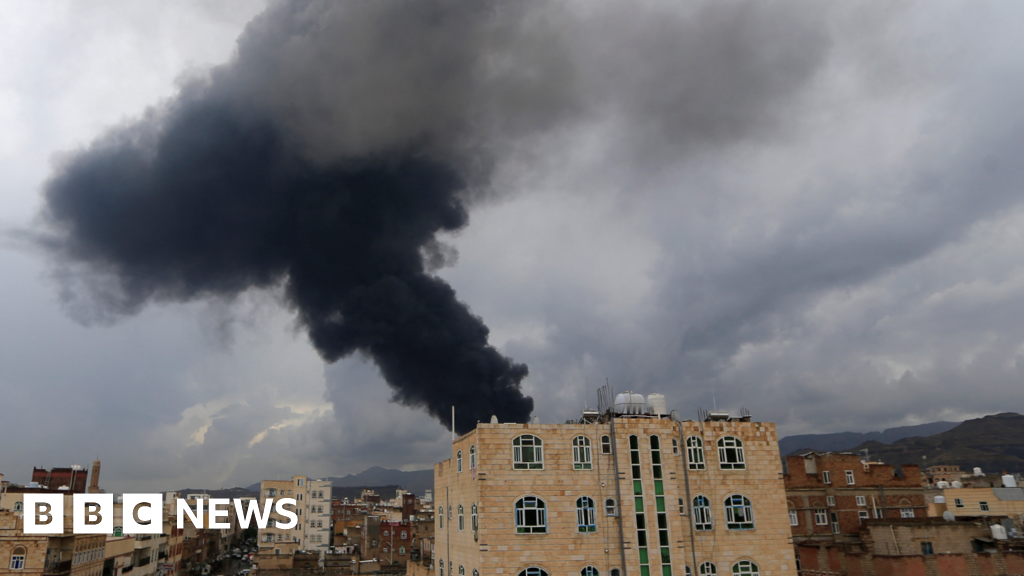
Israel conducted retaliatory air strikes on Houthi targets in Yemen following a Houthi missile attack on Israel that reportedly utilized cluster munitions, marking a significant escalation and prompting an Israeli investigation into its missile defense system's failure. This development, against a backdrop of ongoing Houthi attacks on Red Sea shipping and Israel since October 2023, intensifies regional geopolitical risk and highlights the increasing proliferation of advanced weaponry in the Middle East.
The direct military exchange between Israel and Yemen's Houthi forces marks a significant escalation in the regional conflict, underscored by two critical developments. Firstly, the reported use of cluster munitions by the Houthis for the first time in this conflict introduces a more indiscriminate and internationally condemned form of weaponry, elevating the severity of their attacks. Secondly, the Israeli Defense Forces' investigation into the failure of its missile defense system to intercept the incoming missile before it dispersed its payload raises questions about potential vulnerabilities in its air defense capabilities against specific threat profiles. This event, set against the backdrop of persistent Houthi attacks on Red Sea shipping and direct strikes against Israel since October 2023, amplifies geopolitical risk across the Middle East. The high market impact score of 0.7 reflects the potential for this escalatory cycle to disrupt key commercial and energy corridors, further destabilizing a region already fraught with tension.
AI-powered research, real-time alerts, and portfolio analytics for institutional investors.
Request DemoOverall Sentiment
strongly negative
Sentiment Score
-0.70
