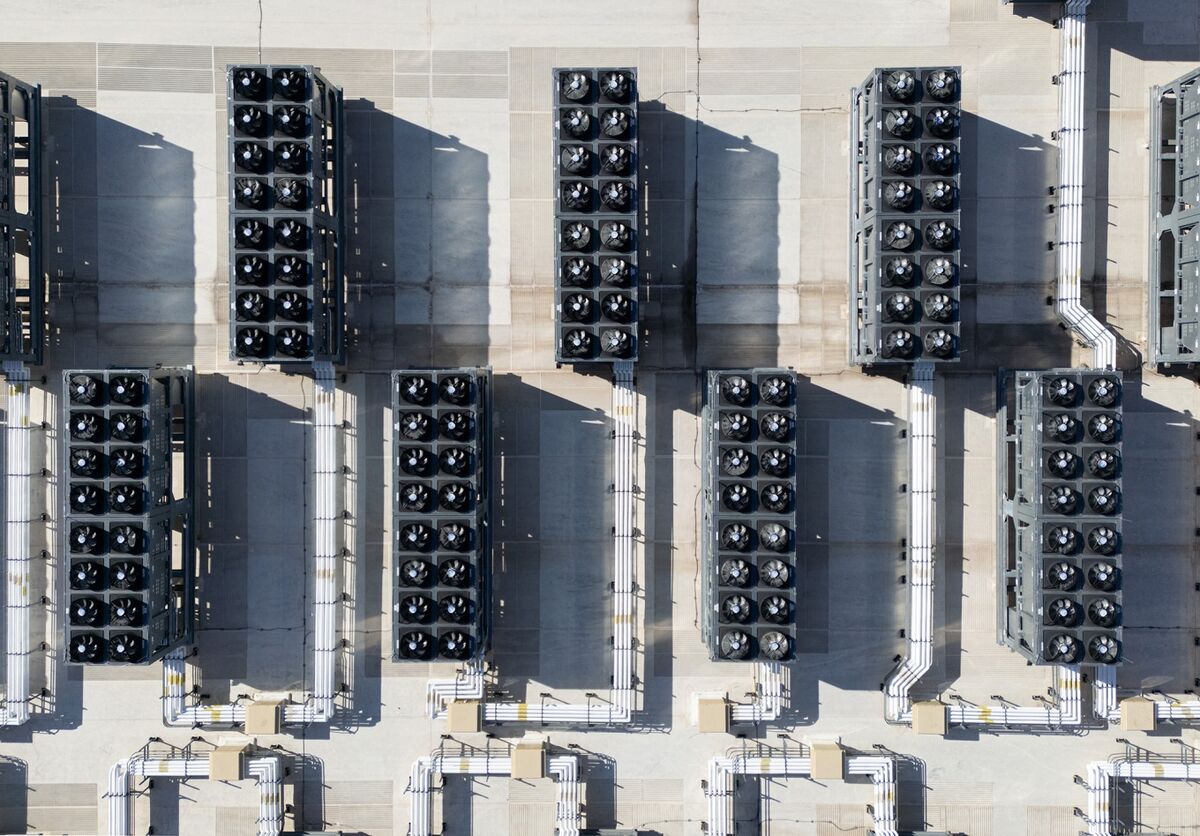
Blackstone and Halliburton are said to be investing a combined $1 billion in VoltaGrid, valuing the Houston-based energy startup at more than $10 billion. The company makes gas-powered microgrids used for rapid data center deployments, tying the deal to fast-growing AI/infrastructure demand. The transaction could be announced as soon as Monday and would signal continued investor appetite for private energy and power-supply solutions.
This is less about one startup and more about a capital-allocation signal: strategic money is underwriting the bottleneck for AI infrastructure rollout. If gas-fired microgrids become the default for fast-scaling data centers, the winners are not just the platform provider but the upstream ecosystem around power generation, gas compression, controls, and land/zoning execution; the losers are slow-to-interconnect utilities and any datacenter developers betting on grid power availability as the binding constraint.
The second-order effect is that the value of speed is rising faster than the value of cheap power. In a world where AI buildouts are measured in months, not years, a premium on modular, behind-the-meter generation can compress leasing and commissioning timelines enough to matter economically even if per-kWh costs are higher. That tends to favor firms with balance-sheet flexibility and industrial distribution more than pure-play venture-backed challengers, because the market is likely to rerate “infrastructure optionality” as a scarce asset.
Near term, the main risk is that this becomes a narrative trade before it becomes an earnings trade. Private-market marks can reprice on headline demand, but public-market follow-through requires visible order flow, permitting success, and proof that these systems are commercially durable under high-load duty cycles; any delay or reliability issue would quickly cool the enthusiasm. Over 6-18 months, the key variable is whether gas power remains a bridge solution or gets displaced by utility interconnect acceleration and battery-backed alternatives.
The contrarian read is that this may be a financing-scarcity story masquerading as a technology breakthrough. If grid capacity and transmission queues stay tight, investors may overpay for anything that looks like a workaround, which is good for incumbent industrial partners and potentially bad for late-stage private entrants if competition compresses returns. The better trade is likely to own the picks-and-shovels exposure, not the headline winner at an aggressive private valuation.
AI-powered research, real-time alerts, and portfolio analytics for institutional investors.
Request DemoOverall Sentiment
moderately positive
Sentiment Score
0.60
Ticker Sentiment
