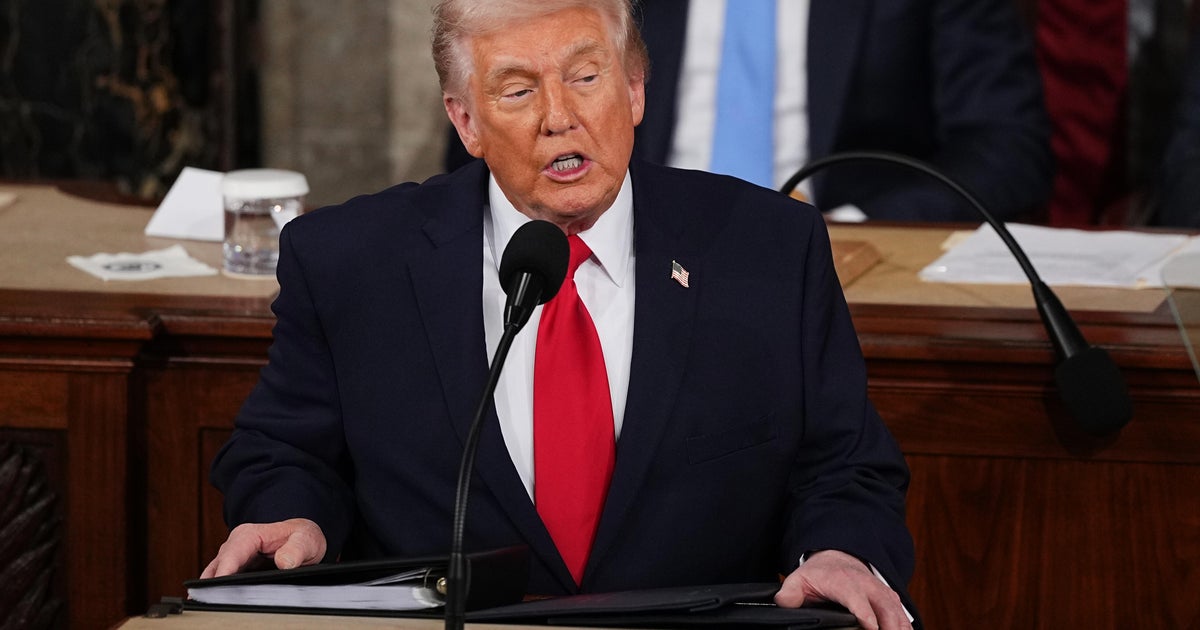
In his 2026 State of the Union, President Trump highlighted a series of economic gains—core inflation down to 1.7% in late 2025, gasoline generally below $2.30/gal, mortgage costs reportedly down roughly $5,000, 53 all-time stock highs, +70,000 construction jobs, U.S. oil production up ~600,000 bpd and an 80M-barrel delivery from Venezuela—and claimed more than $18 trillion in new global investment commitments. He outlined market-relevant policies including expanded tariffs touted as a major revenue source, codification of most-favored-nation drug pricing via TrumpRX (citing an IVF drug fall from $4,000 to <$500), large child “Trump Accounts” funded by a $6.25B private donation, a pledge to protect ratepayers from AI data-center demand, tax cuts and bans on large institutional single-family home purchases. Execution risk is material—many measures require Congressional approval or face legal challenge—so while the rhetoric is pro-growth and supportive of risk assets, traders should view any immediate market reaction as sentiment-driven and monitor legislative and judicial developments for lasting policy impact.
Market structure: The address signals fiscal and regulatory tailwinds for defense, domestic manufacturing, and energy equipment while creating downside pressure for incumbent pharma and large single-family rental operators. Expect a 6–12 month boost to defense contractors (LMT/RTX/NOC) from a stated “trillion-dollar” budget and NATO 5% commitments, and a medium-term reduction in pharma pricing power if MFN-style rules are implemented and codified.
Risk assessment: Key tail risks are legal choke points (Supreme Court limits on tariff authority), rapid policy reversal after elections, and geopolitics (Iran/Venezuela operations) that could spike oil or risk premia. Time horizons: immediate (days) volatility around legislative hearings and court rulings; 1–6 months for codification/legal challenges; 6–24 months for capex and supply-chain reshoring to show earnings impact.
Trade implications: Favor long exposure to defense (LMT/RTX/NOC), power equipment (GE, CAT), and grid/battery names (LRN: NRG, ES, BE) into 6–18 month horizons; short large-cap pharma (PFE, MRK) via put spreads and short single-family rental REITs (INVH, AMH). Hedge macro with 1–2% UUP (USD) or pay-fixed on 2–5 year Treasuries if growth surprises.
Contrarian angles: Consensus underestimates implementation lag — tariffs and MFN will face legal/operational friction, so immediate equity reactions could be overdone. Also, tech building own power plants could benefit equipment and IP players (GE, CAT) more than regulated utilities near term; adverse effects on utilities may be delayed 12–24 months as contracts and permitting play out.
AI-powered research, real-time alerts, and portfolio analytics for institutional investors.
Request DemoOverall Sentiment
moderately positive
Sentiment Score
0.45
