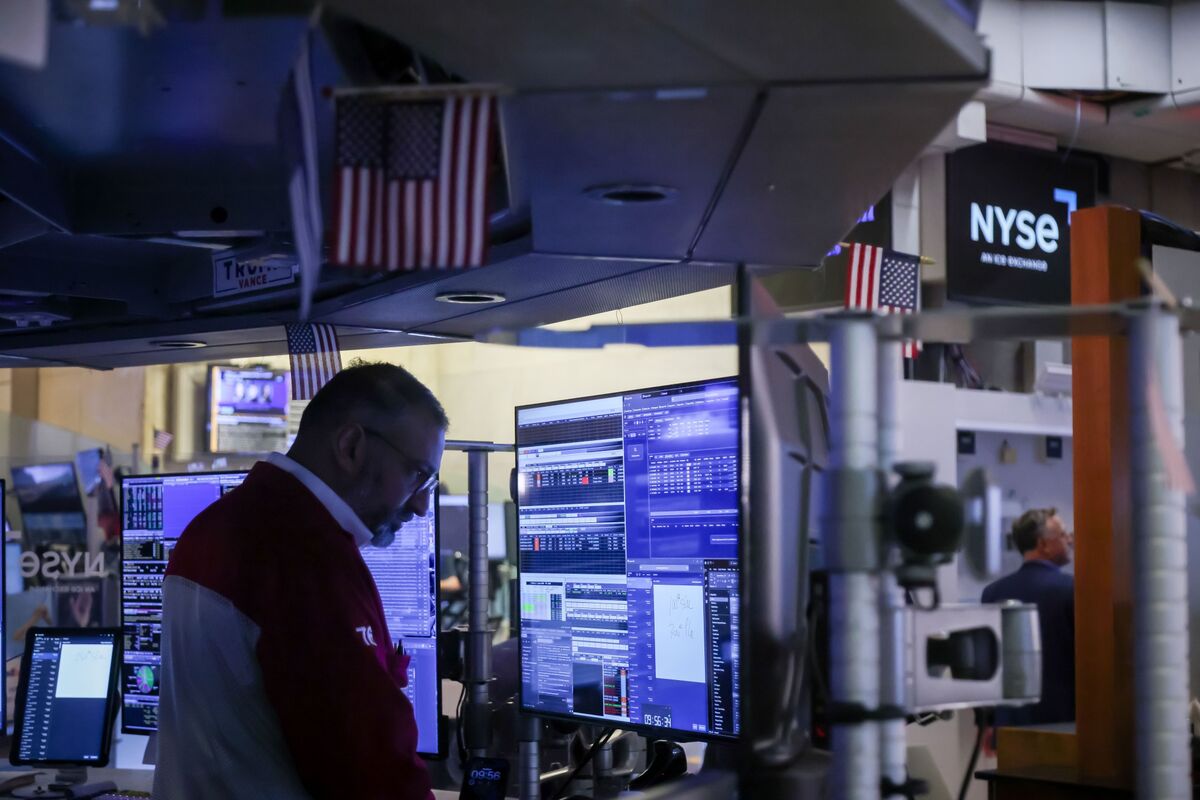
U.S. equities ticked higher Friday as investors positioned ahead of the pending PCE inflation report and next week’s Federal Reserve decision, with the S&P 500 up roughly 0.2% and the Nasdaq 100 up about 0.5% as of 9:32 a.m. in New York. The session reflected cautious, risk-on positioning ahead of key economic data while Netflix shares weakened on news related to a Warner Bros. Discovery deal, highlighting idiosyncratic M&A pressure amid otherwise modest market gains.
Market structure: The WBD deal dynamics favor legacy content owners and ad-supported distribution; WBD should gain short-term pricing power for library monetization while Netflix faces margin pressure and multiple compression. Expect a modest reallocation of subscriber attention—incremental content supply will increase churn risk for pure SVOD players, compressing pricing power by ~100–200bps in gross margins if ad revenues don’t scale. Cross-asset: a risk-on tilt ahead of PCE compresses Treasuries (2s/10s could move 5–15bps intraweek), lifts equities, increases single-name equity skew (NFLX implied vol +15–30% vs peers), and modestly weakens USD on risk flows.
Risk assessment: Tail risks include regulatory scrutiny of content deals (antitrust or foreign-ownership reviews) and execution failure at WBD that could blow out leverage covenants — both <10% probability but >50% portfolio-impact. Immediate (days) risk is PCE-driven volatility; short-term (weeks–months) is subscriber/ad-rev traction post-deal; long-term (quarters) is content amortization and balance-sheet strain. Hidden dependencies: ad-market cyclicality, content amortization schedules, and password-sharing monetization cadence can flip margins rapidly. Key catalysts: PCE print (next 3 trading days), Fed decision (next week), and NFLX/WBD quarterly metrics (next 30–90 days).
Trade implications: Direct play is tactical long WBD and hedged short NFLX on relative fundamentals; preferred sizing 1–3% portfolio per name with disciplined stops. Options: buy 3–6 month NFLX puts or put spreads to cap downside if implied vol <60%; consider covered-call or call-selling on WBD if you want to finance carry. Sector rotation: trim high-duration mega-cap growth exposure by 1–2% and add media/consumer discretionary cyclicals if PCE prints hotter-than-expected (core PCE surprise >+0.1pp).
Contrarian view: The market may overpenalize NFLX on headline M&A noise — if NFLX sells off >10% on headline, risk/reward favors tactical buy with 3–6 month horizon because subscriber KPIs historically mean-revert within two quarters. Conversely, WBD’s early pop could be underdone relative to long-term integration costs; if WBD expands net debt/EBITDA >0.5x vs consensus, cut exposure fast. Unintended consequence: crowded short on NFLX could create squeeze if earnings beat or VOD licensing revenues surprise positive.
AI-powered research, real-time alerts, and portfolio analytics for institutional investors.
Request DemoOverall Sentiment
mildly positive
Sentiment Score
0.25
Ticker Sentiment
