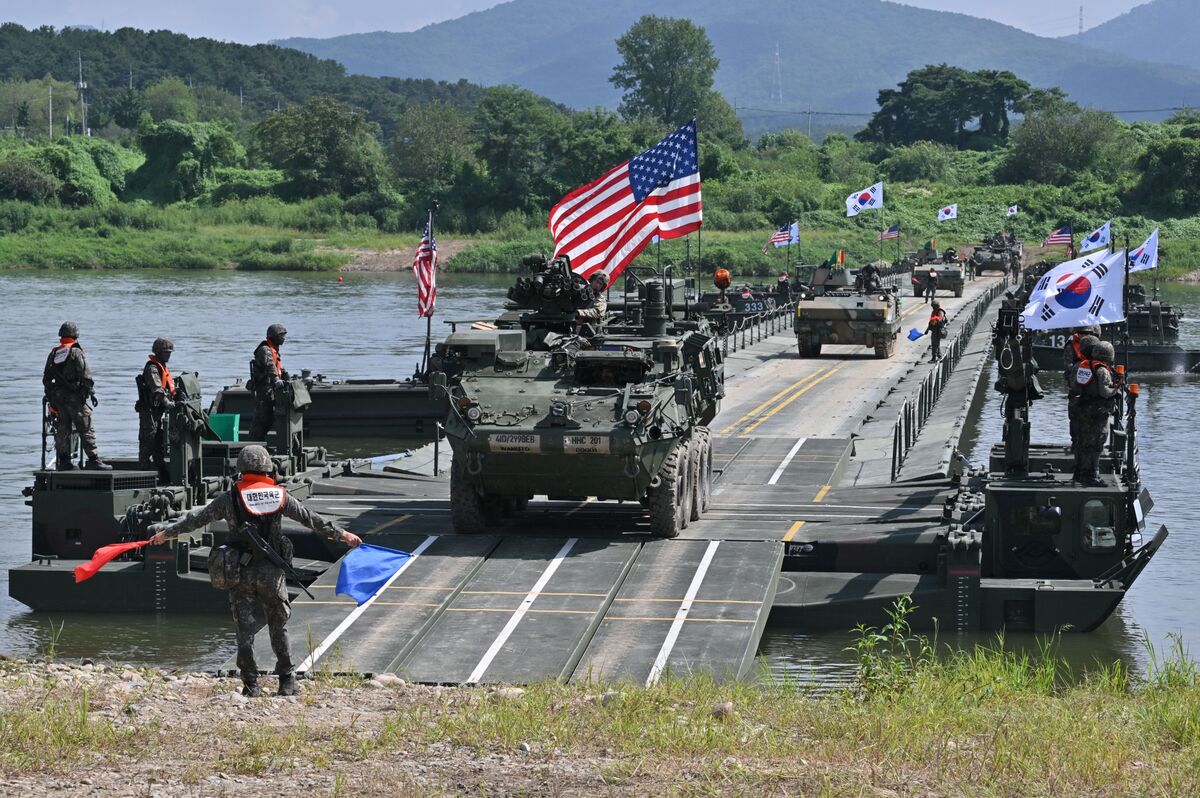
The US, South Korea, and Japan have commenced their first joint multi-domain military exercises, dubbed "Freedom Edge," since Presidents Trump and Lee Jae Myung took office, deploying maritime, air, and cyber assets for five days off Jeju. These drills, aimed at enhancing interoperability against North Korea's nuclear and missile threats, promptly drew threats of "counteraction" from Pyongyang, signaling heightened regional geopolitical tensions.
The US, South Korea, and Japan have commenced their first joint multi-domain military exercises, named "Freedom Edge," under the current presidential administrations, signaling a reinforcement of their trilateral security alliance. The five-day drills, occurring off South Korea's Jeju island, integrate maritime, air, and cyber assets, officially aimed at enhancing interoperability to counter North Korea's nuclear and missile capabilities. North Korea's immediate and sharp rebuke, labeling the exercises a "war rehearsal" and threatening "counteraction," confirms the heightened geopolitical tension in the region. While the neutral sentiment and low market impact score of 0.25 suggest markets are currently pricing this as a routine, albeit noteworthy, escalation, the event underscores a persistent risk factor for regional stability. The inclusion of cyber warfare training specifically points to the evolving nature of defense priorities and potential conflict scenarios, which has direct implications for the defense and cybersecurity sectors.
AI-powered research, real-time alerts, and portfolio analytics for institutional investors.
Request DemoOverall Sentiment
neutral
Sentiment Score
0.00
