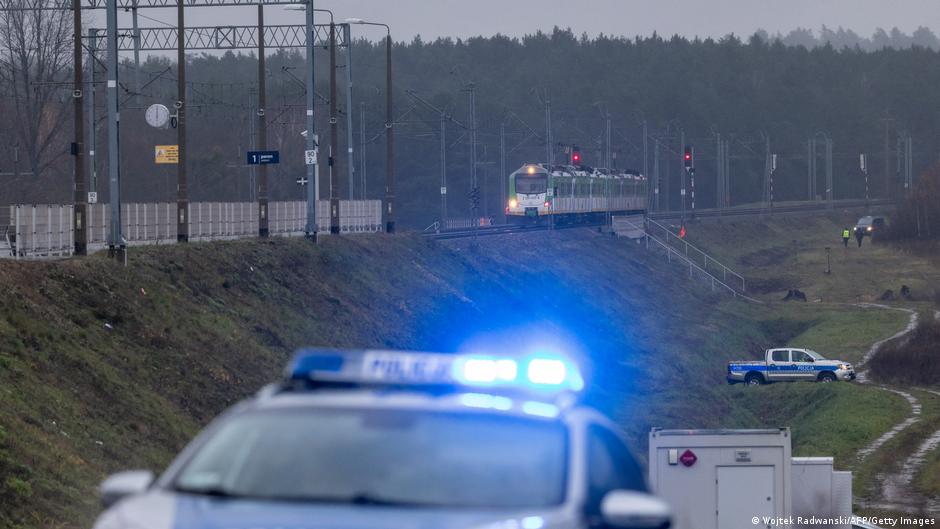
Polish Prime Minister Donald Tusk said investigators have identified two Ukrainian citizens who, allegedly working for Russian intelligence, carried out a sabotage attack on a railway line before fleeing to Belarus—one suspect reportedly had a prior conviction for sabotage in Lviv and the other is from Russian-occupied Donbas—and Polish officials say all evidence points to Moscow. The incidents, an explosion near the village of Mika about 100 km southeast of Warsaw and destruction of power lines near Pulawy about 50 km from Lublin, struck a rail route vital for aid deliveries to Ukraine. Warsaw has elevated security—sending army patrols, convening top military and intelligence officials, and imposing a higher “Charlie” threat level on certain lines—Tusk calling the disruptions possibly the most serious national security situation in Poland since the outbreak of the full-scale war in Ukraine.
Polish Prime Minister Donald Tusk told parliament investigators have identified two Ukrainian citizens allegedly commissioned by Russian intelligence to carry out a sabotage attack on a railway line and that both suspects fled to Belarus; Tusk said one suspect had a prior conviction for "acts of sabotage" in Lviv and the other is a resident of Russian-occupied Donbas, and his office stated all evidence points to Moscow. Two separate incidents were reported: an explosion near the village of Mika about 100 kilometers (60 miles) southeast of Warsaw and destruction of power lines near Pulawy about 50 kilometers (30 miles) from Lublin, with authorities saying the route links Warsaw to the Ukrainian border and is vital for aid deliveries to Ukraine. The government has elevated protections—sending army patrols, convening top military and intelligence officials, and introducing a third "Charlie" threat level on certain railway lines while leaving the rest of the country at a second alert level—Tusk described the disruptions as "perhaps the most serious national security situation in Poland since the outbreak of the full-scale war in Ukraine."
The incidents directly increase operational risk for cross-border logistics and humanitarian corridors, create the potential for short-term disruption to rail-dependent supply chains and aid flows, and raise the geopolitical risk premium for Polish infrastructure and transportation assets. Elevated alert levels and the involvement of national security services increase the likelihood of further state responses, procurement shifts toward defense and security spending, and heavier policing of eastern border infrastructure. Given the government's public attribution of responsibility to Russian-linked actors and the suspects' reported movement to Belarus, there is an acute information flow risk: market reactions will likely hinge on official investigative releases and any confirmation of state-sponsored involvement.
AI-powered research, real-time alerts, and portfolio analytics for institutional investors.
Request DemoOverall Sentiment
moderately negative
Sentiment Score
-0.55
Investors should treat near-term uncertainty as a catalyst for increased volatility in Polish and regional assets linked to transportation, infrastructure and defense, and should prioritize monitoring official announcements on the investigation, restoration of the Warsaw–Ukraine rail corridor, and any Belarus border developments. The moderately negative sentiment and non-trivial market impact score in the reporting signal a need for tactical risk-management rather than assumptive reallocation until facts are confirmed.
