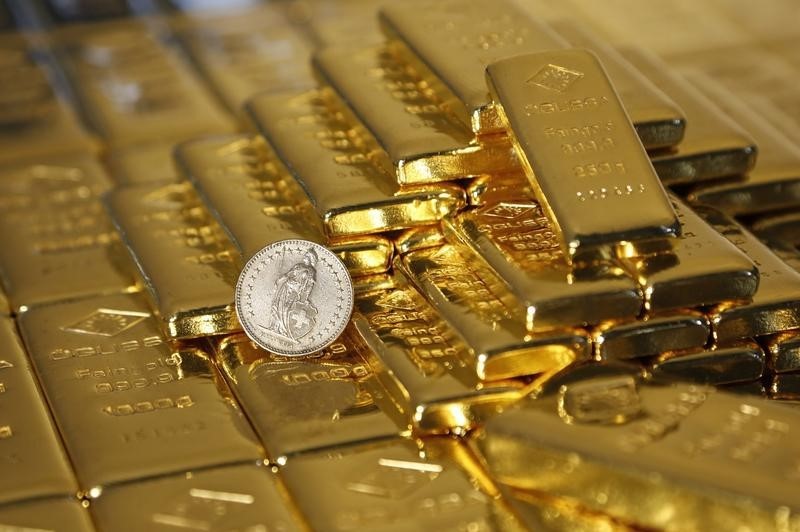
Oil prices fell more than 6% on hopes of a U.S.-Iran deal easing tensions in the Middle East, helping cool inflation fears and push Treasury yields and the dollar lower. Gold rose 0.4% to $4,707.31/oz after a 2.9% jump on Wednesday, while silver gained 0.7% to $77.85/oz and platinum was flat at $2,065.17/oz. Investors are now focused on Friday’s U.S. non-farm payrolls report for clues on the Fed’s policy path.
The immediate market read-through is a sharper disinflation impulse, but the bigger signal is regime change in volatility. A de-escalation path in the Strait of Hormuz compresses the geopolitical risk premium embedded in crude, which matters more for breakevens than for spot oil itself; the first-order winner is duration, with rate vol likely to soften if energy holds down CPI expectations into the next print cycle. That sets up a reflexive bid for long-duration assets and pressure on defensive inflation hedges that had been carrying an elevated war premium.
The second-order effect is that the inflation scare can unwind faster than the real economy impact. If energy reverses lower while payrolls stay firm, the Fed gets more room to lean on growth risks, but if the labor data softens at the same time, rate-cut pricing could accelerate abruptly. That is the key asymmetry: a few more headlines on diplomacy can move front-end yields and the dollar more than the actual barrel move, because positioning is still crowded around geopolitical inflation hedges.
The market may be underestimating how quickly the oil move can mean-revert if talks stall or if supply disruption risks reprice on even a minor incident in Hormuz. Energy equities have likely not fully discounted the possibility of a false dawn in negotiations; integrateds and service names should outperform pure-beta producers if crude chops lower without a collapse in global activity, but they would also be the first to get hit if the peace narrative hardens and OPEC discipline loosens. The contrarian setup is that this is less a durable demand story than a temporary risk-premium washout, so the strongest signal may be in cross-asset confirmation rather than in crude alone.
For gold, the move is being driven by lower real rates and a softer dollar more than by safe-haven demand. That is constructive near term, but if the dollar bounce comes from stronger U.S. data rather than renewed tension, gold can stall even with benign geopolitics. The trade is therefore more about timing the macro mix than making an outright geopolitical bet.
AI-powered research, real-time alerts, and portfolio analytics for institutional investors.
Request DemoOverall Sentiment
mildly positive
Sentiment Score
0.15
