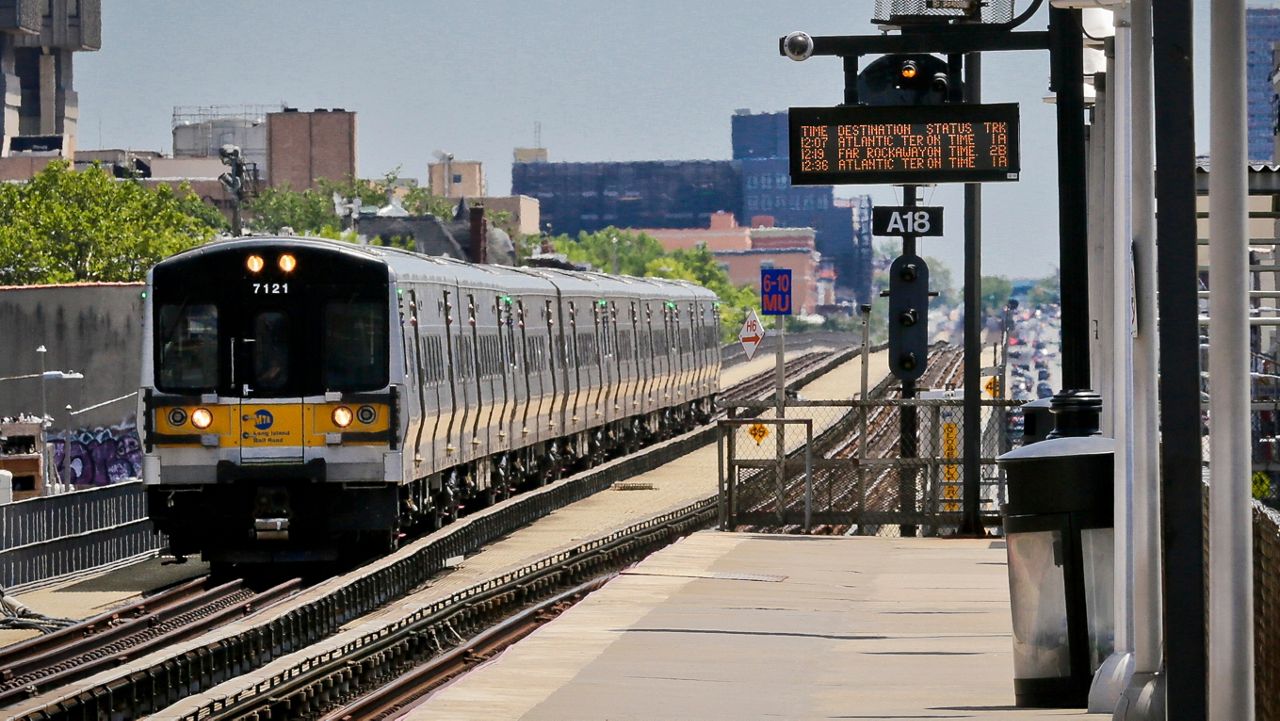
The MTA and five Long Island Rail Road unions reached a deal, ending the three-day LIRR strike. Gov. Kathy Hochul said phased service will resume Tuesday at noon, with the agreement described as delivering raises for workers while protecting riders and taxpayers. The update is positive for commuters and transit operations, but the broader market impact is limited.
The immediate market read is less about the strike itself and more about the de-risking of a politically visible service failure ahead of a crowded labor and election calendar. Transit disruption in the New York corridor tends to create a short, sharp confidence shock, but the reversal usually matters more than the initial outage because it restores commuter reliability and limits follow-on pressure on adjacent employers. The biggest beneficiary is the local economic ecosystem that depends on predictable arrival times; the biggest loser is any narrative that labor unrest can be used as a durable bargaining lever without forcing a rapid political backstop.
Second-order effects are mostly in sentiment rather than fundamentals. Logistics-sensitive names with exposure to the Northeast should see less near-term friction in employee attendance and last-mile timing, but the larger impact is on political optics: policymakers now have an incentive to avoid letting a transport dispute linger into a broader public-service narrative. That reduces tail risk for a multi-week shutdown but increases the probability of future headline-driven interventions whenever negotiations stall, which compresses the expected duration of any labor disruption premium.
The contrarian angle is that the resolution may be more bearish for volatility than bullish for fundamentals. A quick settlement tells you the system still clears under pressure, so this is not a regime change in rail labor power; it is a reminder that disruption windows are likely to be measured in days, not months. The tradeable edge is therefore in fading any overreaction in commuter-exposed equities or local cyclicals, while avoiding overpaying for a relief rally that should mean-revert once service normalizes.
Near term, the key catalyst is the resumption cadence over the next 24-72 hours: if phased service ramps cleanly, the market will rapidly discount the event. If there are operational hiccups, the headline risk reopens and may hit consumer-facing discretionary names, regional retailers, and any stock with heavy Long Island/NYC commuter traffic exposure. Over a 1-3 month horizon, the main risk is that this settlement becomes a template for more aggressive wage demands elsewhere in the transit ecosystem, raising cost pressure for public operators rather than signaling an isolated one-off fix.
AI-powered research, real-time alerts, and portfolio analytics for institutional investors.
Request DemoOverall Sentiment
mildly positive
Sentiment Score
0.15
Ticker Sentiment
