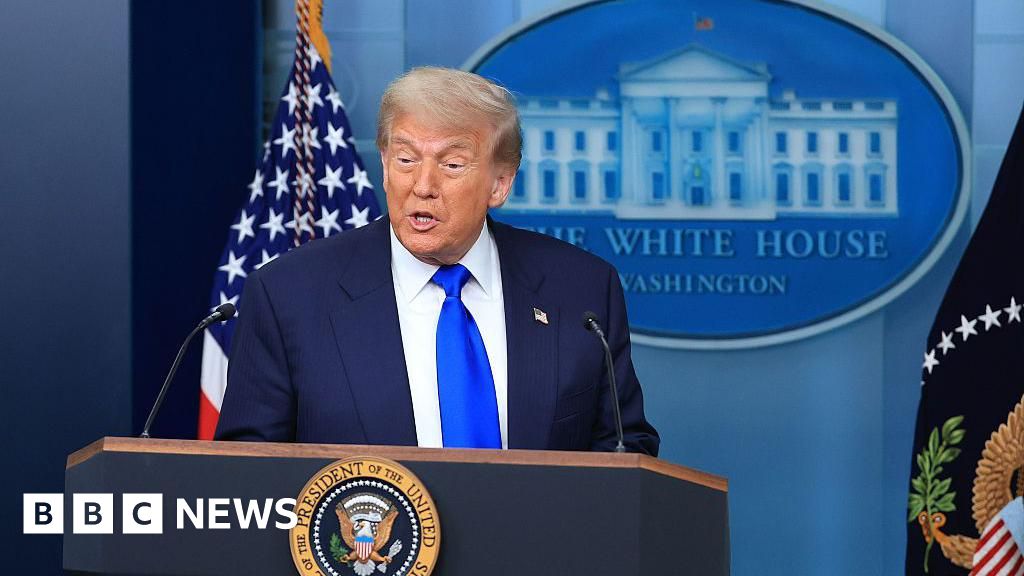
The Supreme Court has agreed to expedite its review of lower court decisions that found the Trump administration exceeded its authority in imposing broad global tariffs using the International Emergency Economic Powers Act (IEEPA). This pivotal case, set for arguments in November, will test the limits of presidential power in trade policy. A ruling upholding the lower courts could compel the U.S. to refund billions in collected tariffs and potentially disrupt existing and future trade agreements, creating significant market uncertainty.
The U.S. Supreme Court's decision to grant an expedited review of global tariffs imposed under the International Emergency Economic Powers Act (IEEPA) introduces significant, near-term uncertainty for trade-sensitive assets. With arguments scheduled for November, the case represents a pivotal test of presidential authority in setting economic policy, challenging the Trump administration's use of an emergency act to levy broad tariffs ranging from 10% to 50%. The financial stakes are substantial; a ruling that upholds the lower court's decision could obligate the U.S. to refund billions of dollars in collected tariffs, potentially benefiting importers while impacting federal revenue. More broadly, the outcome threatens to create chaos for existing trade agreements, such as those with the UK and Japan, and disrupt ongoing negotiations. It is crucial for investors to note the specific scope of this case, as it does not affect the tariffs on steel, aluminum, and cars, which were enacted under a different law. The situation presents a binary risk profile, justifying the moderately negative sentiment and elevated market impact scores, as the court's decision will have far-reaching implications for U.S. trade relationships and the legal framework governing them.
AI-powered research, real-time alerts, and portfolio analytics for institutional investors.
Overall Sentiment
moderately negative
Sentiment Score
-0.40
