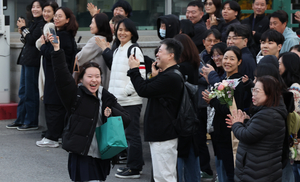
South Korea recently administered its 2026 College Scholastic Ability Test (Suneung), the second under a government policy aimed at eliminating 'killer questions' to curb reliance on private tutoring. The exam committee confirmed the test was designed with an appropriate difficulty level, strictly adhering to the public education curriculum and core concepts, thereby avoiding advantages for students using private academies. While the mathematics section maintained a similar difficulty to the prior year with some differentiation for top-tier students, the overall objective was to ensure a fair, curriculum-based assessment for this high-stakes exam, which significantly impacts university admissions and future career trajectories.
The 2026 Suneung exam in South Korea marks the second year of a government policy to eliminate "killer questions," highly difficult problems requiring university-level concepts. This initiative aims to reduce reliance on private tutoring, with the test committee confirming the exam was designed for an "appropriate level of difficulty" and excluded items favoring private education. This policy directly targets the business model of private academies by ensuring differentiation "solely through content taught in public education."
The mathematics section maintained a similar overall difficulty to last year, though experts noted some high-level questions for top-performing students. The Korean language and English sections also prioritized curriculum-based content, emphasizing conceptual understanding and analytical reasoning over rote memorization or complex calculations. This consistency in approach suggests a stable regulatory environment for the national exam.
While no specific publicly traded companies are identified as directly impacted, and the general sentiment is neutral with no immediate market impact, this regulatory shift represents a significant government intervention in the education sector. The focus on normalizing high school education and reducing private tutoring dependence could have long-term implications for the South Korean private education market.
This policy reflects a broader governmental effort to reshape the educational landscape, potentially reallocating significant household spending from private supplementary education to other sectors or savings. The sustained commitment to this policy indicates a durable regulatory trend rather than a temporary measure.
AI-powered research, real-time alerts, and portfolio analytics for institutional investors.
Request DemoOverall Sentiment
neutral
Sentiment Score
0.00
