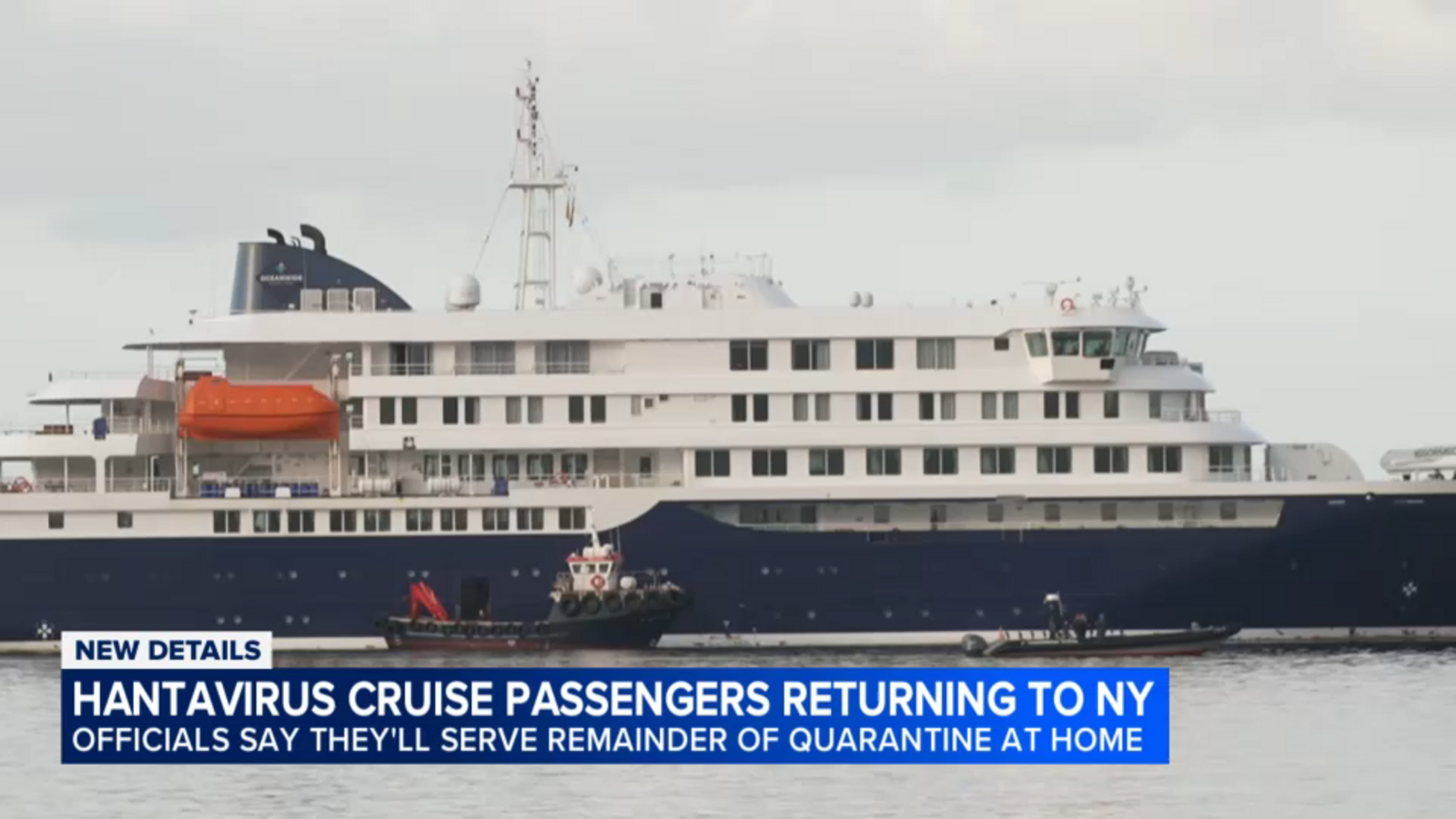
Two New York cruise passengers exposed to hantavirus are expected to return home next week after completing mandated quarantine in Nebraska, with the remainder of their 42-day monitoring period to be served in residences outside New York City. The CDC and New York health officials are coordinating a home-monitoring plan, and officials said there is no immediate risk to the public. This is a public health update with limited direct market impact.
This is a low-probability, high-visibility public-health event that matters more for operational friction than for direct economic damage. The immediate market read-through is not “pandemic risk” so much as a reminder that travel demand is sensitive to headline quarantine logistics, particularly when authorities appear inconsistent or adversarial; that can create brief booking hesitation even when medical risk is contained. Cruise operators and broader leisure names should see little fundamental impact unless the story broadens into repeat quarantine failures or new cases, which would turn a one-off nuisance into a reputational overhang.
The second-order winner is the public-health logistics stack: firms involved in medical transport, testing, compliance software, and remote monitoring could see incremental demand if regulators move toward more standardized home-isolation protocols instead of physically staffed quarantines. The loser, if any, is the cruise industry’s trust premium — not revenue immediately, but the multiple investors assign to future demand stability. That matters because leisure equities typically re-rate on low-frequency disruption risk; a single incident can shave sentiment for weeks even if bookings never show up in the data.
The key catalyst window is the next 1-3 weeks as the monitoring period completes and authorities show whether this was a one-off exception or the template for future cases. If there is no follow-on exposure, the trade fades quickly; if there is any compliance issue, expect a more durable discount in travel-related names and a sharper benefit to “contained travel” solutions. The contrarian point: the market may overestimate the economic relevance of the health event while underestimating the regulatory lesson — agencies are likely to codify stricter, cheaper-to-enforce home monitoring regimes after this, which is structurally positive for digital health compliance but negative for labor-intensive quarantine enforcement.
AI-powered research, real-time alerts, and portfolio analytics for institutional investors.
Request TrialOverall Sentiment
neutral
Sentiment Score
-0.10
