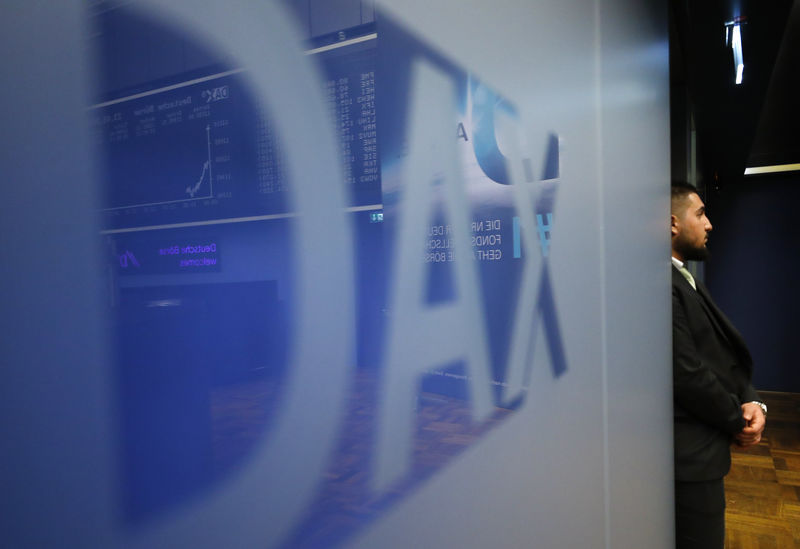
U.S. military seizure of another vessel linked to Iran underscores ongoing Mideast tensions, adding a geopolitical risk premium to markets. Crude oil rose 1.79% to $94.62 a barrel and Brent climbed 1.76% to $103.70, while the DAX volatility index fell 3.44% to 22.94. European equities were mixed to lower, with the DAX down 0.06%, MDAX down 0.98%, and TecDAX down 0.67%.
The market is pricing a classic geopolitical inflation impulse, but the more important second-order effect is cross-asset dispersion: energy and defense-linked cyclicals can keep grinding higher while software and long-duration growth gets hit through both discount rates and sentiment. The sharp air-pocket in SAP looks less like company-specific deterioration and more like a multiple compression event for European software where AI capex intensity is rising but near-term monetization is still underwhelming. That makes the move self-reinforcing: any further oil spike or volatility bid will mechanically pressure quality-growth baskets first.
The oil move matters more for Europe than for the U.S. because it hits an already fragile industrial margin stack and raises the odds of a late-cycle European growth scare. If crude holds above the mid-90s for more than a few sessions, expect upward pressure on shipping, chemicals, airlines, and discretionary input-cost-sensitive names, while defense and power equipment stay bid as investors rotate toward nominal growth and rearmament themes. The standout strength in semis is a reminder that the market is still rewarding idiosyncratic earnings acceleration, so this is not a blanket risk-off tape — it’s a factor rotation away from expensive duration and into tangible cash-flow stories.
The contrarian read is that SAP may be oversold relative to the actual macro shock: this is a multiple de-rating, not a demand-collapse signal, and the stock can stabilize quickly if the oil/geopolitics premium fades. But if crude remains elevated and volatility stays above 20, any bounce is likely to be sold until investors see evidence that enterprise IT budgets are still expanding into 2H. The real tail risk is that a broader energy shock turns into margin compression for European corporates just as the market is already questioning earnings durability, which would extend the drawdown in software and broader quality growth for weeks, not days.
AI-powered research, real-time alerts, and portfolio analytics for institutional investors.
Request TrialOverall Sentiment
mildly negative
Sentiment Score
-0.12
Ticker Sentiment
