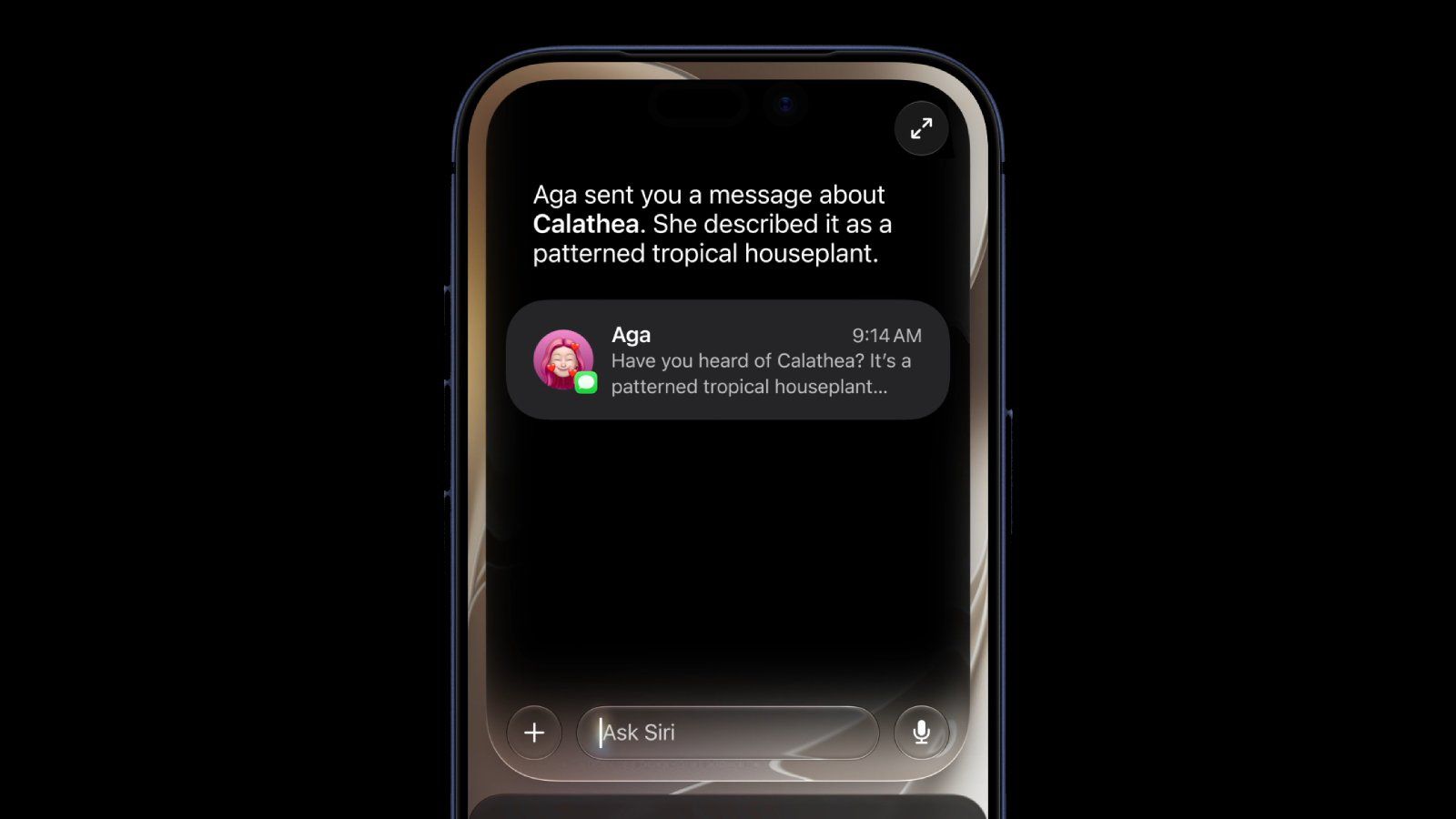
Apple explained that the standalone Siri app in iOS 27 is meant to give users a central place to revisit and manage Siri conversations, not to reposition Siri as a separate chatbot. Federighi said the home screen app is the most natural way for users to return to past chats, while Apple still views Siri as a deeply integrated system experience. The iOS 27 developer beta is available now, with Siri access on a waitlist and a public beta expected in July.
This is less a reversal than a packaging fix, and that matters because Apple is implicitly admitting the UX constraint was stronger than the product-architecture purity argument. The likely winner is Apple itself: any friction reduction around Siri session recall should lift engagement, which is the prerequisite for monetizing higher-value assistant behaviors later. In the near term, the market should treat this as a small but real signal that Apple is moving from AI narrative to workflow utility, which supports multiple expansion more than revenue estimates. Second-order effects are more interesting than the launch itself. If Siri becomes a persistent, revisitable layer, it increases the odds that developers optimize around Apple-native conversational surfaces instead of treating third-party chat apps as the default AI front-end, which is mildly negative for standalone AI assistant brands and some app-discovery funnels. It also reinforces Apple’s platform power over distribution: home-screen real estate and system-level integration are the moat, not model quality, so competitors face a higher customer-acquisition hurdle even if their models are better. The main risk is execution slippage: a polished beta does not guarantee habit formation, and if the feature feels like a settings-era utility rather than a daily workflow tool, usage will remain niche. Over the next 1-3 months the catalyst is beta feedback and any evidence that users are actually revisiting prior conversations; over 6-12 months the real signal is whether Apple extends this into broader cross-app memory and task continuity. The contrarian view is that the market may be underpricing how little this changes near-term fundamentals: this is a narrative-positive UI layer, not yet a monetization event, so any pop in expectations could fade if the rollout stays gated or the experience remains secondary to the core iPhone workflow.
AI-powered research, real-time alerts, and portfolio analytics for institutional investors.
Overall Sentiment
neutral
Sentiment Score
0.10
Ticker Sentiment
