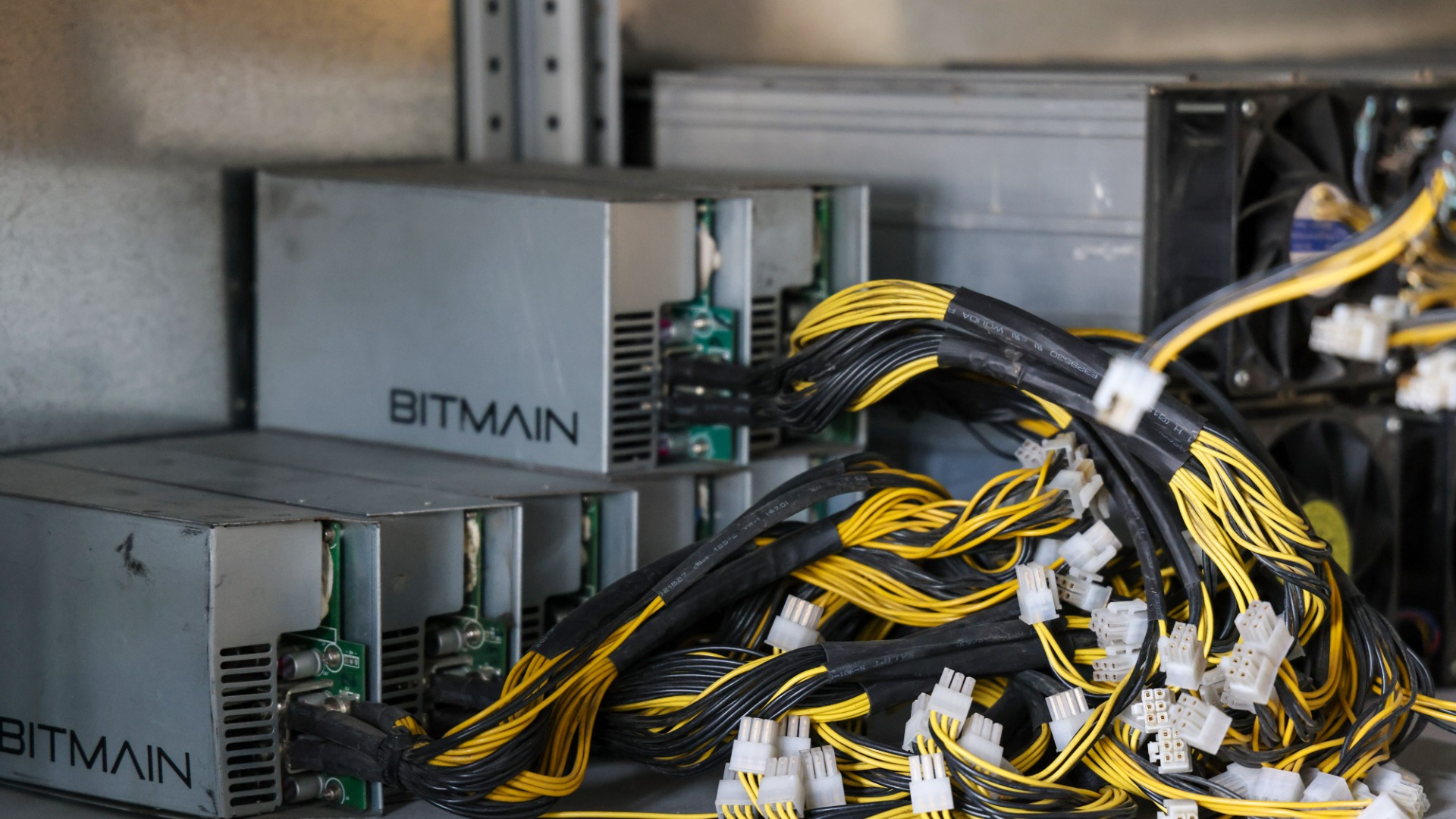
Senior U.S. officials and the Senate Intelligence Committee warn that Chinese-made crypto-mining hardware (e.g., Bitmain machines) deployed in thousands of U.S. data centers poses significant national security risks, including hostile intelligence collection and the potential to sabotage the power grid near sensitive military facilities. Policymakers are considering using Treasury and Commerce authorities—or export controls and restrictions on operation near government and military sites—to mitigate the threat, a development that could prompt regulatory action affecting Chinese hardware suppliers, mining operators and related infrastructure investments.
Market structure: A credible U.S. push to restrict Chinese ASICs (e.g., Bitmain) crystallizes winners — cybersecurity (CRWD, PANW), defense/engineering contractors (LHX, CACI) and Western foundries/supply-chain integrators — and losers — listed crypto miners (MARA, RIOT, HIVE) and hosting/data‑center REITs with mining exposure. Expect short-term pricing power for non‑Chinese ASICs/used ASIC secondary-market sellers; constrained new-supply could raise used-ASIC prices ~15–40% within 3–6 months while reducing global hash-growth trajectory.
Risk assessment: Tail risks include an OFAC/Treasury ban or forced removal order (high impact, low prob.) that could force 20–40% instantaneous markdowns in U.S. miner market caps and a 10–25% spot BTC shock in days. Near-term (0–90 days) headline volatility is highest; medium term (3–12 months) policy clarifications and equipment relocations matter; long-term (1–3 years) outcome is reshoring or supplier diversification. Hidden dependencies: power contracts, lender covenants, and secondary ASIC markets will amplify insolvency risk for leveraged miners.
Trade implications: Position tactically long cybersecurity and defense names and hedge/minimise direct crypto-miner exposure. Core plays: buy CRWD/PANW (6–12 month horizon); short MARA/RIOT/HIVE or buy 3‑month puts (20–30% OTM) on those miners; consider a pair trade long CRWD vs short MARA to isolate crypto-policy beta. Rotate 3–6% AUM from miners into security/utility-overweight trades; watch for regulatory triggers within 30–90 days to scale.
Contrarian angles: Consensus underestimates miners’ ability to pivot to used-ASIC markets, offshore operations (Canada/Kazakhstan), or to accelerate GPU-based alternatives — keeping BTC hash resilient. Past telecom equipment bans (Huawei) showed fragmentation, not elimination, of supply chains; a full U.S. ban is binary but enforcement will be staggered — producing potential oversold levels in miners as buying opportunities once policy certainty arrives.
AI-powered research, real-time alerts, and portfolio analytics for institutional investors.
Request DemoOverall Sentiment
moderately negative
Sentiment Score
-0.40
