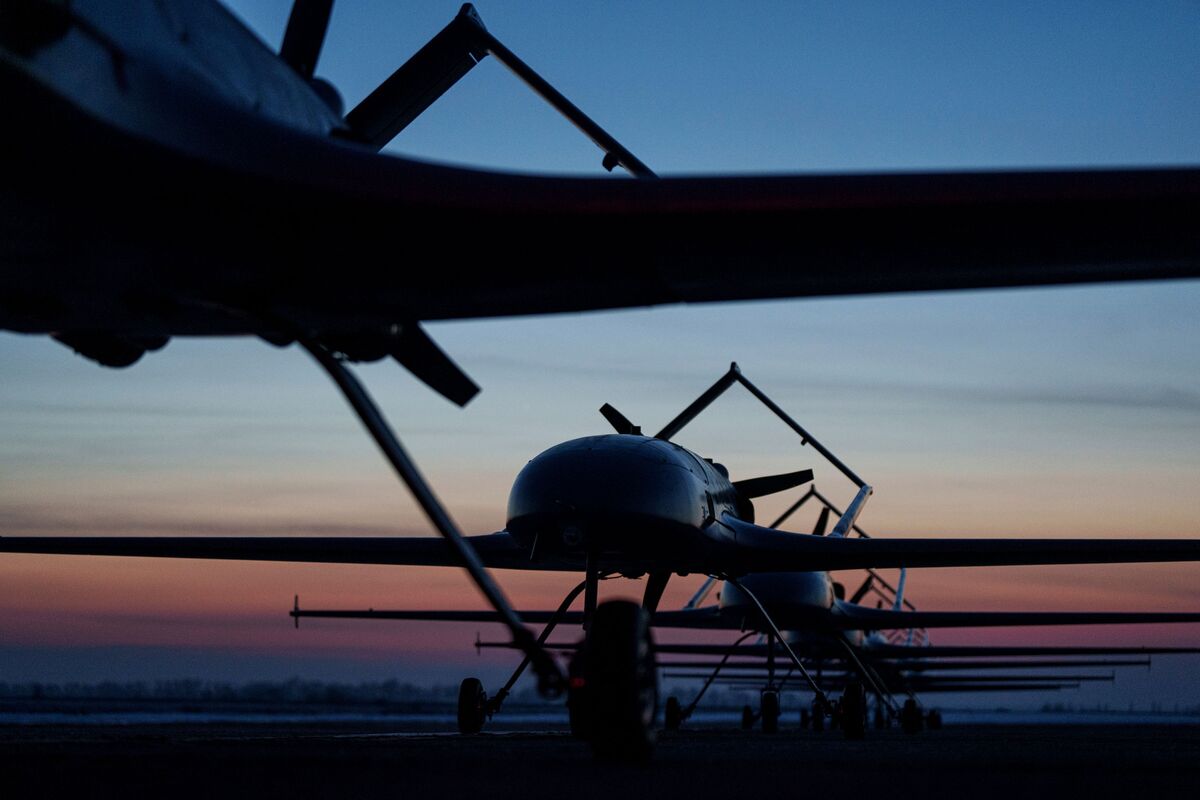
Several drones targeted Rosneft oil refineries in Bashkortostan on Thursday morning, causing a fire in an industrial area of Ufa; authorities said several drones were shot down and debris from one landed in the industrial zone. Firefighters are extinguishing the blaze but the governor provided no details on which facility was hit, leaving operational impact and downtime uncertain. This raises a modest energy risk premium and could pressure Russian refinery throughput and Rosneft-related exposures; monitor confirmations of damage, outage duration and any escalation that could affect regional fuel supply or prices.
The immediate market reaction will be concentrated in three channels: regional refined-product availability, insurance/operational costs for upstream/refining operators, and demand for counter-UAS/air-defense solutions. If exports or refinery throughput in the region are impaired for even 2–6 weeks, expect a near-term widening of the Urals–Brent differential by $2–6/bbl as buyers re-price logistical risk and seek alternate grades; concurrent diesel cracks in Europe/CIS could rise $2–5/bbl until inventory replenishment.
Second-order cost pressure matters: operators will likely accelerate security capex and recurring O&M spending (ballpark: +1–3% of opex), and marine/shipping routes may add 3–7 extra transit days or surcharge fees — an incremental logistics cost that can translate to ~$0.5–$1.5/bbl in landed price for displaced exports. Insurers and P&I clubs historically re-rate premiums after asset attacks; expect renewal pricing moves (20–40%) on Russian exposure at the next quarterly cycle, which will depress FCF and delay non-essential upstream investment.
Tail risks are asymmetric and time-dependent. Over days, headlines are the dominant driver and can spike spreads; over 1–6 months the key catalysts are repair timelines, sanction trajectories, and whether attacks scale geographically — escalation that hits export corridors or ports would materially change global balances, while localized incidents usually mean a 4–12 week supply-tightness window. The high-probability reversal is operational fixes and domestic rerouting within weeks; the low-probability extension is persistent campaign-style strikes that force durable throughput reductions and broader re-routing of crude flows to alternative hubs.
AI-powered research, real-time alerts, and portfolio analytics for institutional investors.
Request DemoOverall Sentiment
mildly negative
Sentiment Score
-0.30
