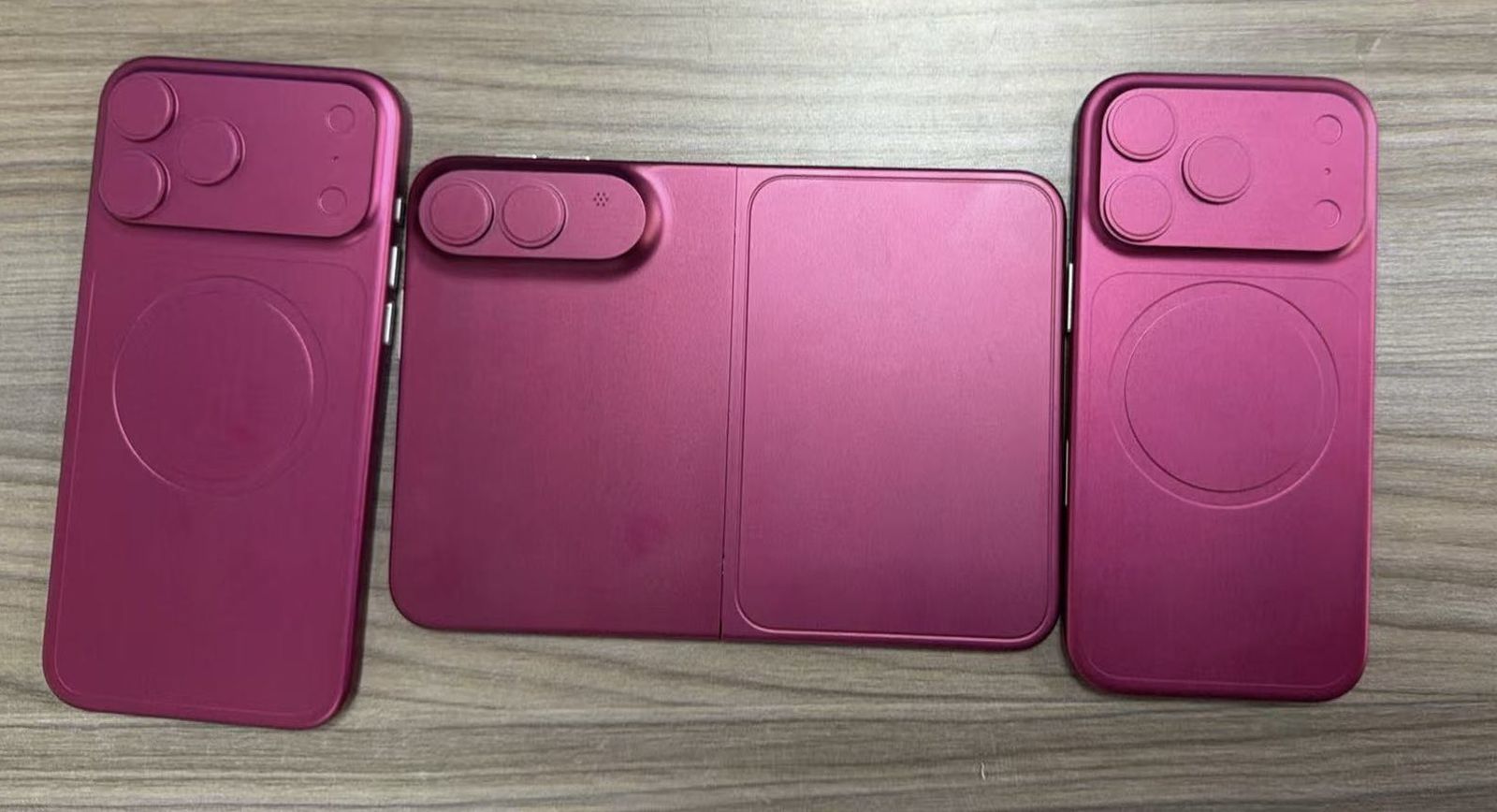
Reported starting price for the first foldable iPhone is about $2,000, with a 7.8-inch inner display (4:3) and 5.5-inch outer display; leaked dummy units also show iPhone 18 Pro/Pro Max with a smaller Dynamic Island. The foldable reportedly uses an ultra-thin 4.5mm titanium frame, reduced-crease class-leading display, Touch ID, and an atypical passport-style rear glass/camera plateau. All three devices are expected to launch in the fall, but the foldable may be delayed, creating timing risk for accessory manufacturers and case suppliers. News is product/sector-specific and likely to affect Apple and its supply chain more than market-wide pricing.
A new high-margin product tier at the top of Apple’s lineup will concentrate value upstream: flexible OLED capacity, advanced packaging and premium-frame machining will capture a disproportionate share of any ASP lift, compressing relative returns for commodity suppliers. Expect a near-term pricing premium for flexible panels and hinge/cover-glass assemblies; suppliers who committed capex to foldable-specific lines will see improved utilizations and pricing power inside 3–9 months, while non-specialists face margin pressure.
Accessory ecosystems face an asymmetric inventory/timing risk. Case and mold manufacturers that front-load production on dummy units are exposed to write-downs if the product is delayed or if the final tolerances change; this creates a short-duration liquidity and margin shock for small, private suppliers and distributors — a scenario that can cascade into slower restocking cycles at retail and discounting several weeks after launch.
Key tail risks: yield problems on ultra-thin displays and hinges (manifesting over the next 2–6 quarters) and demand elasticity at a premium price point if macro consumption weakens. Reversal catalysts include public supplier guidance on panel yields, Apple’s event cadence (fall announcement vs delay), and early sell-through metrics; each has a 1–3 month read-through into supplier orders and a 3–12 month impact on earnings. Longer term (12–36 months), category expansion into foldables re-allocates R&D and supply-chain investment, raising barriers for lagging panel makers but increasing concentration risk in a small set of folding-display vendors.
AI-powered research, real-time alerts, and portfolio analytics for institutional investors.
Request DemoOverall Sentiment
neutral
Sentiment Score
0.05
