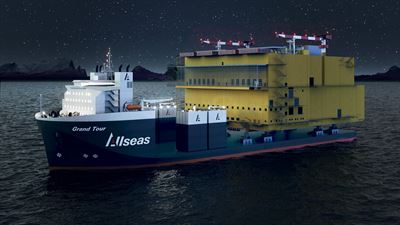
Wärtsilä has booked an engine order in Q4 2025 to supply four Wärtsilä 31 engines (each fitted with a NOx Reducer) for Allseas Group’s new purpose-built semi‑submersible Heavy Transport Vessel being built at Guangzhou Shipyard International; delivery is scheduled for Q1 2028. The selection highlights the engine’s modular design, high fuel efficiency and readiness to convert to low‑ and zero‑carbon fuels, reinforcing Wärtsilä’s positioning in marine decarbonisation and providing a modest near‑term revenue contribution already recorded in Q4 2025.
Market structure: This Allseas win is a tactical order but a strategic signal — buyers prize modular, fuel-flexible propulsion. Direct winners: Wärtsilä (WRT1V:HE) and suppliers of methanol/ammonia bunkering and lifecycle services; losers: legacy engine makers and shipowners with HFO-only fleets. Order size is immaterial to 2025 revenue (<0.1% of EUR6.4bn) but implies a realistic pathway to capture ~2–5% incremental marine engine share in 2–4 years if follow-on contracts materialize.
Risk assessment: Tail risks include slower bunkering infrastructure (probability ~20% over 3 years) or a technical platform failure that forces retrofits (impact: -15–30% EBITDA for an affected program). Near-term (days–months) market moves will be muted; short-term (3–12 months) sentiment can lift supplier equities on visible PO flow; long-term (2026–2029) is where contractual service annuities and fuel-conversion optionality create value. Hidden dependencies: China shipyard execution, steel/semiconductor supply chains and IMO/EU rules timing — any 6+ month slippage compresses margins and defers revenue recognition.
Trade implications: Position small, concentrated long exposure to proven decarbonisation engine suppliers; tail-hedge with short exposure to incumbents slow to support alternative fuels. Cross-asset: incremental demand for green methanol/ammonia could lift industrial gas and ammonia spreads by 5–15% over 2–3 years; sovereign/shipyard credit spreads widen if large backlog slippages occur. Catalysts to watch: follow-on Allseas orders (next 12 months), IMO MEPC rule updates, GSI delivery cadence and Wärtsilä Q1–Q2 2026 orderbook disclosures.
Contrarian angle: The market may overpay for “future-ready” labels — conversion to ammonia/methanol is non-linear and dependent on bunkering rollout; upside from service annuities is underappreciated. Historical parallels: early LNG-ready engine winners saw aftermarket margins, not initial unit margins, drive returns; failure modes include format wars (multiple incompatible fuel-conversion standards) leading to fragmentation and only a few winners. That suggests concentrated, asymmetric bets rather than broad sector leverage.
AI-powered research, real-time alerts, and portfolio analytics for institutional investors.
Request DemoOverall Sentiment
mildly positive
Sentiment Score
0.35
