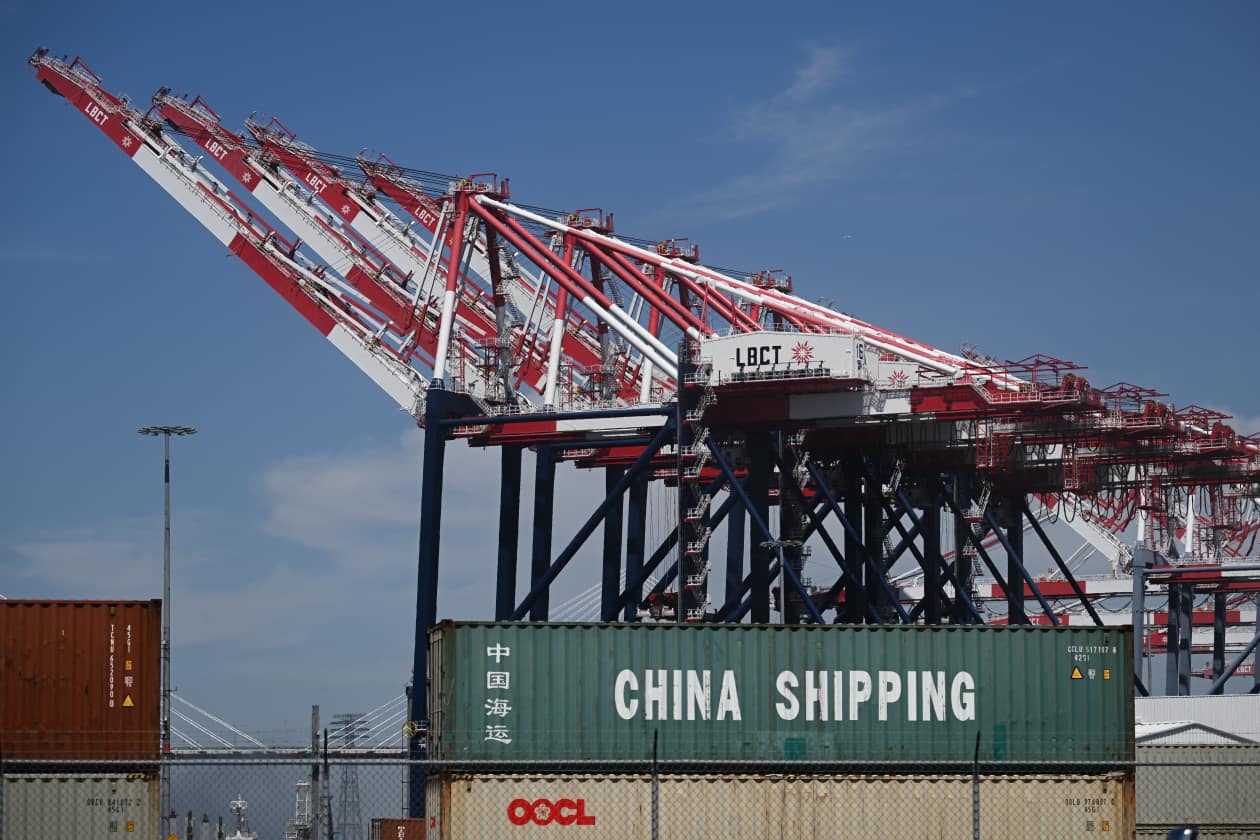
According to international economist David Blond, a potential 55% tariff on Chinese goods by the U.S., intended to boost American manufacturing, is unlikely to yield the benefits the stock market anticipates. Blond argues that it will primarily disrupt America’s consumer-based economy, forcing consumers to either forgo low-cost Chinese products or pay higher prices, while China, with its lower retaliatory tariffs, stands to benefit; furthermore, the tariffs are viewed as a means to offset tax cuts favoring corporations and high-net-worth individuals, disproportionately impacting low- and middle-income Americans.
International economist David Blond posits that a potential 55% U.S. tariff on Chinese goods will not deliver the anticipated trade-war benefits for the stock market, instead primarily harming the U.S. consumer-based economy. Historically, U.S. trade policy, such as during the Tokyo Round (1973-1979), aimed to rebuild global trade by conceding on manufacturing to gain agricultural export access, exemplified by Ford's U.K. operations and GM’s Opel in Germany, while China remained outside this system. The Most Favored Nation (MFN) rules, under which China currently charges an average tariff of about 7.4%, previously ensured transparency and efficiency. Blond argues that a 55% U.S. tariff is excessively high by global standards (which averaged 1-5% post-Doha Round) and will likely halt imports of Chinese goods, many without American substitutes, rather than spur a U.S. manufacturing renaissance. This would disproportionately impact small companies unable to absorb such costs and ultimately lead to U.S. consumers facing higher prices or forgoing products. Conversely, China is positioned as a winner, potentially imposing a 10% retaliatory tariff on limited U.S. agricultural exports, while U.S. restrictions on high-tech exports further limit American leverage. The article suggests these U.S. tariffs are intended to finance tax cuts for corporations and high-net-worth individuals, ultimately burdening low- and middle-income Americans. This perspective aligns with the provided 'strongly negative' sentiment score of -0.75 and 'pessimistic' tone, indicating a significant potential market disruption.
AI-powered research, real-time alerts, and portfolio analytics for institutional investors.
Overall Sentiment
strongly negative
Sentiment Score
-0.75
Ticker Sentiment
