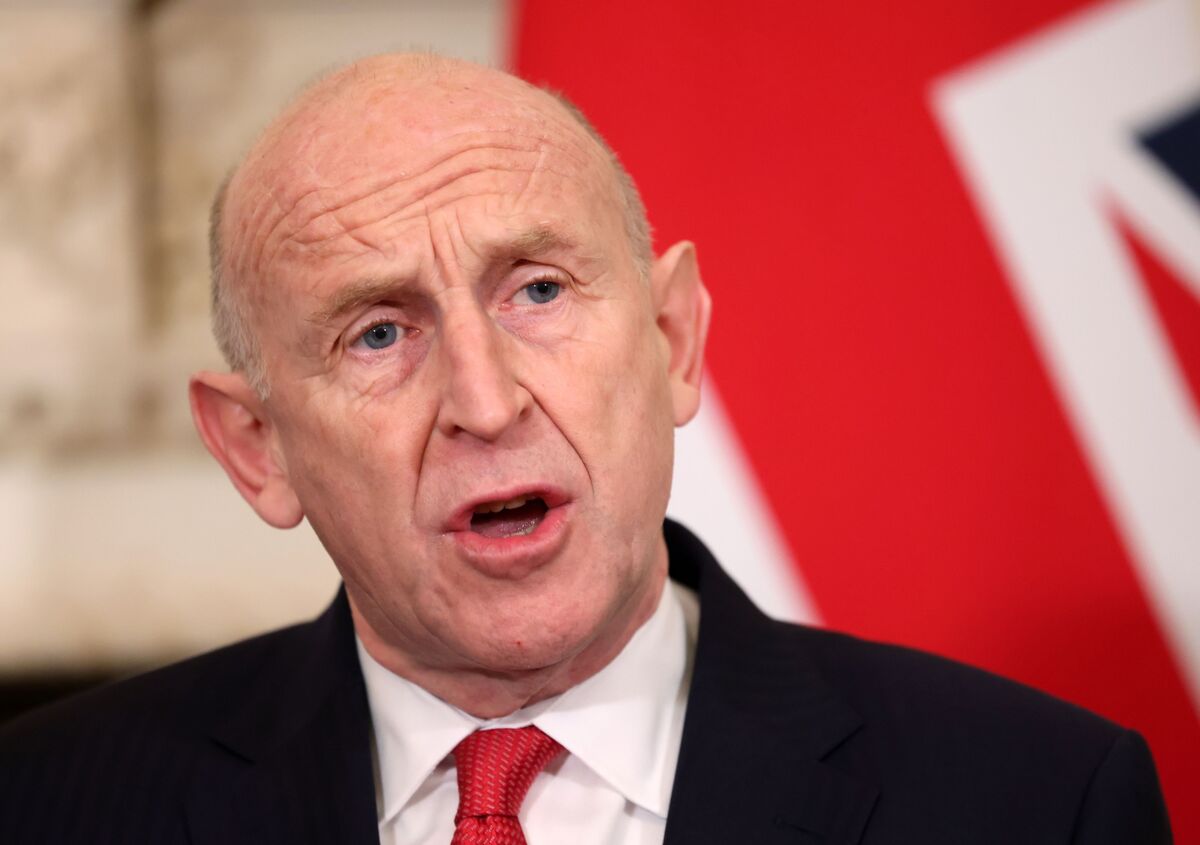
The UK government is prepared to cancel the £6.3 billion (≈$8.4 billion) Ajax armored-vehicle programme after the British Army halted use following incidents in which soldiers fell ill while riding vehicles built by General Dynamics UK Ltd. Defence Secretary John Healey said a final decision will await the conclusion of government and army safety investigations; this follows recent ministerial assurances from Army chief General Roly Walker that the vehicle was “demonstrably safe,” though Healey said he retained confidence in Walker. Cancellation would materially affect the contractor’s UK backlog and has implications for UK defence procurement and the fiscal outlook for planned equipment spending.
Market structure: Cancellation of a £6.3bn Ajax buy shifts procurement share away from General Dynamics’ UK unit and toward large diversified primes and continental suppliers able to bid quickly (e.g., BAE Systems, Rheinmetall). Short-term pricing power moves to bidders with existing UK footprints and retrofit/MRO capabilities; domestic subcontractors face immediate demand hole equivalent to multiple years of work (contract value spread over 3–7 years). Cross-asset effects will be muted: gilts/GBP impact <0.1% of fiscal trajectory, but UK defense equities and GD (NYSE: GD) options implied vol should reprice 10–30% on headlines.
Risk assessment: Tail risks include large litigation/compensation claims (scenario: >£500m liability), political backlash reducing future UK procurement by 5–15% over 1–3 years, and supply-chain insolvencies for niche UK suppliers within 6–12 months. Immediate (days): headline-driven equity/IV spikes; short (weeks–months): re-tendering and MOD investigation outcomes (decision window 30–90 days); long (1–3 years): reshaped UK defense industrial base and potential import substitution. Hidden dependencies include NATO interoperability standards forcing technical change and EU/US vendors’ capacity constraints if awarded work quickly.
Trade implications: Favor large, diversified primes with UK presence—establish tactical longs in BAE Systems (LSE: BA.L) and Rheinmetall (XETRA: RHM.DE) sized to 1–3% book weight, targeting contract wins within 3–12 months. Hedge/direct-play GD (NYSE: GD) with 3–6 month puts (10–15% OTM) sized 0.5–1% portfolio to capture downside/IV moves; consider pair trade long BA.L vs short GD 1:1 for relative exposure. Use 6-month call spreads on RHM.DE (buy ATM, sell +15% OTM) to limit premium while expressing re-tender upside.
Contrarian angles: Markets may over-penalize GD despite UK Ajax being a small fraction (<5%) of GD’s >$35bn annual revenue, so full-sale panic could be overdone; downside beyond 10–20% in GD risks being mean-revertive once legal outcomes and compensation mechanics are priced. Historical parallels (cancelled programs that resulted in re-scopes and follow-on work) suggest winners emerge from retrofit/MRO contractors rather than outright program winners, so overweight MRO names and selected component suppliers rather than pure-play vehicle OEMs. Unintended consequence: a UK shift to fast foreign procurement could compress margins for bidders who must expand capacity quickly—monitor bid capacity indicators and near-term hiring/capex announcements.
AI-powered research, real-time alerts, and portfolio analytics for institutional investors.
Request DemoOverall Sentiment
moderately negative
Sentiment Score
-0.50
