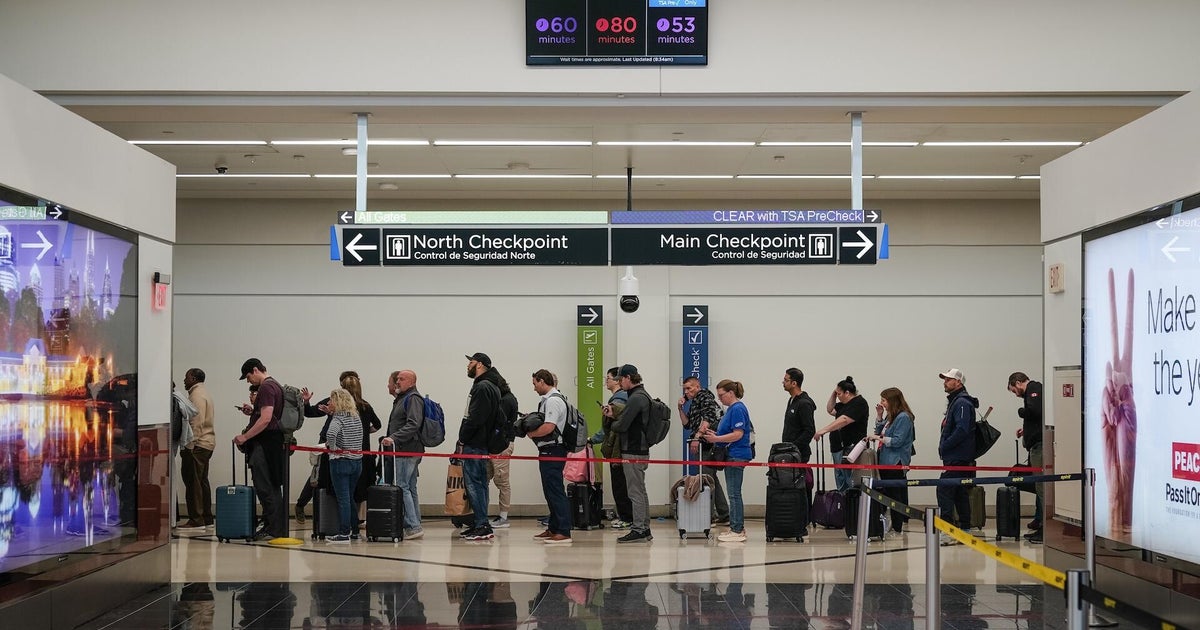
Federal HSI and ICE Enforcement and Removal Operations personnel will be deployed to Hartsfield-Jackson Atlanta International Airport starting Monday to support TSA with line management and crowd control amid TSA staffing and federal funding/pay challenges. City officials say the personnel will not conduct immigration enforcement, will report to TSA, there is no request for Atlanta Police assistance, and officials expect no material impact on city operations; Atlanta will continue monitoring the situation.
This is a localized operational mitigation that masks a systemic fiscal problem: using DHS personnel as line managers creates a repeatable playbook the feds can deploy across major hubs if TSA funding/labor remains unresolved. That playbook reduces near-term tail risk of mass cancellations but increases the probability of episodic staffing shuffles over the next 3–12 months, which favors network carriers able to reallocate capacity and preserve yields.
Second-order winners are carriers and airport operators with concentrated hub control (Delta at ATL, American at CLT/DFW) because constrained TSA throughput raises the value of schedule control and premium re-accommodation; a sustained pattern could lift effective yields on constrained transits by low-single-digit percentage points over peak travel months. Losers are point-to-point low-cost operators and regional connectors with thin margins and limited ability to repackage disrupted flows — they are more likely to shoulder re-accommodation costs and PR friction among affected communities.
Catalysts to monitor: (1) short-term — holiday travel windows (next 30–90 days) when overtime and temporary deployments are most consequential; (2) medium-term — congressional action on TSA funding within 1–3 months, which would normalize operations and compress any option premia in airline equities; (3) downside risk — protests or legal/municipal pushback that convert logistical support into reputational damage, depress local leisure demand by an estimated 2–5% for several quarters. The investible angle is volatility asymmetry: operational uncertainty is priced into stocks unevenly, so prefer concentrated hub exposure via directional or pair trades rather than broad sector bets.
AI-powered research, real-time alerts, and portfolio analytics for institutional investors.
Request DemoOverall Sentiment
neutral
Sentiment Score
0.00
