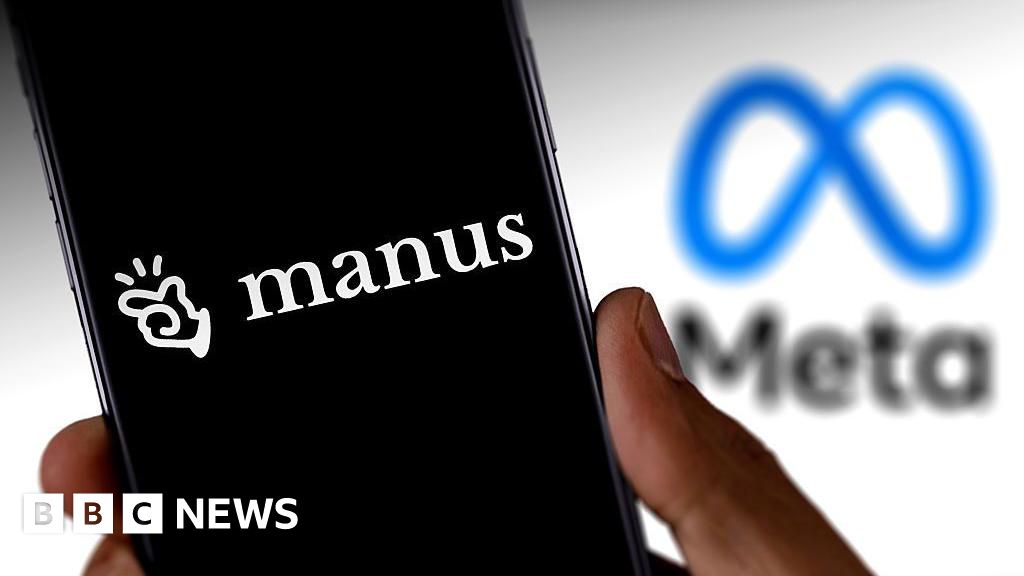
Meta is acquiring Chinese‑founded, Singapore‑based AI startup Manus to accelerate development of general‑purpose AI agents; Bloomberg and The Wall Street Journal estimated the deal could top $2 billion. Meta said Manus's team and agent technology will be integrated into consumer and business products while Manus's service will continue to be operated and sold, reinforcing Meta's broader AI push that included a $14 billion minority investment in Scale AI earlier this year. The deal adds talent and autonomous-agent capabilities that strengthen Meta's competitive positioning in the fast‑moving AI sector and may influence investor views on Meta's AI strategy and M&A cadence.
Market structure: Meta (META) is the clear near-term winner — Manus adds general-purpose agent IP/talent that can accelerate product roadmap and ARPU alongside the Scale AI stake; expect greater pricing power in consumer AI features and potential ad-intent uplift within 6–12 months. Losers are smaller AI pure-plays and ad-revenue-dependent rivals (e.g., SNAP, PINS) who face faster feature compression and higher M&A/talent bidding costs; private-market valuations for agent startups will be bid up (>$2bn anchor). Cross-asset: expect a positive equity re-rate for large-cap tech, modest rise in implied vols around META M&A news, negligible commodity impact, and small upward pressure on risk assets that can push real yields +5–15bp in the short run.
Risk assessment: Tail risks include regulatory intervention (CFIUS/EU/UK privacy reviews or export controls) and geopolitically driven talent restrictions given Manus’s China roots — low-probability but high-impact within 3–12 months. Integration and execution risk (agents underdeliver) could trigger a >10–20% re-rating; goodwill impairment risk is limited to a few percent of META market cap but reputational damage may last. Hidden dependency: success hinges on LLM backbone (internal Llama vs external partners) and cloud infra costs; catalysts to watch: product demos, Q1/Q2 2026 guidance, regulatory filings within 30–90 days.
trade implications: Direct play — constructive on META: establish a modest overweight (2–3% portfolio weight) and express convexity via 9–15 month call spreads to capture 20–40% upside while capping premium. Pair trade — long META vs short SNAP (equal notional exposure, hedge ratio 0.8) for 3–9 months to exploit ad-share displacement and feature-led monetization. Reduce unhedged exposure to small-cap AI application stocks/ETFs by ~20% over next 1–3 months to avoid valuation compression from intensified M&A competition.
contrarian angles: Consensus focuses on immediate product upside but underestimates geopolitical/regulatory backlash risk and integration friction; Manus’s China-origin story could invite scrutiny that delays product rollout by 3–9 months. Conversely, the market may underprice long-term monetization: if Meta converts agents into paid B2B workflows, upside beyond 12 months could exceed 30% and options are currently cheap — consider LEAP structures. Historical parallels: WhatsApp acquisition (long-term payoff) vs Nokia (integration failure) — execution and regulatory path will determine which outcome prevails.
AI-powered research, real-time alerts, and portfolio analytics for institutional investors.
Request DemoOverall Sentiment
moderately positive
Sentiment Score
0.45
Ticker Sentiment
