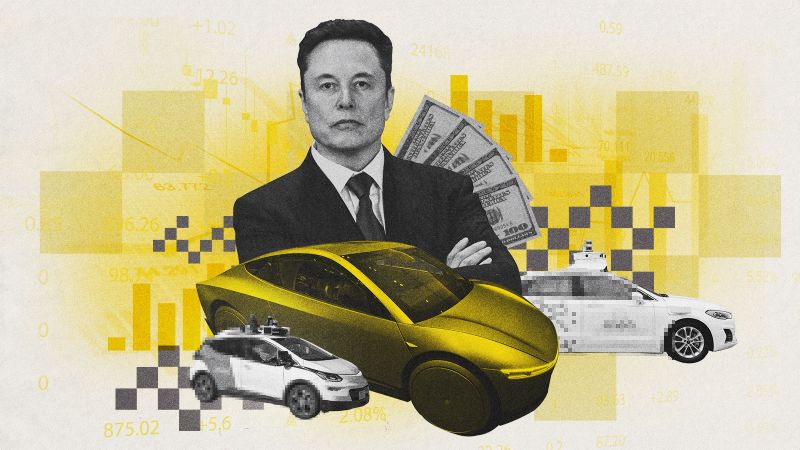
Elon Musk announced Tesla's robotaxi service launch in Austin, Texas, on June 22, aiming to revitalize the company amid declining sales and profits; however, the viability of the service is uncertain, given safety concerns and the exit of traditional automakers like GM and Ford from similar ventures. Experts point to competition from established services like Waymo, which already provides 250,000 paid rides weekly, and economic challenges competing with human drivers from Uber and Lyft, while Tesla's camera-only approach to self-driving raises safety questions compared to lidar-equipped competitors.
Tesla's announcement of a tentative June 22 robotaxi service launch in Austin, Texas, represents a critical juncture for the company, as CEO Elon Musk bets on autonomous vehicles to reverse slumping sales and a 53% year-over-year decline in net income to $7 billion. This move faces substantial headwinds, including significant skepticism from industry experts regarding both its economic viability against human-driven services like Uber and Lyft, and the safety of Tesla's camera-only Full Self-Driving (FSD) technology, which eschews lidar used by competitors like Google's Waymo. Waymo is already a formidable, established competitor, providing 250,000 paid rides weekly across four U.S. cities and demonstrating rapid growth with ridership up over 50% in the last six months, despite its parent Alphabet reporting a $4.1 billion loss for the Waymo-inclusive segment last year. Traditional automakers such as General Motors and Ford have notably retreated from similar robotaxi ventures, citing resource intensity and competitive pressures. Musk's optimistic projections of 99% market share contrast sharply with his history of unmet robotaxi promises since 2019 and ongoing NHTSA investigations into FSD's safety, including a fatal accident. Tesla's stock has already reflected market concerns, plunging 30% since mid-December amidst these challenges and broader backlash against Musk. The success of this robotaxi initiative is therefore paramount for Tesla, but hinges on overcoming considerable technological, competitive, and regulatory hurdles, with analysts like Gordon Johnson viewing the initial launch primarily as a proof-of-concept rather than a full commercial rollout.
AI-powered research, real-time alerts, and portfolio analytics for institutional investors.
Request DemoOverall Sentiment
strongly negative
Sentiment Score
-0.70
Ticker Sentiment
