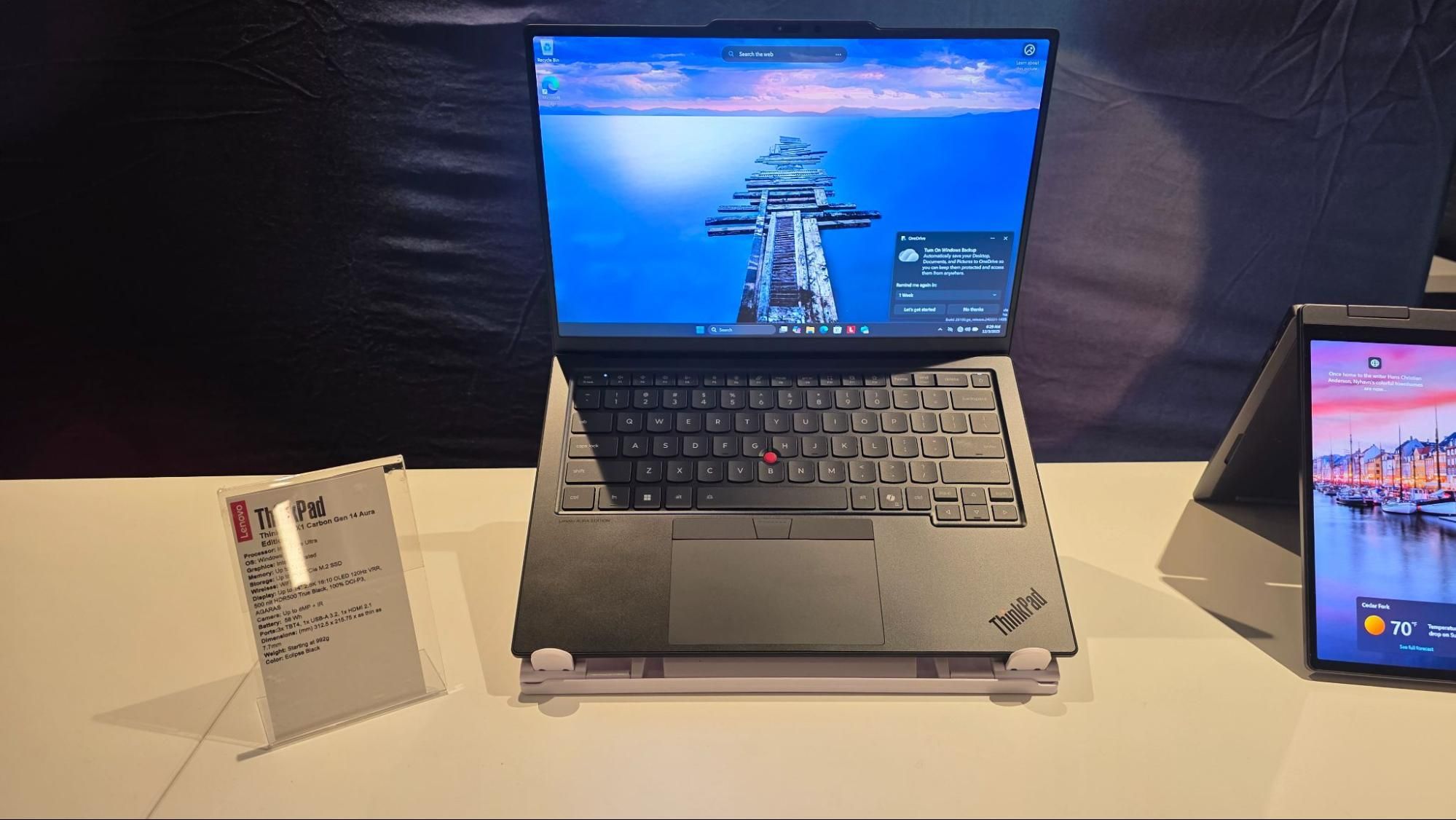
Lenovo refreshed its ThinkPad and Yoga laptop lines at CES 2026, fronting Intel Core Ultra Series 3 “Panther Lake” CPUs in high-end “Aura Edition” systems with AI-focused features (Smart Modes, Smart Share) and dual OS options (Windows 11 and Linux) for business customers. Key models and pricing include the ThinkPad X1 Carbon from $1,999, X1 2‑in‑1 from $2,149 and X9 15p from $1,999 (available March 2026), and Yoga Pro 7i/9i starting at $1,799.99/$1,899.99 in Q2 2026; Lenovo also offers AMD Ryzen AI 400 and Snapdragon X2 variants in its Slim series with the Slim 7x from $949.99. The product breadth — across Intel, AMD and Qualcomm — and premium price points signal a push to capture high-margin enterprise and creative buyers while showcasing AI-capable hardware that could modestly affect vendor and component demand.
Market structure: Lenovo’s premium “Aura” push is a clear short-term win for Intel (INTC) in high-margin enterprise notebooks — expect modest ASP uplift (5–15%) for premium SKUs and a March/Q2 2026 revenue cadence for OEMs. NVDA gets incremental demand in high-end creatives with RTX 5070 placements but addressable GPU revenue is small vs datacenter; AMD and QCOM will remain competitive in mid-/value-tier thinner-margin segments. Supply signals: OEMs betting on Panther Lake implies Intel capacity allocation to mobile dies will rise over H2–H1 2027, tightening spot supply for competitor mobile SKUs if demand ramps faster than forecast.
Risk assessment: Tail risks include Intel Panther Lake delivery delays, renewed PC demand contraction (-5–10% YoY risk), or tighter export controls to China that could remove OEM demand pools; these are low-probability but >10% P(impact) scenarios for revenue. Time horizons: immediate market reaction likely muted (days), measurable revenue/stock moves concentrate around March–Q2 2026 launch and 2–8 quarters thereafter. Hidden deps include Nvidia GPU supply, Intel Arc/driver quality, and enterprise Linux adoption — all could blunt adoption.
Trade implications: Favor tactical exposure to INTC and selective NVDA exposure while hedging AMD/QCOM mobile exposure. Use capital-efficient options to express view — buy-dated spreads into March/Q2 windows and re-evaluate on Lenovo shipment/Intel earnings prints. Rotate 1–3% tactical weight from handset/ SoC cyclicals into enterprise PC suppliers and firmware/security services tied to Linux/AI features.
Contrarian angles: Consensus may overstate durable Intel share gains — history (Intel share cycles 2015–2021) shows OEM preferences can flip if AMD/Qualcomm deliver competitive mobile performance and power. If enterprise upgrade rates disappoint or Linux/driver problems persist, INTC upside is capped and the market could re-rate AMD/QCOM recovery; monitor Lenovo sell-through and enterprise procurement cycles as 2 key leading indicators.
AI-powered research, real-time alerts, and portfolio analytics for institutional investors.
Request DemoOverall Sentiment
mildly positive
Sentiment Score
0.25
Ticker Sentiment
